Putting an end to spicy chatter: Kohli, Gambhir bond over love for Tests, need for aggression
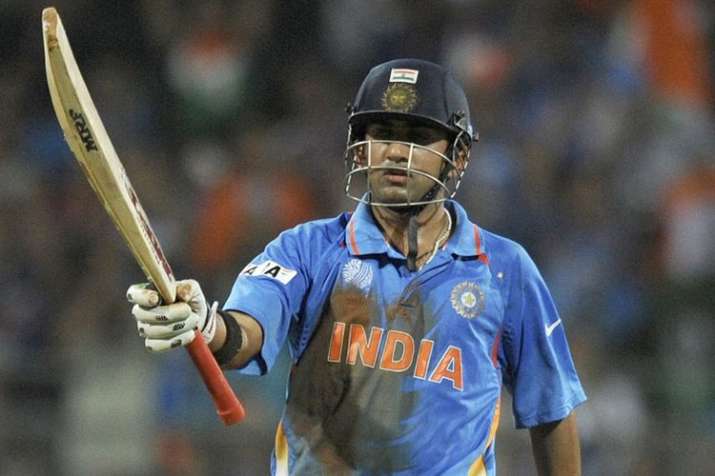
Chennai, Sep 18: Two feisty cricketers who love to get in the face of the opposition to get the best out of themselves. Gautam Gambhir and Virat Kohli were not expected to have a smooth relationship when the former was roped in as India's head coach.
But the two have decided to take the spice out of the chatter surrounding them by sharing a laugh and some thoughts on their aggressive personalities, love for Test cricket and similar aspirations growing up.
"Here we are putting an end to all the masala and spice," said Kohli as he interviewed head coach Gambhir for bcci.tv ahead of the first Test against Bangladesh here.
"That is a good start to the conversation," the southpaw said in response.
Gambhir played with an aggressive mindset all through his career and Kohli continues to play the game with the intensity of a teenager. Considering that, their on-field confrontations in the IPL over the years were hardly a surprise.
In the insightful chat, the two strong personalities looked back at their days in Delhi and Indian cricket.
The conversation flowed after they watched footage of the 2011 World Cup final where Gambhir played a match-winning knock and shared an 83-run stand with his younger teammate Kohli.
"We have come a long way. From playing together for a long time, being part of the same dressing to having ups and downs," said Kohli before Gambhir added that everything that happened between them was in "good spirits".
One could gauge their similar mindset with the way they talked about Test cricket. Gambhir began his India career when there was no IPL and always aspired to be a successful red-ball cricketer. Kohli, on the other hand, is arguably the most high profile supporter of Test cricket.
"Test cricket is the pinnacle of the game. I made my ODI debut before playing Tests. Making Test debut remains my best memory till date. We always thought we would be judged by what we do in red-ball cricket," recollected Gambhir.
The 42-year-old opener, being five years older to Kohli, had established himself when the latter burst on the scene. Kohli still vividly remembers the days when he aspired to be in the league of Gambhir and other big names of Delhi cricket.
"There used to be Kotla 1 and Kotla 2 (nets). We always wanted to be there (with the likes of Gambhir and Co). My first aspiration was to play first class cricket for Delhi. Now you can understand where the competition comes from because the perspective (his and Gambhir's) is very similar," said the most successful Indian Test captain.
For Gambhir, Kohli is the torch-bearer of Test cricket.
"You guys are the torchbearers of Test cricket. In today's day and age the challenge will always remain, how we can motivate the next generation of cricketers. I believe the stronger your Test team, the stronger your cricket," said the former opener and Kohli could not agree more with him.
India needs next generation of bowlers
Both Gambhir and Kohli also agreed that India will have to find the next generation of pacers and spinners to extend their successful run in the longest format. As captain, Kohli had placed emphasis on playing five specialist bowlers, a strategy that paid rich dividends.
"A lot will depend on the next generation of bowlers. We will keep producing quality batters. That is how the structure has been," said Gambhir.
"But does the younger generation have motivation to bowl 20 overs in a day? Someone like Jasprit Bumrah, he just loves to bowl but do the next generation of fast bowlers find enjoyment in bowling 20 overs in a day, even the spinners?
"If you enjoy doing that, that is the only way one would be motivated to play Tests. That is going to be a challenge for all of us to figure out who these guys are," said the coach.
Kohli reserved his last question for Gambhir's umpteen run-ins with opposition bowlers. However, he was quickly reminded about his own on field demeanour.
"You had more altercations. Maybe you can answer this better," said Gambhir (laughs).
"That is what the personality I had and that is the personality you have. At times that conversation can get you in the zone. I don't want the current players to change one bit," added the head coach.
A Very Special Interview 🙌
— BCCI (@BCCI) September 18, 2024
Stay tuned for a deep insight on how great cricketing minds operate. #TeamIndia’s Head Coach @GautamGambhir and @imVkohli come together in a never-seen-before freewheeling chat.
You do not want to miss this! Shortly on https://t.co/Z3MPyeKtDz pic.twitter.com/dQ21iOPoLy
Let the Truth be known. If you read VB and like VB, please be a VB Supporter and Help us deliver the Truth to one and all.
PM Modi to address the nation tonight at 8.30 PM
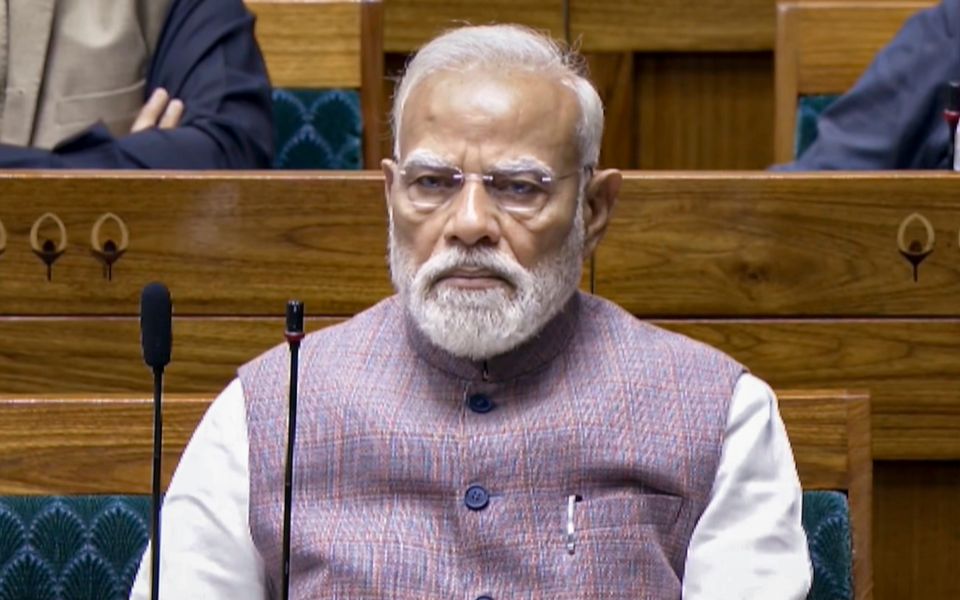
New Delhi (PTI): Prime Minister Narendra Modi will address the nation tonight at 8.30 PM, a day after a bill to implement women's reservation in legislatures was defeated in the Lok Sabha.
"The Prime Minister will address the nation at 8.30 PM (April 18, Saturday)," an official said.
Modi is expected to delve into the issue of implementation of women's quota and the happenings in Parliament, where opposition parties on Friday voted against the Constitution (131st Amendment) Bill.
Under the Bill, Lok Sabha seats were to be increased up to 816 from the current 543 to "operationalise" the women's reservation law before the 2029 parliamentary polls, following a delimitation exercise based on the 2011 Census. Seats were also to be increased in state and UT assemblies to accommodate 33 per cent reservation for women.
A two-thirds majority was required for the passage of the crucial bill but the ruling BJP-led alliance could not muster the numbers.
During polling on the bill in the Lok Sabha on Friday night, 298 members voted in its support, while 230 MPs voted against it.
Out of 528 members who voted, the bill required 352 votes for a two-thirds majority.