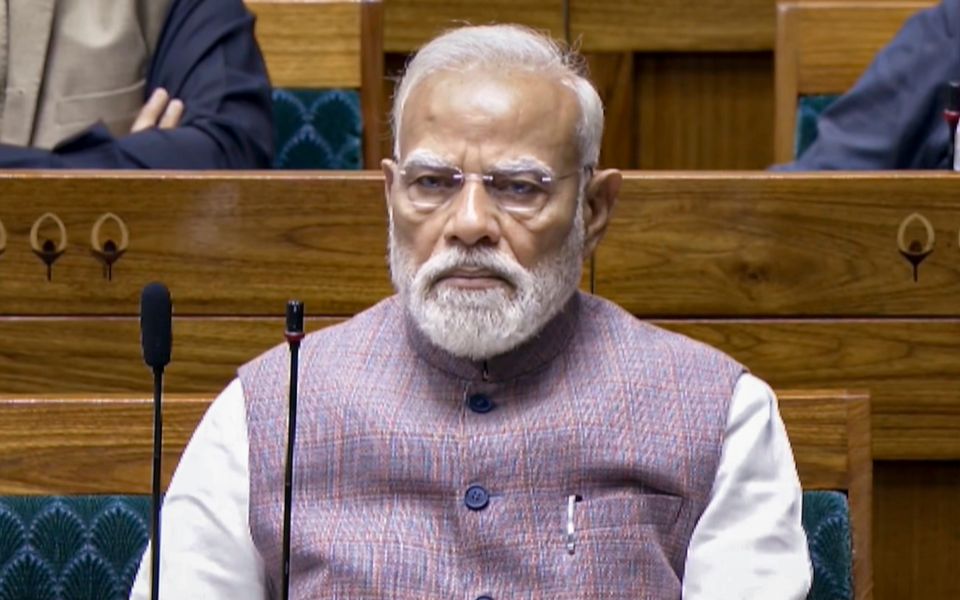
Rohit Sharma-led team India sweat out in ground ahead of 1st Test match against Bangladesh
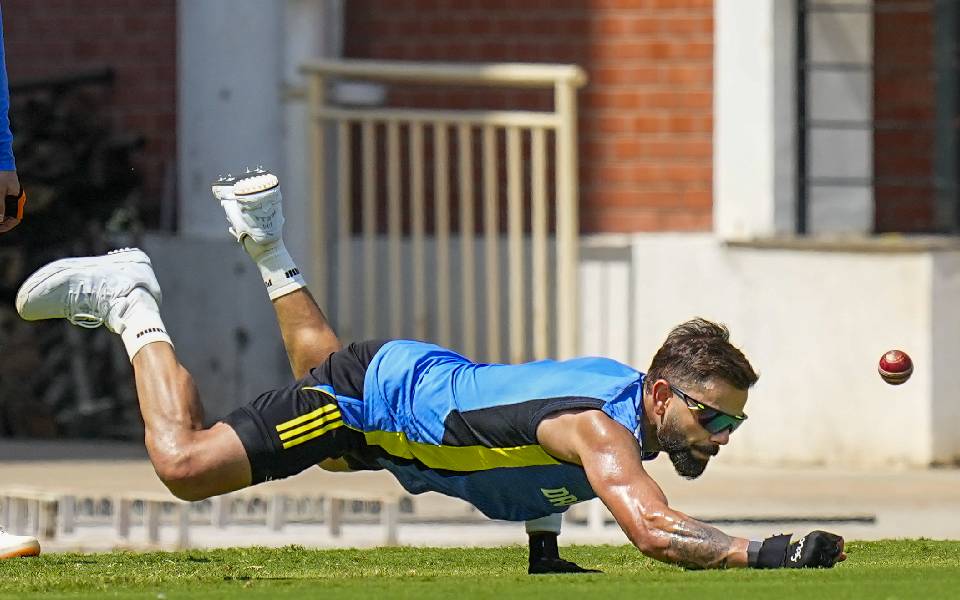
Chennai, Sep 16: Rohit Sharma and Co had another extensive training session in the build up to the first Test against Bangladesh with all 16 squad members turning for practice at the Chepauk here on Monday.
After a day off, the India squad members took part in their third training session since their arrival here last week. The first Test begins on Thursday.
As it is often the case, Virat Kohli was among the first set of batters to hit the nets. In the adjacent net was southpaw Yashasvi Jaiswal as both he and Kohli faced Jasprit Bumrah and home hero R Ashwin.
The next set of batters included skipper Rohit, Shubman Gill and Sarfaraz Khan, the last named player arriving here after taking part in the second round Duleep Trophy match in Anantapur. The captain focussed on playing spinners, keeping Bangladesh's slow bowling attack in mind.
Ravindra Jadeja, Rishabh Pant and pacer Mohammed Siraj too faced local bowlers and a significant amount of throwdowns.
The practice pitch at the main square offered a decent amount of bounce.
India will have two more practice sessions scheduled before the series opener against Bangladesh, who are riding on the confidence of their series sweep in Pakistan.
Most players in the playing eleven select themselves. The Chennai surface usually favour the spinners and there is likelihood of India going into the game with three spinners and two pacers.
The spinners expected to feature are Ashwin, Jadeja and Kuldeep Yadav while Bumrah and Siraj will share workload in the pace department. Axar Patel, despite his impressive all-round returns across formats, may have to sit out.
On the batting front, Pant is expected to make his Test return after a gap of almost two years. Dhruv Jurel, who impressed in his debut series against England, will be benched in that case.
Shuttle runs and intense catching practice
Fielding coach T Dilip was impressed with the intensity of the unit despite punishing Chennai weather which is humid all the year round.
"Today, whole session idea was to get everyone together for a team drill with two segments to it. First is competition taking humidity into account, we made sure that volume is less but intensity is more," Dilip told bcci.tv after the session.
He then explained the training module.
"We split teams into two groups and made some competition in catching and the team that made less number of errors won. It was Virat's team that won today," he informed.
Dilip, the only support staff from the Rahul Dravid's team, who is part of Gautam Gambhir's entourage, also spoke about players coping extreme weather and giving it their all during the session.
"We split two batches -- bowlers and all-rounders split into two stations, where outfield and in-field catching was taken care of along with attacking ground fielding.
"The second group was standard batting group for slip cordon catching and also short-leg, silly point with some reflex catching," Dilip explained.
He seemed pleased with the effort put in by Rohit Sharma's men.
"Overall, I feel it was a fantastic session, considering hot overhead sun and getting used to it but one great part about this team is throughout all stations, the intensity was top notch in this weather," Dilip concluded.
Preps in full swing here in Chennai! 🙌
— BCCI (@BCCI) September 14, 2024
Inching closer to the #INDvBAN Test opener ⏳#TeamIndia | @IDFCFIRSTBank pic.twitter.com/F9Dcq0AyHi
Let the Truth be known. If you read VB and like VB, please be a VB Supporter and Help us deliver the Truth to one and all.
Iran reimposes restrictions on Strait of Hormuz, accusing US of violating deal to reopen it
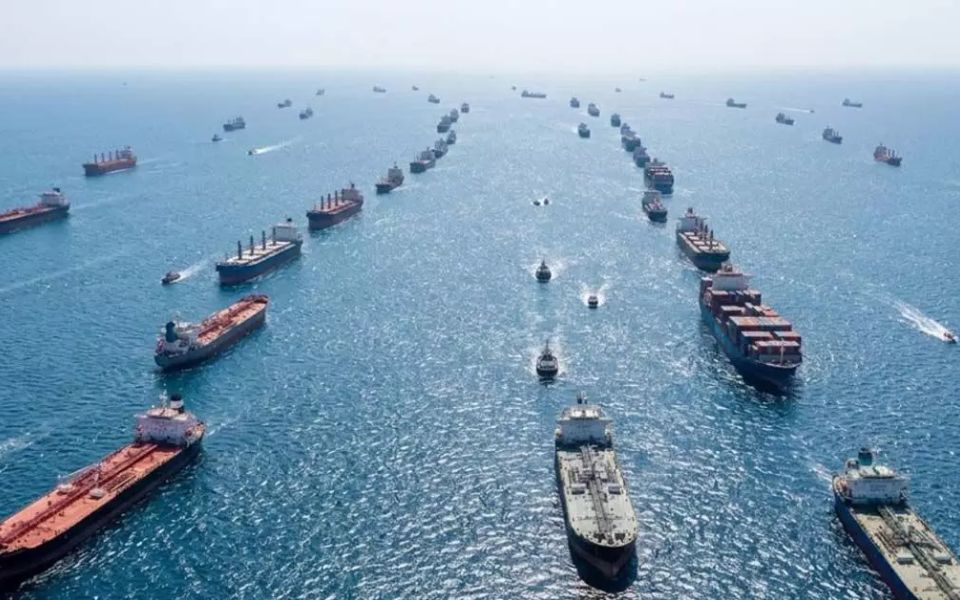
Cairo (AP): Iran swiftly reversed course on reopening the Strait of Hormuz, reimposing restrictions on the critical waterway on Saturday after the US said it would not end its blockade of Iran-linked shipping.
Iran's joint military command said on Saturday that “control of the Strait of Hormuz has returned to its previous state ... under strict management and control of the armed forces.” It warned that it would continue to block transit through the strait as long as the US blockade of Iranian ports remained in effect.
The announcement came the morning after US President Donald Trump said that even after Iran announced the strait's reopening on Friday, the American blockade “will remain in full force” until Tehran reaches a deal with the US, including on its nuclear programme.
The conflict over the chokepoint threatened to deepen the energy crisis roiling the global economy after oil prices began to fall again on Friday on hopes the US and Iran were drawing closer to an agreement. Roughly one-fifth of the world's oil passes through the strait, and further limits would squeeze already constrained supply, driving prices higher once again.
Control over the strait has proven to be one of Iran's main points of leverage and prompted the United States to deploy forces and initiate a blockade on Iranian ports as part of an effort to force Iran to accept a Pakistan-brokered ceasefire to end almost seven weeks of war that has raged between Israel, the US and Iran.
Iran said it fully reopened the Strait of Hormuz to commercial vessels after a 10-day truce was announced between Israel and the Iranian-backed Hezbollah militant group in Lebanon. But after Trump said the blockade would continue, top Iranian officials said his announcement violated last week's ceasefire agreement between Iran and the US and warned the strait would not stay open if the US blockade remained in effect.
A data firm, Kpler, said movement through the strait remained confined to corridors requiring Iran's approval.
US forces have sent 21 ships back to Iran since the blockade began on Monday, US Central Command said on X.
Truce in Lebanon could help US-Iran peace efforts
------------------------------------------------------------
The ceasefire in Lebanon could clear one major obstacle to an agreement. But it was unclear to what extent Hezbollah would abide by a deal it did not play a role in negotiating, and which will leave Israeli troops occupying a stretch of southern Lebanon.
Trump said in another post that Israel is “prohibited” by the US from further strikes on Lebanon and that “enough is enough” in the Israel-Hezbollah war.
The State Department said the prohibition applies only to offensive attacks and not to actions taken in self-defence.
Shortly before Trump's post, Israeli Prime Minister Benjamin Netanyahu said Israel agreed to the ceasefire in Lebanon “at the request of my friend President Trump,” but that the campaign against Hezbollah is not complete.
He claimed Israel had destroyed about 90 per cent of Hezbollah's missile and rocket stockpiles and added that Israeli forces “have not finished yet” with the dismantling of the group.
In Beirut, displaced families began moving toward southern Lebanon and Beirut's southern suburbs despite warnings by officials not to return to their homes until it became clear whether the ceasefire would hold.
The Lebanese army and UN peacekeepers in southern Lebanon reported sporadic artillery shelling in some parts of southern Lebanon in the hours after the ceasefire took effect.
An end to Israel's war with Hezbollah was a key demand of Iranian negotiators, who previously accused Israel of breaking last week's ceasefire with strikes on Lebanon. Israel had said that the deal did not cover Lebanon.
The fighting has killed at least 3,000 people in Iran, more than 2,290 in Lebanon, 23 in Israel and more than a dozen in Gulf Arab states. Thirteen US service members have also been killed.