Shami, Ashwin strike back as Australia reach 75/2 at lunch
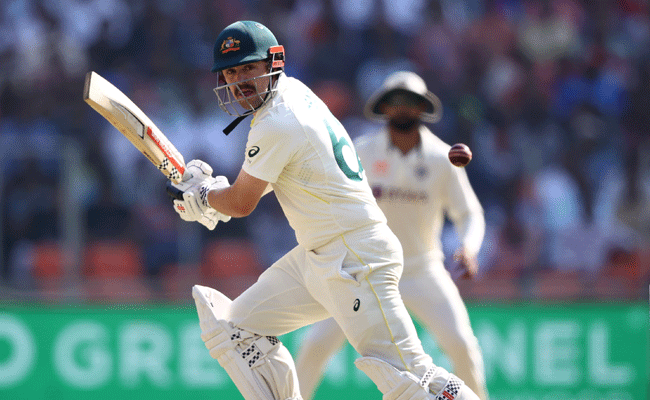
Ahmedabad (PTI): Ravichandran Ashwin and Mohammed Shami squared things for India in the second hour as Australia lost the initiative after an impressive start to go into lunch at 75 for two on the opening day of the fourth Test here on Thursday.
The dogged Usman Khawaja (27 batting, 94 balls) was being given company by skipper Steve Smith (2 batting, 17 balls) after Travis Head (32) and Marnus Labuschagne (3) were dismissed in quick succession by Ashwin (1/18 in 10 overs) and Shami (1/14 in 8 overs) respectively.
There is nothing in the track and Australia, if they apply themselves well, could post their best total of the series.
Head, in fact, must be feeling horrible as he undid all his good work in the first hour by playing an indiscreet shot. He tried to chip Ashwin over mid-on without reaching to the pitch of the delivery.
Ashwin had just altered the length slightly and deceived Head, who offered the easiest of catches to one of the world's best fielders, Ravindra Jadeja.
Head got a reprieve while batting on seven when wicketkeeper KS Bharath dropped a regulation catch off Umesh Yadav's bowling. Umesh, who has always been blamed for his inconsistency, was once again erratic as he gave a lot of boundary balls.
Out of the seven boundaries that Head got, half a dozen came from Umesh's overs.
Bharath would like to forget the session in a hurry as he was troubled by inconsistent bounce on both sides of the wicket. He found it difficult to gather a lot of balls which kept low from one end, and conceded eight byes, apart from dropping a dolly.
The end from which Shami bowled, a lot of deliveries kept low and one such ball brought about the downfall of Labuschagne. It was an off-cutter and Labuschagne wanted to play the square cut but dragged it back onto the stumps, much to his dismay.
Let the Truth be known. If you read VB and like VB, please be a VB Supporter and Help us deliver the Truth to one and all.
Pawan Khera denied anticipatory bail in passport case: Cong stands up for senior member
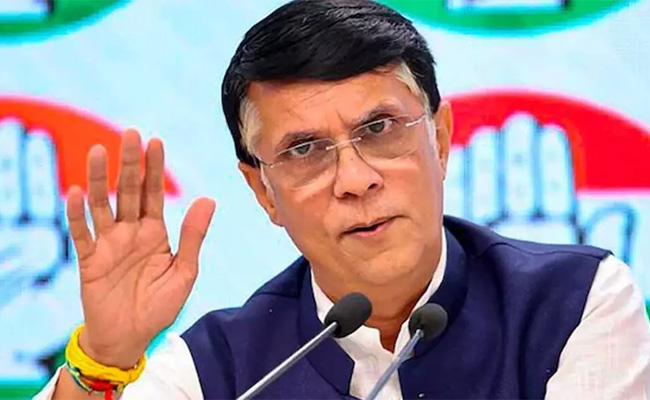
New Delhi: The Congress party has stood by Pawan Khera, the Chairman of the party’s Media and Publicity Department, expressing confidence that regardless of hurdles like politics of threat and intimidation, justice would emerge victorious.
Khera was denied anticipatory bail by the Gauhati High Court on Friday in the case filed against him by Assam Chief Minister Himanta Biswa Sarma's wife Riniki Bhuyan Sarma for alleging that she possessed not only multiple passports but also undisclosed properties abroad.
Senior Congress leader Jairam Ramesh has said in a post in Hindi on his ‘X’ account, “The entire Indian National Congress stands in solidarity with Pawan Khera, the Chairman of its Media and Publicity Department. The process to challenge the Gauhati High Court’s decision in the Supreme Court is underway.” In the post, which he put up on Friday, Ramesh has added, “We are confident that justice will prevail over the politics of threats, intimidation, and harassment.”
Bhuyan Sarma has lodged also an FIR seeking legal action against Pawan Khera for his allegations that she possesses passports of three countries and owns a company in the US, which had invested Rs. 50,000 crores. She has filed criminal cases against the Congress leader at the Guwahati Crime Branch Police Station under various sections of the Bharatiya Nyaya Sanhita (BNS).