Suryakumar Yadav named captain of ICC men's T20I Team of the Year, 3 more Indians feature
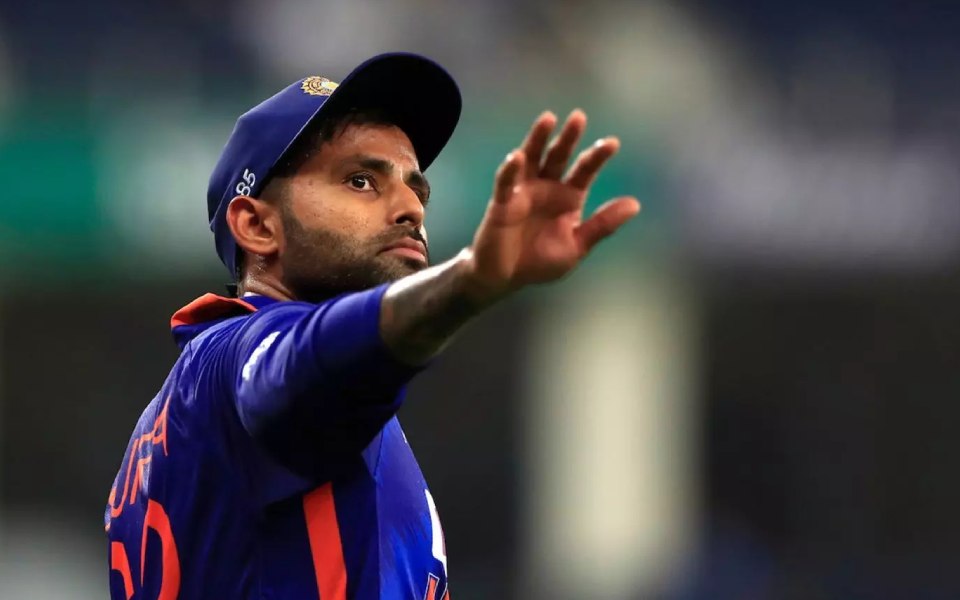
Dubai: Flamboyant middle-order batter Suryakumar Yadav has been named the captain of the ICC men's T20I Team of the Year, which also includes three more Indians in opener Yashasvi Jaiswal, spinner Ravi Bishnoi and left-arm pacer Arshdeep Singh.
The ICC Team of the Year recognizes 11 outstanding individuals who have impressed throughout the year with the bat, ball, or their all-round exploits.
Suryakumar found a place in the side for a second straight year and is in the running for T20I men's Cricketer of the Year. The right-handed strokemaker from Mumbai had a solid 2023.
His first innings of just seven to start the year against Sri Lanka was a mere speed bump in another prolific year, as he made scores of 51 (36) and 112 not out (51) in the next two matches. Consistent scoring in 20s to 40s continued, before an innings of 83 (44) against the West Indies in Providence proved his class. He ended the series against the West Indies with a knock of 61 (45) in Florida.
Surya also became India captain with Rohit Sharma taking a break in the back end of the year.
He made half-centuries against Australia (80 off 42 balls) and South Africa (56 from 36 balls), before posting a 100 against the Proteas off just 56 balls in their final T20I of the year in Johannesburg.
Besides the Indian quartet, the 11-member team also has England's Phil Salt as Jaiswal's opening partner, West Indies' Nicholas Pooran as wicket-keeper, Mark Chapman of New Zealand, Zimbabwe's Sikandar Raza, Uganda all-rounder Alpesh Ramjani, Iraland's Mark Adair and Richard Ngarava of Zimbabwe. Among women, off-spinner Deepti Sharma is the lone Indian to find a place in the 11-member side to be led by Sri Lanka's Chamari Athapaththu. The women's side features four Australians -- Beth Mooney (wk), Ellyse Perry, Ash Gardner and Megan Schutt, two from England in Nat Sciver-Brunt and Sophie Ecclestone, Laura Wolvaardt of South Africa, West Indies' Hayley Matthews and Amelia Kerr of New Zealand.
A mixture of youth and experience make up the ICC Men's T20I Team of the Year 2023 🙌
— ICC (@ICC) January 22, 2024
Details ➡️ https://t.co/BWgwdpaspp pic.twitter.com/2uztdSgsJE
Let the Truth be known. If you read VB and like VB, please be a VB Supporter and Help us deliver the Truth to one and all.
T'gana RTC strike: Talks between govt, employees successful

Hyderabad (PTI): Talks between employees of Telangana State Road Transport Corporation (RTC) who were on strike and the state government concluded successfully on Friday as the government agreed to the key demands of the workmen.
Following a day-long marathon of talks between the leaders of the employees' Joint Action Committee (JAC) and the cabinet sub-committee, the government announced after midnight that it acceded to the demands, including a merger of RTC with the government, 11 per cent pay revision and elections to the employees' unions.
A committee comprising officials and employee leaders would be appointed over the merger of RTC with the government, it said.
The RTC management has also agreed to address the remaining issues as well, an official release said.
The employees would call off their strike and the RTC buses would hit the roads shortly, it said.
The employees had been on an indefinite strike since April 22 over a series of demands, including the merger of RTC with the government.
Earlier in the day, a driver of the RTC, who attempted suicide on April 23 during the strike, died at a hospital here in the early hours of Friday.
Shankar Goud, a 55-year-old driver, set himself ablaze by pouring petrol at Narsampet in Warangal district when the employees were staging a protest on Thursday in support of their demands.
Goud suffered serious burns, was initially admitted to a state-run hospital in Warangal, and later shifted to a super-speciality hospital in Hyderabad for advanced treatment.
"He succumbed (to injuries) at about 1.30 am on Friday," a senior official said.
The driver’s body was taken to his relative’s village, Muttojipet in Warangal district, for funeral rites.
Tension prevailed in Muttojipet as his family members and RTC employees attempted to take the body to the Narsampet bus station, where he worked, to enable his colleagues to pay their last respects. However, police did not permit this, citing law-and-order concerns.
This led to a deadlock before the funeral could proceed.
Union Minister Bandi Sanjay Kumar criticised the Telangana government for not allowing the body to be taken to the Narsampet bus station.
Kumar, Minister of State (Home), visited Muttojipet village in Warangal district, where the funeral was held, and paid homage to Goud.
“They (family members) want to take the body to the bus depot for five minutes. Is the RTC bus depot in Pakistan or Bangladesh? They are emotionally attached to taking the body there. The government is hurting sentiments and creating fear among RTC employees,” Kumar told reporters.
He also expressed anger at the police for not allowing the body to be taken to the bus station and staged a protest, according to a release from his office.
RTC employees and BJP workers attempted to take the mortal remains in an ambulance to Narsampet, but were stopped by the police.
Later, after discussions with the police, the family members and RTC employees agreed to conduct the funeral in the village.
Sanjay Kumar, stating he would abide by the family’s decision, left the village after the funeral was conducted there.
Transport Minister Ponnam Prabhakar said an ex gratia of Rs 10 lakh, a house, and a government job would be provided to the kin of Goud.
Chief Minister A Revanth Reddy expressed shock over the employee’s death and conveyed deep condolences to the grieving family, according to the release.
The RTC employees’ JAC had earlier announced an agitation programme from April 24 to 29, including silent marches and submission of memorandums to MLAs and other leaders.