Tejaswin Shankar wins bronze, becomes first Indian to win medal in CWG high jump
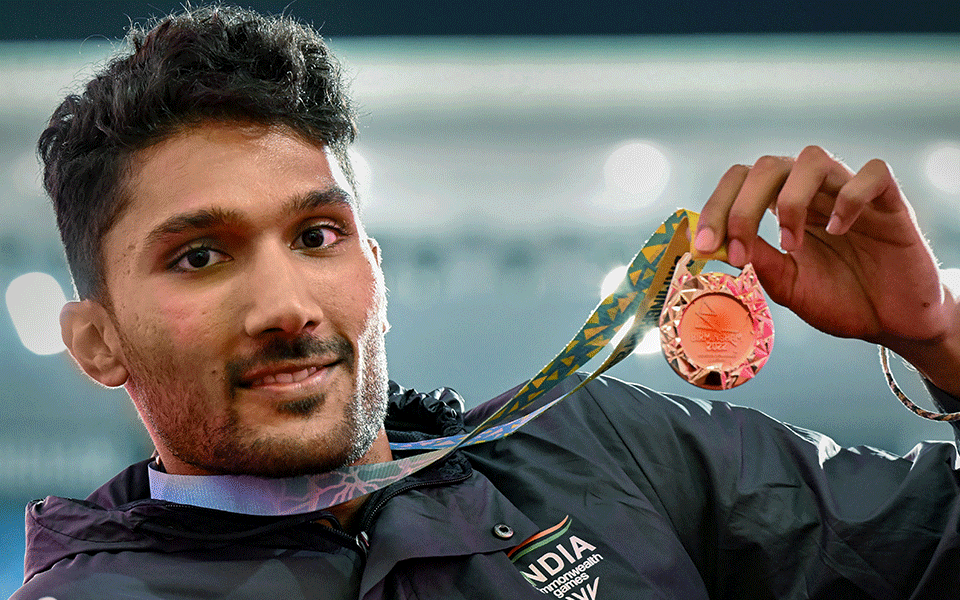
Birmingham (PTI): A last minute addition to the athletics team, Tejaswin Shankar on Wednesday became the first Indian to win a men's high jump medal in the Commonwealth Games as he clinched a bronze in the final here.
The national record holder cleared 2.22m to finish third on countback. Donald Thomas of Bahamas and England's Joel Clarke-Khan also cleared 2.22m but they needed more than one attempt to do it while Shankar was successful in single try.
In women's shot put final, Manpreet Kaur finished 12th and last with a disappointing best throw of 15.69m.
The 23-year-old Shankar could not soar over 2.25m in two attempts. He then went for 2.28m in his third and final attempt in a bid to win a silver but failed.
Before Shankar, the best position an Indian had achieved in men's high jump in CWG was by Bhim Singh who cleared 2.06m in the 1970 edition in Edinburgh.
"I had a long (US) collegiate season and started jumping in January but getting a bronze here is like a dream come true and I'm just happy to take something back home with me," an elated Shankar said.
Shankar had finished sixth in the 2018 Gold Coast edition with a best jump of 2.24m.
Shankar, who was added in the Indian athletics squad on the orders of Delhi High Court, has a season's best of 2.27m and personal best of 2.29m.
Hamish Kerr of New Zealand won the gold while Australia's Brandon Starc clinched the silver. Both cleared 2.25m but could not soar over 2.28m but the Kiwi won the gold on count back.
"I've been seeing these guys (Hamish Kerr and Brandon Starc) on TV all the time so just to share the podium with them is spectacular. This is my first feather in my cap so I just want things to move forward from here," he added
On July 22, Shankar was cleared to compete at the Commonwealth Games after the organisers accepted his entry on the request of Indian Olympic Association (IOA), ending a month-long drama surrounding his participation.
The organisers had initially rejected Shankar's late entry but the IOA later got confirmation from the Commonwealth Games Federation (CGF) and Birmingham CWG organisers about acceptance of his entry after a Delegate Registration Meeting (DRM).
Shankar had petitioned the Delhi High Court after he was not selected for the CWG despite achieving the qualifying standard set by the AFI.
The national federation later told the Delhi HC that Shankar has been included in the Indian athletics team in place of 4x400m relay team member Arokia Rajiv, who was named in the original squad.
Initially, the AFI had requested the IOA to increase its quota to accommodate more athletes. The IOA, in turn, had requested the CWG organisers in this regard.
Shankar had filed a petition at the Delhi High Court challenging the decision of the AFI to exclude him from the team, contending that he reached the qualification guidelines of the AFI by jumping 2.27m at the NCAA Championships in USA, where he is studying.
Let the Truth be known. If you read VB and like VB, please be a VB Supporter and Help us deliver the Truth to one and all.
Cristiano Ronaldo scores his 100th Saudi Pro League goal
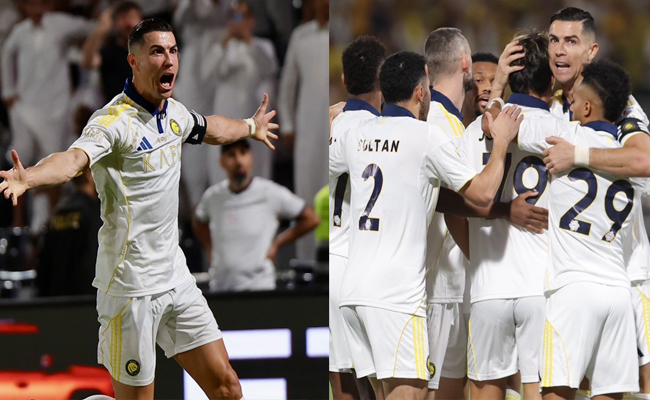
Riyadh (AP): Cristiano Ronaldo scored his 100th Saudi Pro League goal as Al-Nassr beat Al-Shabab 4-2 to move five points clear at the top of the table.
The 41-year-old forward converted a Sadio Mané cross at the near post with 15 minutes remaining to record the 971st goal of his career on Thursday. It was also his 26th league goal of the season.
“Ronaldo is always dangerous going forward and we saw that again today,” Al-Nassr coach Jorge Jesus said.
João Félix, signed from Chelsea in July, scored three goals for the league leaders.
The win took Al-Nassr to 82 points from 32 games, five ahead of Al-Hilal, which has three matches, one more than Nassr, left to play. Al-Hilal meets Al-Kholood on Friday and faces Nassr on Tuesday in what could be a title decider against its Riyadh rival.
“Now we have a derby match against our rival, which is a difficult encounter,” Jesus said.
“We are fully aware of its importance, and we are dealing with it with complete focus as we know that small details could decide the result.”
Ronaldo, a five-time Ballon d'Or winner, has yet to secure a major trophy in Saudi Arabia since signing with Al-Nassr in December 2022.