Virat Kohli retains top spot in ICC rankings
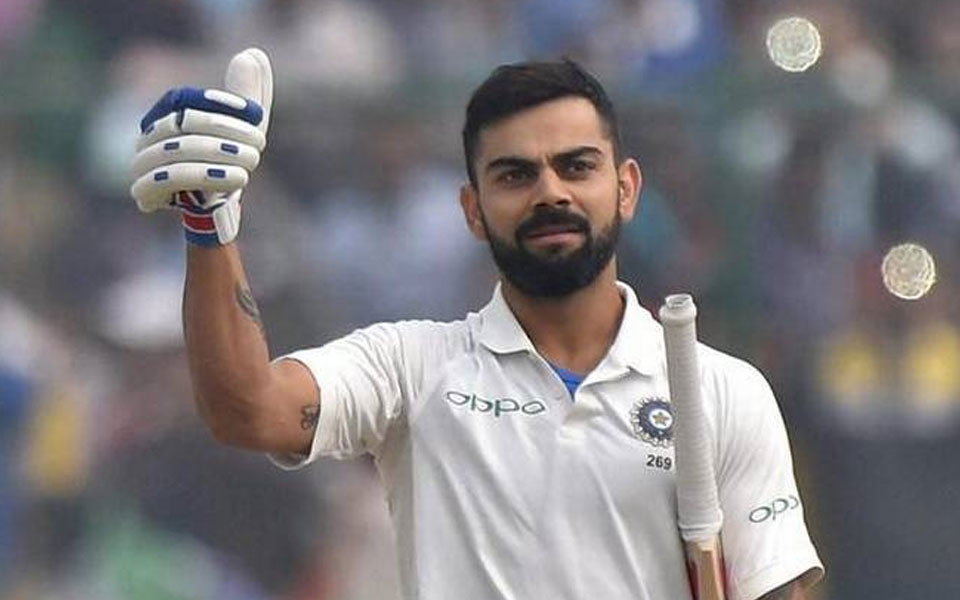
Dubai, Sep 3 : The Indian skipper Virat Kohli retained his number one spot in the latest International Cricket Council (ICC) Test batsmen rankings with a career-high 937 rating points, despite the defeat in the fourth Test against England.
Although India lost the fourth Test by 60 runs and conceded an unassailable 3-1 lead to England in the five match Test series, Kohli's 46 and 58 in the two innings helped him retain the top spot.
Kohli, who has scored 544 runs in his eight innings this series, is 11th on the list of best ever in terms of rating points, just one adrift of a group of four -- Gary Sobers, Clyde Walcott, Vivian Richards and Kumar Sangakkara, an ICC statement said on Monday.
Similarly, Cheteshwar Pujara stayed at the sixth position but his unbeaten 132, which helped India take the first innings lead, has lifted him from 763 to 798 points.
India fast bowler Mohammad Shami progressed back to the top 20 as his six-wicket match haul has lifted him three places to 19th position among bowlers, while his fellow fast bowler Ishant Sharma's four wickets saw him move up one place to the 25th position.
Jasprit Bumrah continued the strong start to his Test career, moving to a career-best 487 points while retaining the 37th position after his fifth Test.
Among others, England all-rounder Sam Curran made quick gains in the ICC Test Player Rankings while spinner Moeen Ali also moved up after the Southampton Test.
The 20-year-old Curran moved up 29 places to the 43rd position among batsmen after producing crucial knocks of 78 and 46 in his fourth Test match.
The left-hander, son of former Zimbabwe cricketer Kevin Curran and younger brother of England player Tom Curran, also gained 11 places to reach the 55th place in the bowlers' list and 15th position among all-rounders after gaining 27 slots.
Player of the match Ali's haul of nine wickets helped him move up three places to the 33rd position with a huge gain in rating points.
The off-spinner, who grabbed five for 63 and four for 71 in the two innings, gained 66 points to reach 543 points in bowling, while also gaining one slot to reach seventh place among all-rounders.
Buttler gained 15 slots to reach a career-best 32nd position on the batsmen's list and 584 rating points, just five behind England all-rounder Ben Stokes, who has also gained three places to reach 29th position. Opener Keaton Jennings is another one to gain, moving up four places to 86th position on the list for batsmen.
Let the Truth be known. If you read VB and like VB, please be a VB Supporter and Help us deliver the Truth to one and all.
Riyan Parag likely to be fined 25 percent of match fees for vaping inside dressing room
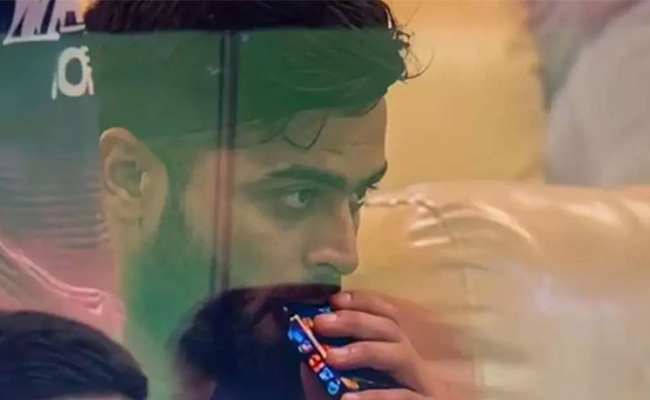
New Delhi (PTI): Rajasthan Royals captain Riyan Parag is set to be fined 25 per cent of his match fee for bringing the game into "disrepute" after being caught vaping on camera during the IPL game against Punjab Kings in Mullanpur.
Parag's actions during the Royals' chase on Tuesday night drew condemnation on social media.
PTI has learned that on field umpires Tanmay Srivastava and Nitin Menon had not reported the matter to match referee Amit Sharma right after the game. They only did that after seeing visual proof and Sharma found Parag guilty for a code of conduct breach as per the IPL guidelines.
The Level 1 offences carries 25 per cent deduction from match fees and one demerit point.
"He is set to be fined a portion of his match fees and a demerit point for a Level 1 offence," said an IPL source.
The Indian government had banned e-cigarettes back in 2019, prohibiting their production, sale and distribution. As per the law, the offender faces imprisonment up to one year and/or a Rs one lakh fine for a first time offence.
"Article 2.21 of IPL Code of Conduct is intended to cover all types of conduct that bring the game into disrepute and which is not specifically and adequately covered by the specific offences set out elsewhere in this Code of Conduct, including Article 2.20," the IPL Code of Conduct states.
"By way of example, Article 2.21 may (depending upon the seriousness and context of the breach) prohibit, without limitation, the following: (a) public acts of misconduct; (b) unruly public behaviour; and (c) inappropriate comments which are detrimental to the interests of the game.
"When assessing the seriousness of the offence, the context of the particular situation, and whether it was deliberate, reckless, negligent, avoidable and/or accidental, shall be considered.
"Further, the person lodging the Report shall determine where on the range of severity the conduct lays (with the range of severity starting at conduct of a minor nature (and hence a Level 1 Offence) up to conduct of an extremely serious nature (and hence a Level 4 Offence)."
Since it is a Level 1 offence there was no need for a hearing.
Parag, who has not had the best of times with the bat this IPL, was seen inhaling an e-cigarette, also known as vaping, in the dressing room during the live broadcast of their game against Punjab Kings. Royals won the game to end Kings' unbeaten run in the tournament.
This is not the first controversy to hit the Royals this season. Earlier this month, team manager Romi Bhinder was fined Rs one lakh for breaching PMOA protocol after being found using his phone in the dugout.
IPL and BCCI officials involved in the conduct of the IPL termed it as a careless act in the age of social media and prying TV cameras.
Royals next host Delhi Capitals at home on Friday night.