Virat Kohli withdraws from first two Tests against England; Patidar, Sarfaraz in contention
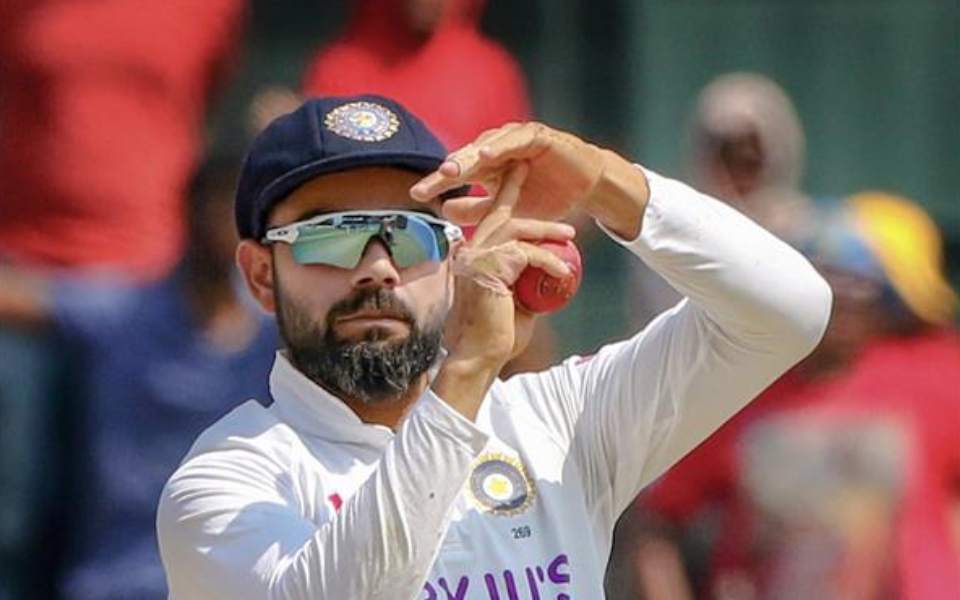
New Delhi, Jan 22: India's batting mainstay Virat Kohli has pulled out of the first two Tests against England due to personal reasons which "demand his presence and undivided attention", the BCCI said on Monday.
The BCCI urged the fans and media to refrain from speculating about the exact reason for his forced break before the five-match series begins in Hyderabad on January 25. The Board said it will name a replacement for the star batter soon.
"Virat Kohli has requested the Board of Control for Cricket in India (BCCI) to be withdrawn from the first two Tests of the upcoming IDFC First Bank Test series against England, citing personal reasons," BCCI secretary Jay Shah said in a statement.
The BCCI also said that Kohli has discussed his decision with skipper Rohit Sharma and the team management.
"Virat has spoken to captain Rohit Sharma, the team management and the selectors and has emphasized that while representing the country has always been his top priority, certain personal situations demand his presence and undivided attention," the release further stated.
Shah also said that BCCI completely backs its star player and has faith in the team and its ability to get results even without its best batter.
"The BCCI respects his decision and the Board and team management has extended its support to the star batter and is confident in the abilities of the remaining squad members to step up and deliver commendable performances in the Test series," the secretary said.
He also urged everyone to respect Kohli's privacy.
"The BCCI requests the media and fans to respect Virat Kohli's privacy during this time and refrain from speculating on the nature of his personal reasons.
"The focus should remain on supporting the Indian cricket team as they embark on the upcoming challenges in the Test series," Shah said.
It has been learnt that both Shah and chairman of selectors Ajit Agarkar were kept in loop about the possibility of Kohli needing a break at some point during the England series.
Recently, Kohli also skipped the first T20I game against Afghanistan due to "personal reasons".
Before that, he had taken a short break, again for personal reasons, during India's tour of South Africa where he missed an intra-squad practice game and flew to London, within days after arriving in South Africa.
The last time he took a break, which was not linked to any injury, during a Test series was a paternity leave in 2021 when his daughter Vamika was born. He only played the first Test of that series.
Rajat Patidar vs Sarfaraz Khan as replacement
It is understood that one among the two heavyweight India 'A' performers -- Rajat Patidar of Madhya Pradesh and Sarfaraz Khan of Mumbai -- are frontrunners to replace Kohli.
Patidar recently scored 151 against the England Lions in an unofficial Test and Sarfaraz scored a half-ton in the second innings of the same game.
There is talk of including veteran Cheteshwar Pujara in the line-up considering his experience of 20,000 plus first-class runs, including 7000 in Tests.
However, it will be interesting if the current selection committee under Agarkar is ready to look back or move forward.
The batting line-up for first Test will comprise Yashasvi Jaiswal, Rohit Sharma, Shubman Gill, KL Rahul, Shreyas Iyer, Ravindra Jadeja, and KS Bharat (wk).
Let the Truth be known. If you read VB and like VB, please be a VB Supporter and Help us deliver the Truth to one and all.
T'gana RTC strike: Talks between govt, employees successful

Hyderabad (PTI): Talks between employees of Telangana State Road Transport Corporation (RTC) who were on strike and the state government concluded successfully on Friday as the government agreed to the key demands of the workmen.
Following a day-long marathon of talks between the leaders of the employees' Joint Action Committee (JAC) and the cabinet sub-committee, the government announced after midnight that it acceded to the demands, including a merger of RTC with the government, 11 per cent pay revision and elections to the employees' unions.
A committee comprising officials and employee leaders would be appointed over the merger of RTC with the government, it said.
The RTC management has also agreed to address the remaining issues as well, an official release said.
The employees would call off their strike and the RTC buses would hit the roads shortly, it said.
The employees had been on an indefinite strike since April 22 over a series of demands, including the merger of RTC with the government.
Earlier in the day, a driver of the RTC, who attempted suicide on April 23 during the strike, died at a hospital here in the early hours of Friday.
Shankar Goud, a 55-year-old driver, set himself ablaze by pouring petrol at Narsampet in Warangal district when the employees were staging a protest on Thursday in support of their demands.
Goud suffered serious burns, was initially admitted to a state-run hospital in Warangal, and later shifted to a super-speciality hospital in Hyderabad for advanced treatment.
"He succumbed (to injuries) at about 1.30 am on Friday," a senior official said.
The driver’s body was taken to his relative’s village, Muttojipet in Warangal district, for funeral rites.
Tension prevailed in Muttojipet as his family members and RTC employees attempted to take the body to the Narsampet bus station, where he worked, to enable his colleagues to pay their last respects. However, police did not permit this, citing law-and-order concerns.
This led to a deadlock before the funeral could proceed.
Union Minister Bandi Sanjay Kumar criticised the Telangana government for not allowing the body to be taken to the Narsampet bus station.
Kumar, Minister of State (Home), visited Muttojipet village in Warangal district, where the funeral was held, and paid homage to Goud.
“They (family members) want to take the body to the bus depot for five minutes. Is the RTC bus depot in Pakistan or Bangladesh? They are emotionally attached to taking the body there. The government is hurting sentiments and creating fear among RTC employees,” Kumar told reporters.
He also expressed anger at the police for not allowing the body to be taken to the bus station and staged a protest, according to a release from his office.
RTC employees and BJP workers attempted to take the mortal remains in an ambulance to Narsampet, but were stopped by the police.
Later, after discussions with the police, the family members and RTC employees agreed to conduct the funeral in the village.
Sanjay Kumar, stating he would abide by the family’s decision, left the village after the funeral was conducted there.
Transport Minister Ponnam Prabhakar said an ex gratia of Rs 10 lakh, a house, and a government job would be provided to the kin of Goud.
Chief Minister A Revanth Reddy expressed shock over the employee’s death and conveyed deep condolences to the grieving family, according to the release.
The RTC employees’ JAC had earlier announced an agitation programme from April 24 to 29, including silent marches and submission of memorandums to MLAs and other leaders.