Women's T20 WC: New Zealand thrash India by 58 runs as skipper does star turn
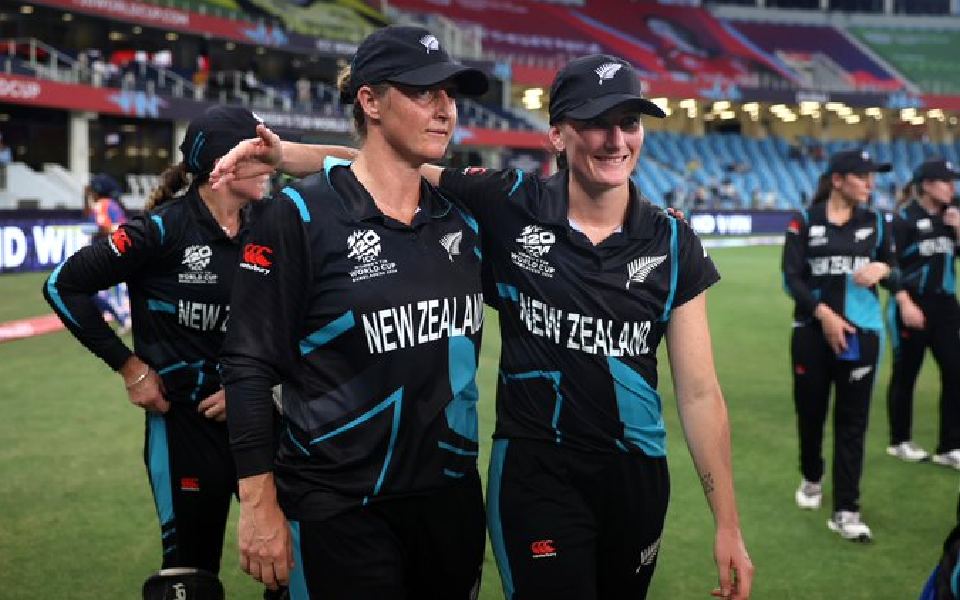
Dubai, Oct 4: A completely out of sorts India were trumped by opposition skipper Sophie Devine's flamboyant batting and tactical astuteness as New Zealand powered to 58-run win in a lopsided Women's T20 World Cup game here on Friday.
The 'White Ferns' also put an end to their 10-match losing streak with their biggest win against India in T20Is.
On a pitch which was extremely difficult for batting, Devine's power-packed unbeaten 57 off 36 balls took New Zealand to an above-par 160 for 4 in 20 overs.
The 35-year-old Kiwi legend then used her slow bowlers to first choke the 'Women in Blue' and then asked her seamers to take pace off deliveries blowing the opposition for a meagre 102 in 19 overs.
The difference between two sides was brute power, a mandatory requirement on such surfaces, which Devine and her two openers Suzie Bates and Georgia Plimmer possessed. For India, most of their batters didn't have enough muscle to even clear the 30-yard circle.
The game for all practical reasons was won and lost in the Powerplay. While Bates (27 off 24 balls) and young Plimmer (34 off 23 balls) added 55 in the first six overs, India lost their three potential game-changers, Shafali Verma (2), Smriti Mandhana (12) and skipper Harmanpreet Kaur (15) in the Powerplay for only 43 runs.
The best part about Devine was that the batter in her understood what the skipper required to do. She started with left-arm spinner Eden Carson (2/34 in 4 overs) from one end and Shafali, who is never comfortable if pace is taken off deliveries, closed her bat face and a simple return catch lobbed to the bowler.
Mandhana, India's best and most consistent batter over the past few years, also tried to get going and was holed out in the deep while seamer Rosemary Mair (4/19 in 4 overs) bowled one that swung in to hit Harmanpreet on the pads.
Such was the slowness that even Lea Tahuhu (3/15 in 4 overs) had Jemimah Rodrigues trying to chip it over mid-on but the stroke lacked power and Richa Ghosh chipped one to mid-off as the Indian challenge fizzled out in a jiffy.
Earlier, on a sticky track where stroke-making was difficult, Devine muscled her way with seven boundaries as most Indian bowlers sans Deepti Sharma (0/45 in 4 overs) used the tackiness of the track to good effect for the better part of the innings.
Devine, who dropped herself in the batting order, displayed excellent footwork to dismantle the length bowled by Indian bowlers with the standout shot being a bent on knee cover-drive off Shreyanka Patil to complete her fifty.
One thing that stuck out like a sore thumb was poor ground fielding from India save Rodrigues, who was brilliant as usual in the deep.
Veteran Bates and young Plimmer rode their luck and some shoddy fielding from India to race to 55 at the end of the Powerplay.
However once leg-spinner Asha Sobhana (1/22 in 4 overs) started operating just after Powerplay, she immediately put brakes but once Devine started chancing her arms at the death, Indian bowlers were left with little option.
Let the Truth be known. If you read VB and like VB, please be a VB Supporter and Help us deliver the Truth to one and all.
Defeated delimitation bill in Parliament to defend idea of India: Cong leader Rahul Gandhi
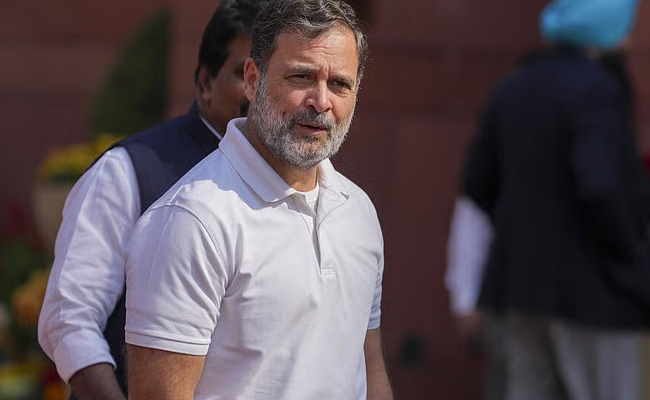
Chennai (PTI): Congress leader Rahul Gandhi on Saturday said the opposition parties defeated the delimitation bill in the Parliament on Friday to defend the "idea of India."
Addressing a poll rally at Ponneri here, he said the BJP-led government at the Centre brought a new bill on April 16, and said they were trying to pass the women's bill, which he said was passed in 2023.
"In the so-called Women's Bill, delimitation was hidden. The idea was to reduce Tamil Nadu's representation in the Union of India... the delimitation move by BJP was to weaken the strength of southern states, small states, north eastern states," he alleged.
"We defeated in Parliament, a bill in which delimitation was hidden; we defeated it to defend the idea of India."
Rahul added that India that is Bharat, is a union of states, and every single state should have a voice, be free to express itself, and protect its tradition.