World Anti-Doping Agency imposes 4-year ban on Russia
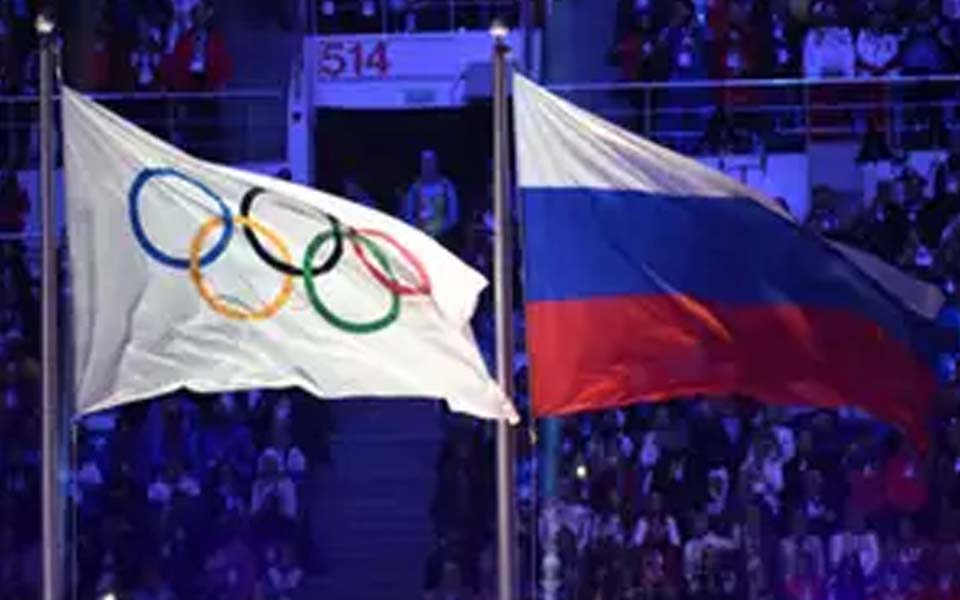
Lausanne, Dec 9: The Russian flag and national anthem were banned from next year's Tokyo Olympics and other major sports events for four years on Monday.
Russia's hosting of world championships in Olympic sports also face being stripped after the World Anti-Doping Agency executive committee approved a full slate of recommended sanctions as punishment for state authorities tampering with a Moscow laboratory database.
Russian athletes will be allowed to compete in major events only if they are not implicated in positive doping tests or if their data was not manipulated, according to the WADA ruling.
Still, it is unclear how the ruling will affect Russian teams taking part in world championships such as soccer's World Cup.
Russia's anti-doping agency can appeal the decision to the Court of Arbitration for Sport within 21 days.
Legal fallout from the WADA ruling seems sure to dominate preparations for the Tokyo Olympics, which open on July 24.
Evidence shows that Russian authorities tampered with a Moscow laboratory database to hide hundreds of potential doping cases and falsely shift the blame onto whistleblowers, WADA investigators and the International Olympic Committee said last month.
Flagrant manipulation of the Moscow lab data was an insult to the sporting movement worldwide, the IOC said last month.
However, WADA's inability to fully expel Russia from the Tokyo Olympics and 2022 Beijing Winter Games frustrated the doping watchdog's vice president.
I'm not happy with the decision we made today. But this is as far as we could go," said Linda Helleland, a Norwegian lawmaker who serves on WADA executive committee and has long pushed for a tougher line against Russia.
This is the biggest sports scandal the world has ever seen. I would expect now a full admission from the Russians and for them to apologize on all the pain all the athletes and sports fans have experienced.
Handing over a clean database to WADA was a key requirement for Russia to help bring closure to a scandal that has tainted the Olympics over the last decade.
Although the IOC has called for the strongest possible sanctions, it wants those sanctions directed at Russian state authorities rather than athletes or Olympic officials.
That position was opposed by most of WADA's athlete commission. It wanted the kind of blanket ban Russia avoided for the 2016 Rio de Janeiro Olympics and the 2018 Pyeongchang Winter Games after a state-run doping program was exposed by media and WADA investigations after Russia hosted the 2014 Olympics in Sochi.
This entire fiasco created by Russia has cheated far too many athletes of their dreams and rightful careers, for far too long, the WADA athlete panel said in a statement ahead of the meeting.
Russia previously signaled it would appeal the ruling. That must be filed by the Russian anti-doping agency, known as RUSADA. That body was declared non-compliant on Monday, 15 months after it was reinstated by WADA in defiance of athlete opposition.
The decision to appeal has been stripped from RUSADA chief executive Yuri Ganus, an independent figure criticizing Russian authorities' conduct on the doping data issue. Authority was passed to the agency's supervisory board after an intervention led by the Russian Olympic Committee.
The ROC on Saturday labeled the expected sanctions as illogical and inappropriate.
Russia has stuck to its claim that deceptive edits in the data were in fact made by WADA's star witness, Grigory Rodchenkov. The former Moscow lab director's flight into the witness protection program in the United States was the subject of an Oscar-winning documentary.
Technical reasons were claimed and debunked by WADA investigators for why the data appeared to have been edited shortly before the delayed handover in January.
Let the Truth be known. If you read VB and like VB, please be a VB Supporter and Help us deliver the Truth to one and all.
Several Gurugram schools receive hoax bomb threats

Gurugram (PTI): Several Gurugram schools received another hoax bomb threat emails on Wednesday morning, prompting police to launch searches on the premises.
Police said the email was sent by the 'Khalistan National Army', with threats issued to Haryana Chief Minister Nayab Singh Saini to declare April 29 as the "40th Khalistan Declaration Day". It also threatened to bomb the Red Fort in Delhi.
Police said it was a hoax as no suspicious items were found after an intensive search.
Several schools, including Shri Ram, Amity, and the HDFC school, received threatening emails at 8.33 am, when classes had already begun, police said.
The school administrations became aware of the threats around 9 am and immediately informed the police, a senior police officer said.
The schools immediately implemented emergency protocols, with many declaring a holiday and asking parents to take their children home safely, the officer said.
A large number of anxious parents gathered outside the schools, as police and bomb squad teams reached the spots and started checks.
"Around 10 schools have approached the police from morning until now over bomb threats. Police teams are alert, and searches are underway on all the premises", the officer said.
As soon as the information about this email was received, police in Gurugram and Delhi swung into action and started investigation.
Schools immediately implemented emergency protocols upon receiving the mail. Many schools declared a holiday and sent messages to parents, asking them to take their children home. Large crowds of parents gathered outside the schools.
The schools were sanitised by sending a bomb disposal squad as well as a dog squad.
A senior police officer said that police teams thoroughly searched the school premises, classrooms, buildings, and surrounding areas. No suspicious objects or explosive materials were found during the investigation.
"Police teams are seriously investigating the entire matter. Cyber experts are being consulted to determine the authenticity of the email, its source, and the identity of the sender", added the officer.
This is the third time since January that schools have received fake bomb threats.
In March, at least a dozen schools in the city received bomb threat emails, which later turned out to be hoaxes.
Similarly, on January 28, as many as 13 schools received hoax bomb threats via email, forcing authorities to evacuate campuses and suspend classes.
Last month, police arrested a Bangladeshi national whose email ID was allegedly used to make a bomb threat for some payment.