You didn’t lose but yet you’ve been defeated: Bajrang after Vinesh bids adieu to wrestling
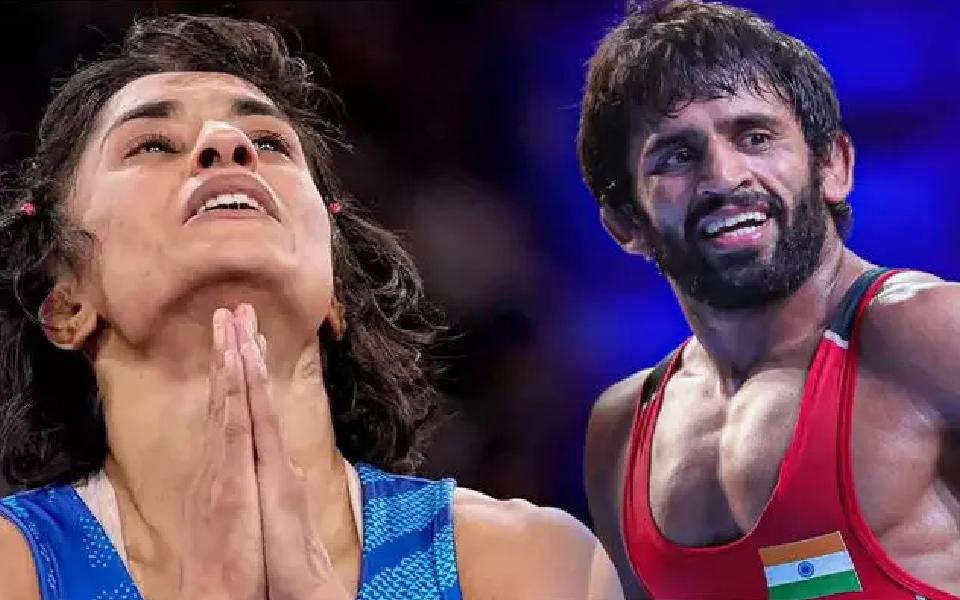
New Delhi, Aug 8: India woke up to another shock on Thursday after a heartbroken Vinesh Phogat announced her retirement from wrestling, prompting an outpouring of support from the sporting community.
The 29-year-old, who was disqualified for being 100gm overweight ahead of her 50kg category gold medal bout in the Olympics on Wednesday, announced her decision to retire on social media, saying she doesn't have the strength to continue anymore.
India’s Tokyo Olympics bronze medal winner Bajrang Punia led the tributes for Vinesh, saying she did not lose yet she has been defeated.
"Vinesh, you did not lose but yet you have been defeated. For us, you will always be a winner and along with being India’s daughter you are India’s pride as well,” he said in a post in Hindi.
Sakshi Malik, the first Indian female wrestler to win an Olympics medal — a bronze at 2016 Rio de Janeiro — said all that has transpired with Vinesh is a "defeat of every daughter of our country".
“Vinesh you were not the one who lost. It's the defeat of every daughter of our country for whom you fought,” Sakshi wrote on 'X'.
"This is a defeat for entire country. The country is with you. As an athlete I salute your struggle and passion," she said.
Dronacharya Awardee coach Mahavir Phogat said she might have taken the decision in the heat of the moment and people close to the wrestler would encourage her to aim for the 2028 Los Angeles Olympics.
"It is true, people lose heart. When she will come, we (I, Bajrang, Gita) will all sit and talk. We will take a decision and convey it. In the heat of the moment, people take such decisions but after some time, we will decide on it,” Mahavir told PTI Videos.
"We will encourage her to play 2028 Olympics. I thank (the) Haryana govt for announcing the reward. As long as I am active, I will be helping the athletes," he said.
Former sports minister Rajyavardhan Singh Rathore called the turn of events as "sad and heart breaking" and expressed solidarity with the ace wrestler.
"A sportsman life has years of struggle, ups and downs, then that important day comes to show the skills and win the game, then if this kind of mistake happens, then it is sad and heart breaking," said former shooter Rathore, who had won a silver medal in Athens Olympics in 2004.
"But I want to say to Vinesh (Phogat) that she is young and should face this challenge and move ahead with a lot of positivity. She should face it. We are all with her, a champion is the who stands after falling."
Geeta Phogat, the 2010 Commonwealth Games gold medallist, said it was "very sad" to see the way Vinesh retired from the sport.
"Sister Vinesh, we will always be we will always be indebted to you for what you have done for the country. Your passion and struggle will be remembered for centuries,” she wrote on 'X'.
"You are a role model for all girls. You saying goodbye to wrestling like this is very sad for the whole family and the whole country."
विनेश आप हारी नही हराया गया हैं, हमारे लिए सदैव आप विजेता ही रहेगी आप भारत की बेटी के साथ साथ भारत का अभिमान भी हो 🫡😭 https://t.co/oRTCPWw6tj
— Bajrang Punia 🇮🇳 (@BajrangPunia) August 8, 2024
विनेश तुम नहीं हारी हर वो बेटी हारी है जिनके लिए तुम लड़ी और जीती।
— Sakshee Malikkh (@SakshiMalik) August 8, 2024
ये पूरे भारत देश की हार है 😭
देश तुम्हारे साथ है। खिलाड़ी के तौर पे उनके संघर्ष और जज्बे को सलाम 🙏🫡@Phogat_Vinesh https://t.co/8W5MpdYUvD
Let the Truth be known. If you read VB and like VB, please be a VB Supporter and Help us deliver the Truth to one and all.
Ordinance issued to increase number of Supreme Court judges from 34 to 38
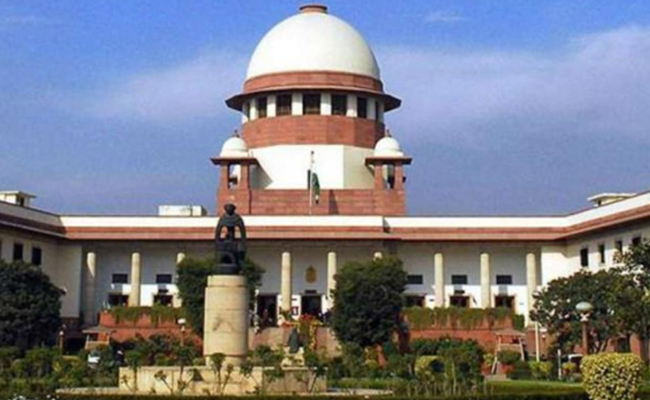
New Delhi (PTI): The government has promulgated an ordinance to increase the strength of the Supreme Court from the present 34 judges to 38, including the Chief Justice of India.
The law ministry notified the ordinance on Saturday, which amended the Supreme Court (Number of Judges) Act, 1956, to increase the sanctioned strength of the top court.
So far, the sanctioned strength of the top court was 34, including the Chief Justice of India (CJI). Now, the number of judges has been increased by four, taking the sanctioned strength to 38.
The top court will now have 37 judges, other than the CJI.
With the apex court having two vacancies at present, and the ordinance coming into force immediately, the Supreme Court Collegium will now have to recommend six names for appointment as judges in the top court.
A bill will be brought in the Monsoon Session of Parliament to convert the ordinance – an executive order – into a law passed by Parliament.
The Union Cabinet had cleared a draft bill on May 5 to increase the number of apex court judges.
The strength of the Supreme Court was last increased from 30 to 33 (excluding the CJI) in 2019.
The Supreme Court (Number of Judges) Act, as originally enacted in 1956, put the maximum number of judges (excluding the CJI) at 10.
This number was increased to 13 by the Supreme Court (Number of Judges), Amendment Act, 1960, and to 17 by another amendment to the law.
The Supreme Court (Number of Judges) Amendment Act, 1986, augmented the strength of judges from 17 to 25, excluding the CJI.
A fresh amendment in 2009 further increased the strength from 25 to 30.
Article 124(3) of the Constitution lists the qualifications required to become a Supreme Court judge.
An Indian citizen who has either served as a high court judge for at least five years, or as an advocate for 10 years, or is a distinguished jurist, can be appointed to the top court.
The strength of the Supreme Court is increased based on the recommendations of the CJI, who writes to the Union law minister. After consulting the finance ministry, the Department of Justice under the law ministry moves the Cabinet with a draft bill.