15 killed, over 400 missing after deadly fire in Rohingya refugee camp in Bangladesh: UN official
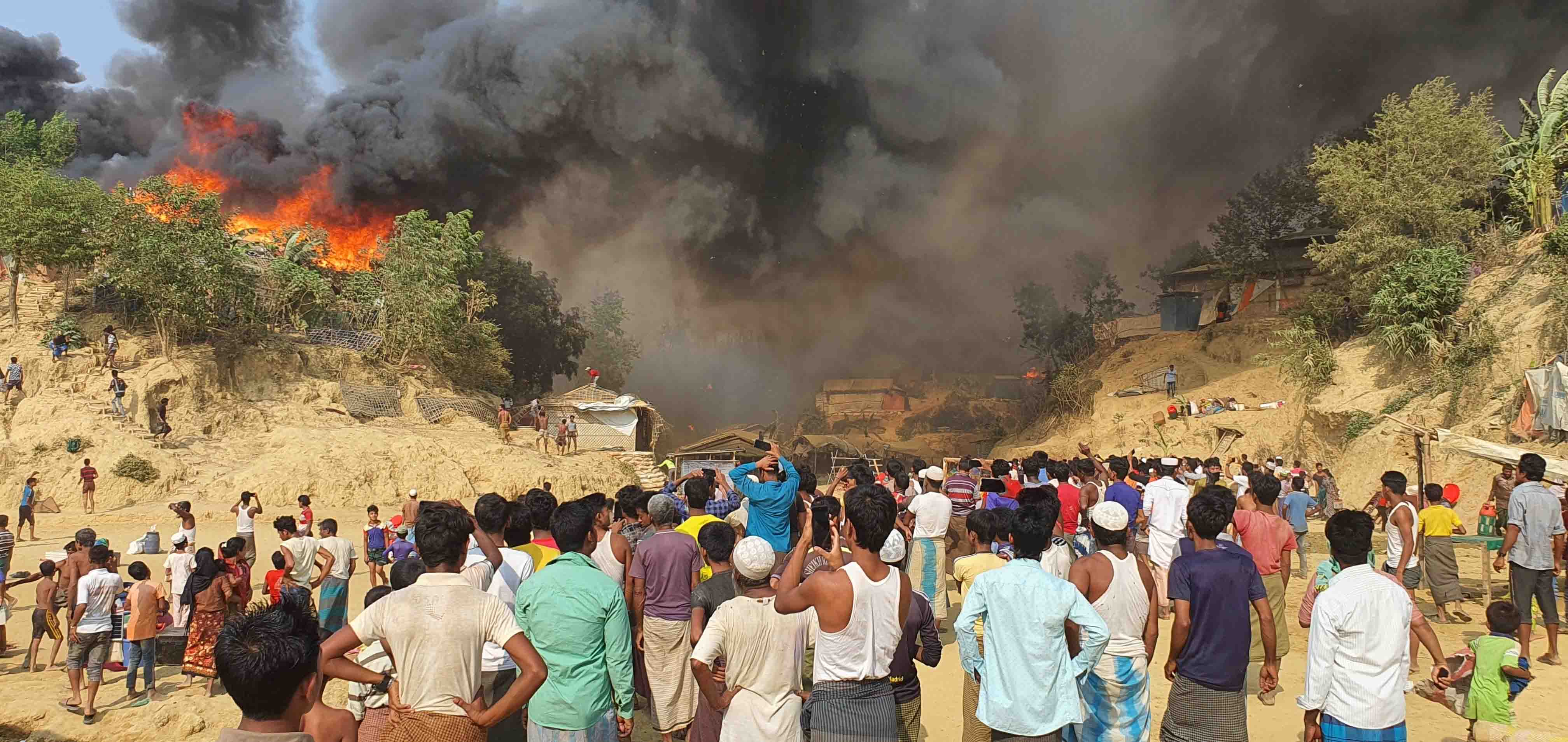
Dhaka, Mar 23: At least 15 people were killed and 400 were reported missing after a massive overnight fire swept through a crammed Rohingya camp in Bangladesh's southeastern Cox's Bazar district, destroying thousands of shelters housing over 45,000 people, a senior UN official said on Tuesday.
Rescuers on Tuesday recovered the 15 bodies. Hundreds of people injured in the fire are being treated at nearby hospitals.
"We have so far confirmed 15 people dead, 560 injured, 400 are still missing and at least 10,000 shelters have been destroyed," UN Refugee agency (UNHCR) spokesman Johannes van der Klaauw said virtually joining a news briefing in Geneva from Dhaka.
We still have 400 people unaccounted for, maybe somewhere in the rubble as the blaze destroyed at least 10,000 provisional shelters which were makeshift tarp and bamboo-made abode of over 45,000 people.
"What we have seen in this fire is something we have never seen before in these camps. It is massive. It is devastating," Klaauw added.
Bangladesh officials initially reported seven deaths as searches were underway. Alongside the shelters, the fire destroyed six makeshift health facilities, including four bigger hospitals.
The Bangladesh authorities are yet to confirm the death toll.
But the government's Deputy Chief Refugee Commissioner Shamsud Douza said it was the biggest fire since the influx of Rohingya from Myanmar in August 2017 following a brutal military crackdown back home.
He said an official investigation was launched to ascertain the cause of the fire.
Bangladesh is hosting over 1.1 million Rohingya refugees in Cox's Bazar, who fled Myanmar facing military crackdown, often considered as "ethnic cleansing" by many rights groups.
The fate of the refugees' return to their country remains uncertain as Myanmar's military seized power last month detaining the country's de-facto leader Aung San Suu Kyi.
The military coup took place at a time when Bangladesh was spearheading a desperate campaign for safe return of some 1.1 million Rohingyas.
Let the Truth be known. If you read VB and like VB, please be a VB Supporter and Help us deliver the Truth to one and all.
Indian startup's 'Drishti' satellite launched aboard SpaceX rocket
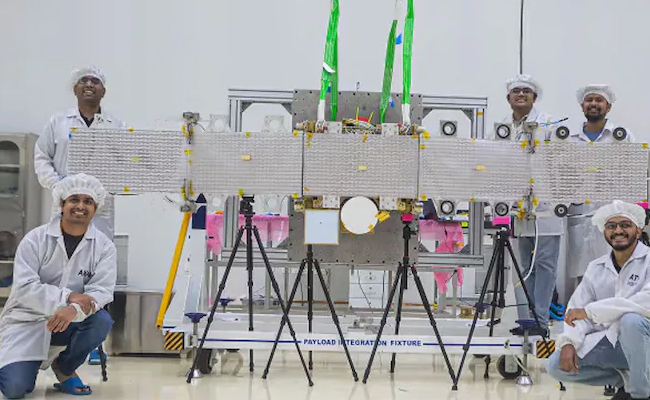
New Delhi (PTI): Bengaluru-based space start-up GalaxEye's Mission Drishti satellite was launched on Sunday aboard SpaceX's Falcon 9 rocket from California.
Mission Drishti is the world's first OptoSAR satellite, integrating electro-optical (EO) and synthetic aperture radar (SAR) sensors into a single operational platform, according to the company.
While EO sensors capture high-resolution images during sunlight and clear skies, SAR sensors provide all-weather and all-time images, using radar pulses.
In a statement, Suyash Singh, founder and CEO of GalaxEye, said, "With the satellite (Mission Drishti) now successfully in orbit, our immediate focus is on completing its commissioning. As we move through this phase, we are already witnessing strong global interest in the differentiated datasets enabled by our OptoSAR payload."
The satellite will help address long-standing limitations of conventional systems and enable more reliable and consistent data acquisition across diverse environmental conditions, the company said.
As a dual-use Earth observation satellite, the mission will support use cases across defence, agriculture, disaster management, maritime monitoring, and infrastructure planning.
The satellite is also expected to complement India's broader initiatives, including the 29 active Earth Observation satellites outlined in ISRO's recent annual report.
The launch came after five years of indigenous research and development, and extensive environmental testing and performance validation of the Mission Drishti.
In a statement, Lt Gen AK Bhatt (Retd), director general of Indian Space Association (ISpA), said, "GalaxEye has achieved what only a few global players have, which is seamlessly combining optical and SAR capabilities on a single platform to enable persistent, all-weather intelligence."
What stands out is not just the technology, but its broader impact on how downstream applications will increasingly define value in the space economy, particularly in Earth observation, where timely, decision-grade insights are critical," he added.
ISpA is the premier industry association of space and satellite companies in the country.
Union Minister Jitendra Singh also took note of the Mission Drishti launch, saying the development marked a significant milestone in India's space journey.
In a post on X, the minister said, "The successful launch of the world's first OptoSAR satellite, and the largest privately-built satellite in the country, reflects the immense potential of our young innovators driving nation-building."
GalaxEye aims to scale up Mission Drishti to a constellation of 10 satellites by 2030, developing a robust and sovereign Earth observation infrastructure for India.