91 killed, hundreds injured in clashes between protesters and ruling party supporters in Bangladesh
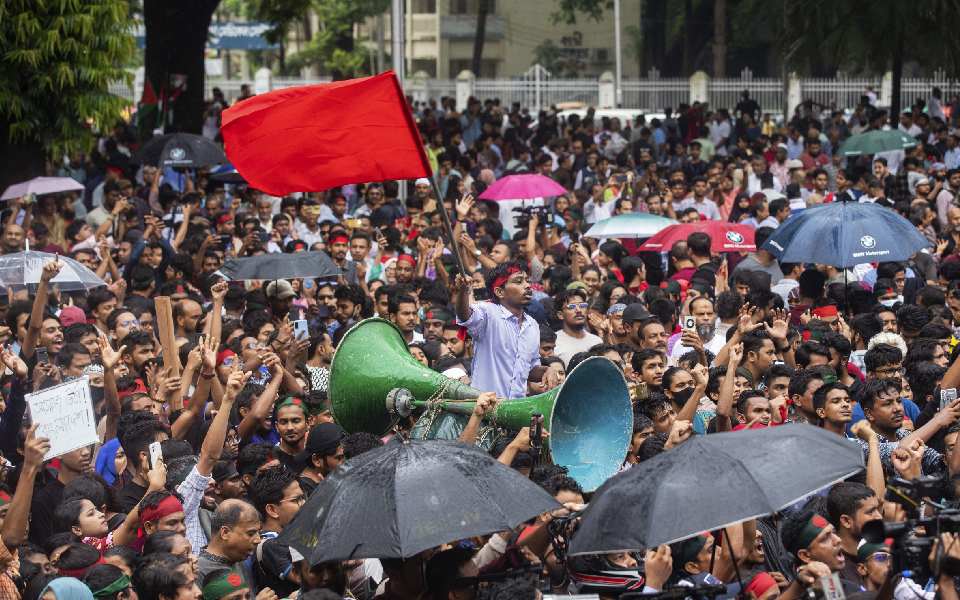
Dhaka, Aug 4: At least 91 people, including 14 policemen, were killed and hundreds injured on Sunday in fierce clashes between protesters demanding Prime Minister Sheikh Hasina's resignation and the ruling party supporters in different parts of Bangladesh, forcing authorities to cut off mobile internet and enforce a nationwide curfew for an indefinite period.
The clashes broke out Sunday morning when protesters attending the non-cooperation programme under the banner of the Students Against Discrimination with the one-point demand of the government's resignation over a job quota system faced opposition from the supporters of the Awami League, Chhatra League, and Jubo League activists.
At least 91 people have been killed in clashes, shootings and counter-chases across the country surrounding the non-cooperation program, leading Bengali-language newspaper Prothom Alo reported.
According to the police headquarters, 14 policemen have been killed across the country. Of them, 13 were killed in Sirajganj's Enayetpur police station. One person was killed in Comilla's Elliotganj, the paper said. More than 300 policemen were injured, it added.
The fresh round of clashes erupted days after over 200 people were killed in violent clashes between the police and mostly student protesters demanding an end to the controversial quota system that reserved 30 per cent of government jobs for relatives of veterans who fought in Bangladesh's War of Independence in 1971. Since then, more than 11,000 people have been arrested.
Officials claimed that today's protests were joined by unidentified people and activists of rightwing Islami Shashontantra Andolon, which erected barricades on several major highways and within the capital city. The protesters attacked the police stations and boxes, ruling party offices and residences of their leaders and burnt several vehicles, they added.
The situation prompted authorities to order a curfew in major cities and small towns across Bangladesh for an indefinite period from 6 PM Sunday, mobilising troops, paramilitary border guards BGB, and the elite anti-crime Rapid Action Battalion alongside police.
The government ordered the shutdown of Meta platforms Facebook, Messenger, WhatsApp and Instagram. The mobile operators were ordered to shut down 4G mobile internet, the paper added.
Meanwhile, Prime Minister Hasina said that those engaging in "sabotage" across the country in the name of protest are not students but terrorists and asked people to suppress them with a firm hand.
"I appeal to the countrymen to suppress these terrorists with a firm hand,” she said.
Hasina called a meeting of the National Committee on Security Affairs - the highest policy-making authority of national security - at Ganabhaban, the paper reported citing sources from the Prime Minister's Office (PMO). The meeting was attended by the chiefs of the Army, Navy, Air Force, police, RAB, BGB, and other top security officers. The meeting came as renewed violence spread to several parts of the country.
The government has announced a three-day general holiday on Monday, Tuesday and Wednesday to ensure public safety amid the ongoing violent protests across the country.
Giving details of casualties, the paper said eight people were killed in Feni, 22 including 13 policemen in Sirajganj, five in Kishoreganj, eight in Dhaka, five in Bogura, three in Munshiganj, four in Magura, three in Bhola, four in Rangpur, three in Pabna, five in Sylhet, three in Cumilla, two in Sherpur and two in Joypurhat. One person was killed in Keraniganj, one in Savar and one in Barisal.
Six Awami League leaders and activists were beaten to death and several others injured in a clash between the ruling party supporters and protesters in Narsingdi, the paper reported.
Citing Dhaka Medical College Hospital sources, the paper said 56 people were brought to the hospital with bullet injuries from Shahbagh, Shanir Akhra, Nayabazar, Dhanmondi, Science Laboratory, Paltan, Press Club and Munshiganj.
In a related development, a group of former senior military generals Sunday asked the government to withdraw the armed forces from the streets and send them back to barracks.
"We urge the government to undertake political initiatives to resolve the ongoing crisis. Do not destroy the good standing of our armed forces by keeping them engaged in a disgraceful campaign," said former army chief Iqbal Karim Bhuiyan, who served as the army chief under Prime Minister Hasina’s government.
Reading out a statement at a media briefing here, he said, "The Bangladeshi armed forces have never faced off with the masses or trained their guns at the chests of their fellow citizens."
Another former army chief, octogenarian general Nuruddin Khan, who also served as the energy minister in Hasina’s past 1996-2001 tenure, was one of those who joined the briefing along with fellow officers, some of them being 1971 Liberation War veterans.
"Time is ripe to immediately take the soldiers to barracks to prepare themselves for any eventuality as the time taken to transition from internal security mode to operational mode takes quite some time,” the statement read.
Most of the shops and malls in Dhaka were closed amid the protest. Hundreds of students and professionals had gathered at Dhaka’s Shahbagh, blocking traffic on all sides.
Protesters had also gathered at the Science Lab intersection of the capital on the first day of the non-cooperation movement. They chanted anti-government slogans.
According to the Daily Star newspaper, several vehicles at Bangabandhu Sheikh Mujib Medical University (BSMMU) were torched on Sunday by unidentified people.
People carrying sticks were seen vandalising private cars, ambulances, motorcycles, and buses on the hospital premises, triggering fear among the patients, their attendants, doctors and staff, the paper said.
Nahid Islam, a coordinator of the anti-government protests, announced said they will stage a demonstration and mass sit-in on Monday to press home their one-point demand.
On Monday, they will unveil Martyrs' Memorial plaques across the country in memory of people killed recently centring the quota reform movement, he said in a statement.
There have been reports of vandalism and arson attacks on police vehicles and government buildings in multiple locations.
In Chattogram, the residences of Education Minister Mohibul Hasan Chowdhury Nowfel and Chattogram City Corporation Mayor Rezaul Karim Chowdhury, as well as the office of AL MP Md Mohiuddin Bachchu were attacked.
In an apparent retaliation, the homes of several Opposition Bangladesh Nationalist Party (BNP) leaders, including Standing Committee member Amir Khosru Mahmud Chowdhury, were targeted.
The BNP and its allies, along with numerous political, professional, and cultural groups have thrown their support behind the student-led movement that had been launched to demand reforms to quotas reserved for government jobs.
Prime Minister Hasina offered to sit for talks on Saturday with the coordinators of the movement. However, they rejected her proposal.
The government leaders earlier claimed that the “peaceful campaign” was hijacked by fundamentalist Jamaat-e-Islami and their student front Islami Chhatra Shibir being backed by ex-premier Khaleda Zia’s BNP.
Let the Truth be known. If you read VB and like VB, please be a VB Supporter and Help us deliver the Truth to one and all.
Bhojshala case: Disputed structure built from remains of pre-existing temples, claims ASI
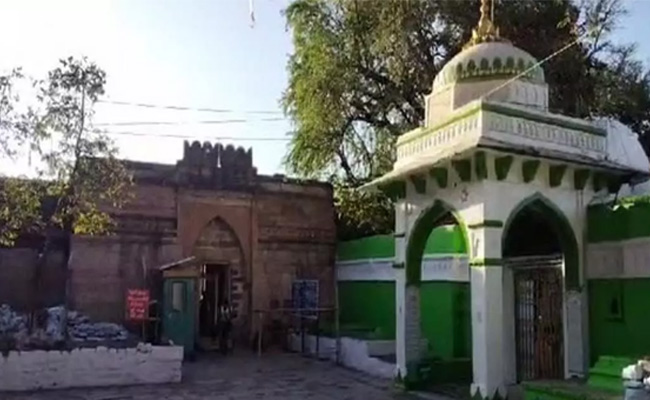
Indore (PTI): The ASI has told the Madhya Pradesh High Court that a massive structure dating back to the Paramara kings' rule existed at the disputed Bhojshala temple-Kamal Maula mosque complex, and the current structure was built from the remains of temples.
The Archaeological Survey of India (ASI) made the claim on Tuesday based on its 98-day scientific survey and over 2,000-page report.
The Hindu community considers Bhojshala a temple dedicated to Vagdevi (Goddess Saraswati), while the Muslim side claims the monument as the Kamal Maula Mosque. The disputed complex is protected by the ASI.
During the hearing before Justices Vijay Kumar Shukla and Alok Awasthi of the HC's Indore bench, Additional Solicitor General Sunil Kumar Jain, representing the ASI, presented a detailed account of the scientific survey conducted two years ago at the complex.
Referring to the ASI's survey report, he said, "Retrieved architectural remains, sculptural fragments, large slabs of inscriptions with literary texts, Nagakarnika inscriptions on pillars, etc, suggest that a large structure associated with literary and educational activities existed at the site. Based on scientific investigations and archaeological remains recovered during the investigations, this pre-existing structure can be dated to the Paramara period."
It can be said that the existing structure was made from the parts of earlier temples, based on scientific investigations, survey and archaeological excavations conducted, study and analysis of retrieved finds, study of architectural remains, sculptures, and inscriptions, art and sculptures, Jain said quoting the report.
Summarising the report, he also drew the court's attention to the fact that the archaeological study identifies that many architectural components, such as pillars and beams, were originally part of temple structures before being repurposed for a mosque.
"The evidence of this transition includes Sanskrit and Prakrit inscriptions that were damaged or hidden, alongside sculptures of deities and animals that were often mutilated or defaced," Jain contended.
The report also states that "all Sanskrit and Prakrit inscriptions are older than the Arabic and Persian inscriptions, indicating that users or engravers of the Sanskrit and Prakrit inscriptions occupied the place earlier".
In light of the Muslim side's earlier objections, the bench wanted to know why there were some discrepancies in the ASI's responses regarding the status of the disputed complex in the cases filed over the years.
The Additional Solicitor General argued that earlier studies of the complex involved only officials, while the current survey involved scientists and the use of advanced technologies such as Ground Penetrating Radar (GPR).
The hearing in the Bhojshala case will continue on Wednesday.
The high court has been regularly hearing four petitions and one writ appeal regarding the religious nature of the Bhojshala temple-Kamal Maula mosque complex since April 6.