A 6.9 magnitude quake in remote Papua New Guinea kills 3 and destroys nearly 1,000 homes
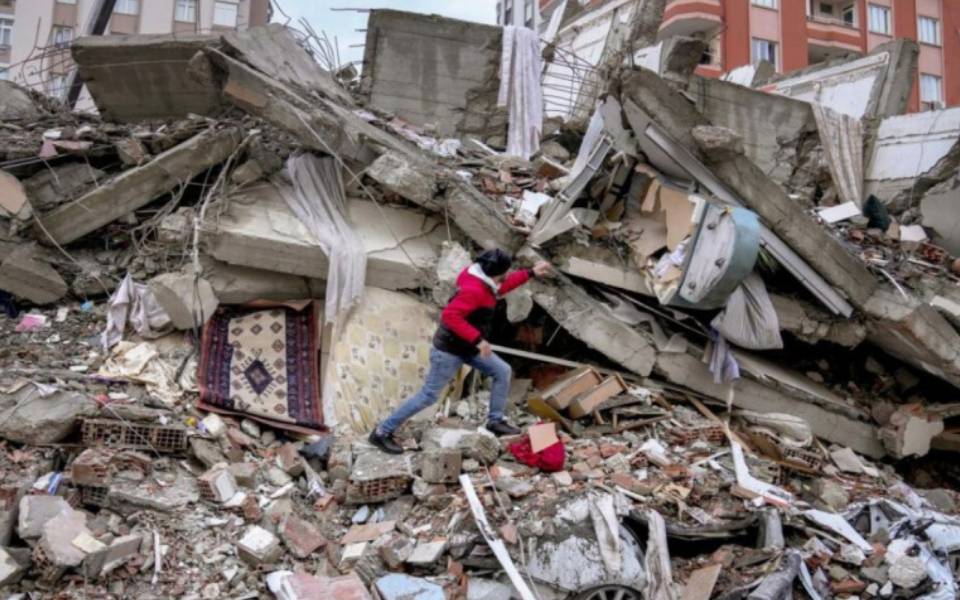
Port Moresby, Mar 25: A magnitude 6.9 earthquake has hit a remote part of western Papua New Guinea killing at least three people and causing extensive damage to around 1,000 homes, officials said.
The quake rocked the East Sepik region at about 6.20 am Sunday (2020 GMT Saturday) near the town of Ambunti, about 470 miles (756 kilometres) northwest of the capital of Port Moresby, and at a depth of 25 miles (about 40 kilometres), according to reports by the Australian Broadcasting Corporation.
East Sepik province Governor Allan Bird posted on Facebook Sunday that initial estimates show the earthquake had destroyed about 1,000 homes in the area which was already "dealing with widespread flooding" from earlier in March.
"The flooding actually covers an area more than 800 kilometres long, and so there's about maybe 60 or 70 villages involved all along the Sepik River," Bird told the ABC on Monday.
Local emergency crews were already active in the region because of the flooding when the earthquake struck.
"The floods weren't their biggest problem. They were confidently dealing with that because it's something they're used to," Bird said. "It was the earthquake that no one was prepared for. That would have caused the most significant damage now."
Bird said shelter, clean water, food and canvases to keep belongings dry were the most immediate pressing needs for the village communities.
Papua New Guinea, a South Pacific island nation located to the north of Australia, was hit with two earthquakes in April last year, including a magnitude 7.0 quake that killed four people in a remote northern part of the country.
A magnitude 7.6 quake that struck a remote area of the island in September 2022 was later found to have killed 21 people.
It is located on the eastern half of the island of New Guinea and sits on the Pacific "Ring of Fire," the arc of seismic faults around the Pacific Ocean where much of the world's earthquake and volcanic activity occurs.
In recent months, the island has also been beset by civil unrest with rioting in its two largest cities in January leaving 15 dead, before tribal violence killed at least 26 combatants and an unconfirmed number of bystanders last month.
Let the Truth be known. If you read VB and like VB, please be a VB Supporter and Help us deliver the Truth to one and all.
India, Vietnam elevate ties to enhanced comprehensive strategic partnership; set USD 25 bn
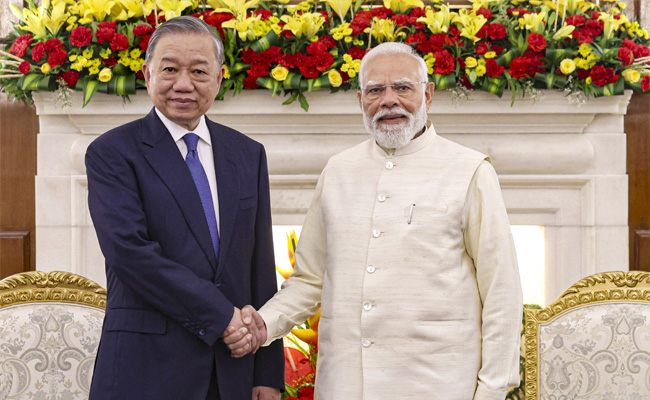
New Delhi (PTI): India and Vietnam on Wednesday elevated their ties to an enhanced comprehensive strategic partnership and set a USD 25 billion annual trade target by 2030 as Prime Minister Narendra Modi and Vietnamese President To Lam held talks focusing on expanding bilateral ties in areas of trade, defence, and critical minerals in the face of increasing geopolitical upheavals.
Following the Modi-Lam meeting, the two sides signed as many as 13 agreements which will provide for deeper two ways engagements in a range of areas including digital payments, rare earth minerals, pharmaceuticals, education, banking and culture.
Modi and Lam also deliberated on the situation in the Indo-Pacific amid China's increasing assertiveness in the region, and agreed to continue to contribute to the rule-of-law, peace, stability, and prosperity.
It is understood that China's growing military muscle-flexing in the South China Sea also figured in the delegation-level talks between the two sides.
Elected as president earlier this month, Lam began his first state visit to India on Tuesday, leading a high-level delegation for a three-day trip.
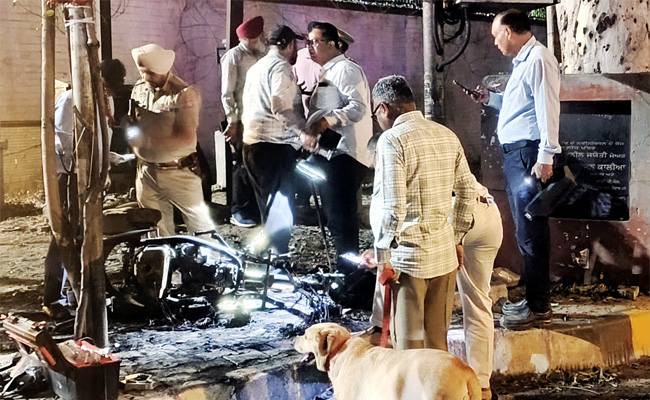
ALSO READ: Explosives used in blast outside Punjab Frontier BSF HQ in Jalandhar: Punjab Police
"A decade ago, Vietnam became India's first comprehensive strategic partner in ASEAN (Association of Southeast Asian Nations) . Since then, our relations have made rapid and comprehensive progress," Modi said in his media statement.
"Building on this strong foundation, today we are elevating our relations to the level of Enhanced Comprehensive Strategic Partnership. We will now advance our partnership to even higher goals," he said.
"Our cooperation will reach new levels in every area ' culture, connectivity, and capacity building, as well as security, sustainability, and supply chain resilience," Modi added.
He noted that the bilateral trade between India and Vietnam has doubled in the last decade to reach USD 16 billion and that the target now is to increase it to USD 25 billion by 2030.
Modi also cited a plethora of agreements signed between the two countries to emphasis that the economic engagement is expected to witness a significant upswing going forward.
"The MoU between our drug authorities will now increase access to Indian medicines in Vietnam. Exports of Indian agricultural, fisheries, and animal products to Vietnam are also set to become easier. Very soon, Vietnam will taste India's grapes and pomegranates," he said.
The two sides also agreed to update the India-ASEAN trade agreement by the end of this year.
"This will provide a new impetus to trade and investment between India and all ASEAN countries. New initiatives in critical minerals, rare earths, and energy cooperation will ensure the economic security and supply chain resilience of both countries," Modi said.
"To boost financial connectivity, we have today decided to enhance cooperation between our central banks. India's UPI and Vietnam's fast payment systems will soon be linked. Furthermore, we are strengthening state-to-state and city-to-city cooperation between the two countries," he noted.
Modi said India is grateful to Vietnam for its strong condemnation of the Pahalgam terrorist attack and standing with India in its fight against terrorism.
"In this era of global turmoil and economic challenges, thanks to their talent, good governance, and economic reforms, India and Vietnam are emerging as the world's fastest-growing economies," he said.
"Now, through our enhanced strategic partnership, we will support each other's rapid growth. As the Buddha's teachings say, 'If you light a lamp for someone else, it also illuminates your own path'," Modi said.
He also described Vietnam a a key pillar of India's Act East Policy and Vision Ocean.
"In the Indo-Pacific region as well, we share a common outlook. Through our strengthening defence and security cooperation, we will continue to contribute to the rule-of-law, peace, stability, and prosperity," he said.
The prime minister said India will broaden its relations with ASEAN with Vietnam's cooperation.
In his remarks, Lam said both sides agreed to deepen political trust and elevate security cooperation.
Last year, the two sides inked a pact to set up a framework for submarine search, rescue and support mechanism. They also signed a letter of intent (LoI) to strengthen bilateral defence industry collaboration.