Alibaba's Jack Ma to retire next year, Daniel Zhang to succeed
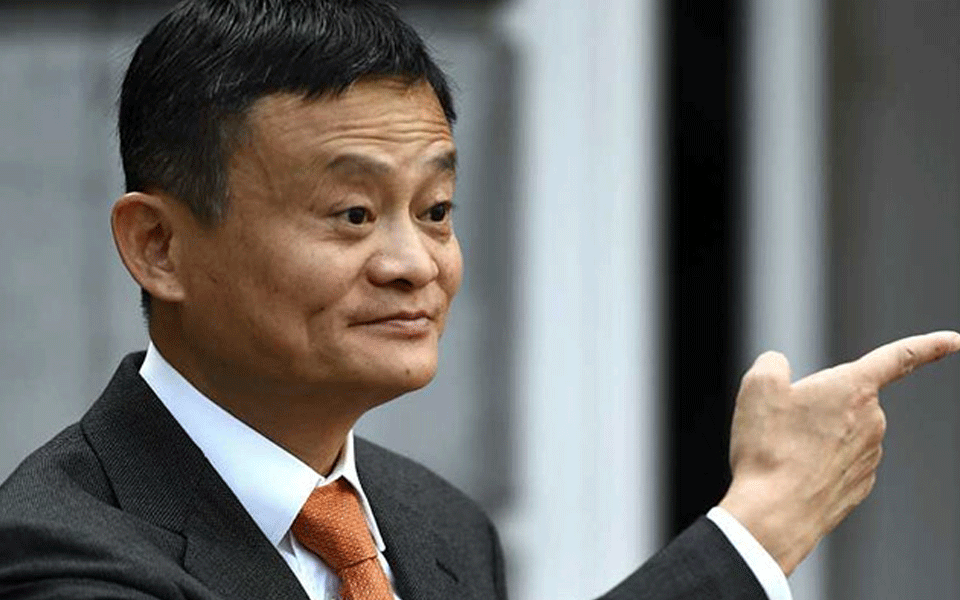
Bengaluru/Beijing, Sep 10: Alibaba's Executive Chairman Jack Ma will step down in September 2019 and hand over the reins to Chief Executive Daniel Zhang, the Chinese e-commerce giant said on Monday.
Ma, who co-founded the company almost 20 years ago which now is the world's biggest e-commerce behemoths, said in a letter to his employees that "transition demonstrates that Alibaba has stepped up from a company that relies on individuals, to one built on a culture of talent development".
Ma, who was a school teacher in China's small town of Hangzhou where Alibaba is headquartered and now one of the richest men in the world, will get to back to education, the billionaire said in a letter to his employees.
On the company's 20th anniversary on September 10, 2019, Zhang will take charge as the new chairman.
The development comes days after his imminent retirement in a report by the New York Times, juked by the company.
"Ma will continue as the executive chairman of the company over the next 12 months to ensure a smooth transition to Zhang," a statement from the firm said.
Ma's net worth is $36.6 billion.
Zhang, who was earlier the Chief Executive Officer (CEO) of Taobao, an online shopping portal owned by the Alibaba Group, was appointed the CEO of the group in 2015. He has been with the company since 2007.
The co-founder of the company, Ma, will however, remain as a board member of the Alibaba Group until the annual shareholder meet in 2020, which marks the 21st anniversary of the e-commerce and tech conglomerate.
"While remaining as executive chairman in the next 12 months, I will work closely with Daniel (Zhang) to ensure smooth transition," Ma said in a letter to the shareholders and employees on the occasion of the company's 19th anniversary on Monday.
The transition demonstrates that Alibaba has stepped up from a company that relies on individuals, to one built on a culture of talent development, Ma's letter addressed to the company's 86,000 employees said.
Ma, who turned 54, will remain a lifetime partner in the Alibaba Partnership and is a member of its partnership committee, the statement added.
The Alibaba Partnership has 36 partners, who are the senior management of Alibaba Group or its affiliates, including movie-making firm Alibaba Pictures, cloud computing firm Alibaba Cloud, financial services firm Ant Financial among others.
Founded in 1999, Alibaba stands among one of the largest companies in the world.
"I want to return to education, which excites me with so much blessing because this is what I love to do. The world is big, and I am still young, so I want to try new things," the Chinese business icon's letter added.
The group's e-tail portals Alibaba.com, Taobao, Tmall and AliExpress together clock billions of dollars of sales each year.
As per its statement, the company's revenue was $39.9 billion for fiscal 2017-18.
During the company's annual global shopping festival held on November 11 last year, the firm made a whopping $25 billion worth sales in a 24-hour period across its e-commerce platforms.
Apart from its online shopping portals, Alibaba also offers electronic payment services and cloud computing services.
Let the Truth be known. If you read VB and like VB, please be a VB Supporter and Help us deliver the Truth to one and all.
4 workers die after being buried under coal slurry in Jharkhand's Dhanbad
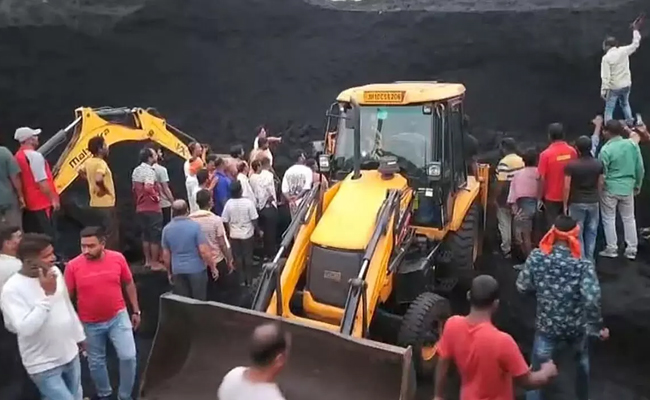
Dhanbad (Jharkhand) (PTI): At least four workers died after being buried under coal slurry in Jharkhand's Dhanbad district on Saturday, a police official said.
The incident took place at Moonidih coal washery in the command area of Bharat Coking Coal Limited (BCCL).
"Bodies of all four workers were dug out of debris during a rescue operation," Putki police station in-charge Waqar Hussain told PTI.
The incident took place when coal slurry was being loaded into trucks by workers, during which a large chunk of slurry fell and trapped several workers underneath, officials said.
The deceased have been identified as Manik Bauri, Dinesh Bauri, Deepak Bauri, and Hemlal Gope.
Meanwhile, the family members of the deceased and local villagers placed the bodies in front of the washery gate and began a protest.
They demanded compensation, jobs for dependents and action against those responsible for the incident.
Police and administration officials are trying to pacify the protesters, an official said.