AstraZeneca admits ‘very rare’ side effect of COVID vaccine in UK court
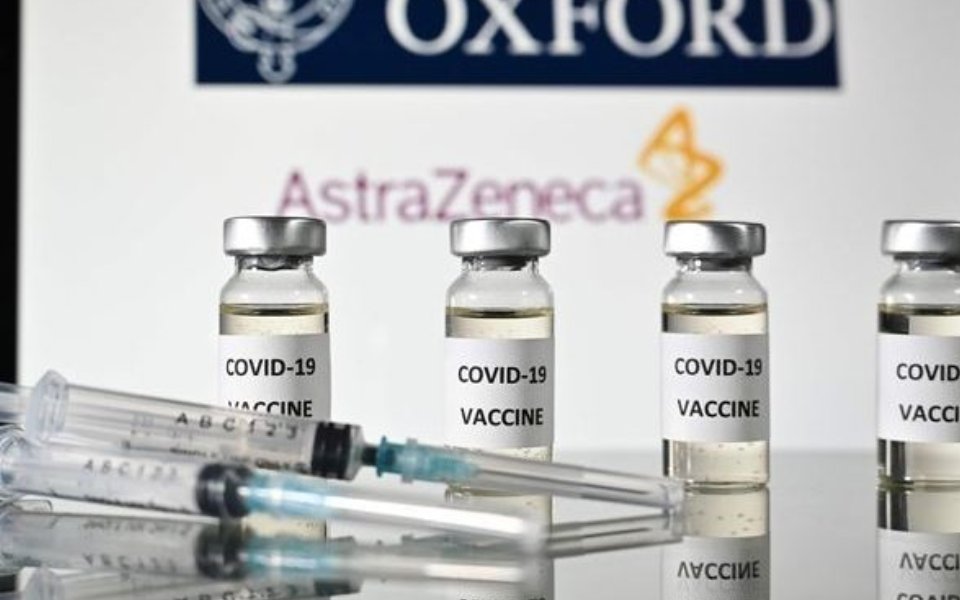
London, Apr 30: UK-headquartered pharmaceutical giant AstraZeneca (AZ) has admitted that in "very rare cases" its COVID vaccine can cause a blood clot related side effect but the causal link is unknown, according to court papers being quoted in the UK media.
‘The Daily Telegraph’ reports that in a legal document submitted to the High Court in London in February for a group action being brought by 51 claimants, AZ admitted that the vaccine developed with the University of Oxford to protect against COVID-19 may cause Thrombosis with Thrombocytopenia Syndrome (TTS) in “very rare cases”. The AZ Vaxzevria vaccine, also manufactured by the Serum Institute of India (SII), was known in India as Covishield.
“It is admitted that the AZ vaccine can, in very rare cases, cause TTS. The causal mechanism is not known. Further, TTS can also occur in the absence of the AZ vaccine (or any vaccine). Causation in any individual case will be a matter for expert evidence,” the newspaper quotes the legal document as stating.
Lawyers acting on behalf of the claimants say they, or their loved ones, who received the AZ vaccine suffered TTS – a rare syndrome characterised by the concurrence of thrombosis or blood clotting and thrombocytopenia or insufficiency of platelets.
The consequences of TTS are potentially life-threatening including strokes, brain damage, heart attacks, pulmonary embolism and amputation. Of the 51 claimants in the group action being represented by the law firm Leigh Day for damages under Section 2 of the UK’s Consumer Protection Act 1987 against AstraZeneca UK Ltd in respect of injuries sustained as a result of the vaccine, 12 are acting on behalf of a loved one who died.
“All of those within the group have death certificates or medical evidence confirming that the vaccine caused the deaths and injuries suffered,” said Sarah Moore, partner at Leigh Day.
“It has taken AstraZeneca a year to formally admit that their vaccine has caused this harm, when this was a fact widely accepted by the clinical community since the end of 2021. In that context, regrettably it seems that AZ, the government and their lawyers are more keen to play strategic games and run up legal fees than to engage seriously with the devastating impact that the vaccine has had upon our clients’ lives,” she said.
It is the claimants’ case that the safety of the AZ vaccine fell below the level of safety that persons were generally entitled to expect. AZ has strongly denied the claims.
“Our sympathy goes out to anyone who has lost loved ones or reported health problems. Patient safety is our highest priority, and regulatory authorities have clear and stringent standards to ensure the safe use of all medicines, including vaccines,” AstraZeneca said in a statement.
“From the body of evidence in clinical trials and real-world data, the AstraZeneca-Oxford vaccine has continuously been shown to have an acceptable safety profile and regulators around the world consistently state that the benefits of vaccination outweigh the risks of extremely rare potential side effects,” it noted.
The British-Swedish multinational points out that product information relating to the vaccine was updated in April 2021, with the approval of the UK regulator, to include “the possibility that the AstraZeneca-Oxford vaccine is capable, in very rare cases, of being a trigger for” TTS, indicating that the court documents reference this aspect rather than something new.
“It’s absolutely appalling that only now AstraZeneca are acknowledging serious harm from their COVID vaccine. Surely, they would have known this from the outset and therefore there would have been serious question marks around whether it should have been administered to a single human being in the first place,” said British Indian cardiologist Dr Aseem Malhotra, who has been a vocal campaigner over the issue.
The World Health Organisation (WHO) has described the vaccine as “safe and effective for all individuals aged 18 and above”, with the adverse effect that has prompted the legal action being “very rare”.
The claimants in the UK have served “Particulars of Claim” in regard to two cases and AZ has provided its defence disputing liability. The parties have requested that the cases are managed together, and a case management hearing is expected later in the year in the London High Court.
SII has been approached for a comment.
Let the Truth be known. If you read VB and like VB, please be a VB Supporter and Help us deliver the Truth to one and all.
'Last rites' of INDIA bloc: BJP on Cong-DMK fallout in Tamil Nadu
New Delhi (PTI): The BJP on Wednesday took a swipe at the Congress for extending support to Vijay's TVK in forming the government in Tamil Nadu and breaking away from its long term ally DMK, saying the party has a history of "betraying" its allies.
The saffron party also attacked the opposition INDIA bloc, claiming the alliance is "falling apart like a pack of cards" and lacks any common ideology or vision.
The Tamil Nadu Congress has decided to support TVK leader Vijay in forming a secular government in the state, sources said.
The decision to support the TVK was taken at an urgent meeting of the Political Affairs Committee (PAC) of Tamil Nadu Congress late on Tuesday night.
Reacting to the development, BJP national spokesperson Shehzad Poonawalla claimed the INDIA alliance had effectively come to an end after the declaration of assembly election results on May 4.
"There is nobody whom the Congress has not deceived. Imagine what they will do to the Samajwadi Party if they have done this to the DMK," he wrote in a post on X.
Calling it the "last rites" of the INDIA bloc, Poonawalla, in a video post, said, "It has become a Bharat free of the DMK, TMC and the Left, and now Congress has dumped the DMK for the TVK."
The BJP spokesperson alleged that the opposition bloc was formed solely out of political compulsions and personal ambitions.
"The INDI alliance never had any mission or vision. It was only about ambition for position, corruption, commission and obsession against Modi ji that they came together. But now it is all falling apart like a pack of cards," he said.
Questioning the unity of the opposition parties, Poonawalla said the alliance was absent in several states during the election.
"Where was the INDI alliance in Bengal, in Kerala, in Gujarat, in Punjab, in Delhi, in Haryana, in Karnataka? There is no INDI alliance," he said.
The DMK on Wednesday described the Congress move to extend support to TVK as a "backstab" by its long-time national ally.
Speaking to PTI videos, DMK spokesperson Saravanan Anadurai said, "The Congress party has decided to ally with the TVK, pledging their support to the party. I think they have backstabbed... They have backstabbed the people of Tamil Nadu. They've backstabbed the mandate given by the people of Tamil Nadu."
He said that the decision came even before the electoral process had fully concluded.
"Even before the ink on the returning officer's signature on the victory certificate dried up, they've chosen to go ahead with an alliance," he said.
Vijay's TVK won 108 seats in the 234-member Tamil Nadu Assembly, falling short of the halfway mark. He needs the support of 10 MLAs to form a government with a simple majority. The results were declared only on Monday.
The Congress has won five seats, while the Pattali Makkal Katchi (PMK) has bagged four seats. The CPI and CPI-M have two seats each. The outgoing ruling party, Dravida Munnetra Kazhagam (DMK), has won 59 seats while the All India Anna Dravida Munnetra Kazhagam (AIADMK) has won 47 seats.
The Bharatiya Janata Party (BJP) has won only one seat, and so have the Desiya Murpokku Dravida Kazhagam (DMDK) and the Amma Makkal Munnettra Kazagam (AMMK), while the VCK has won two seats.
The Congress had fought the assembly polls in a pre-poll alliance with the DMK, while the BJP had a tie-up with the AIADMK.