Belgian court rejects Mehul Choksi's bail plea, says his lawyer
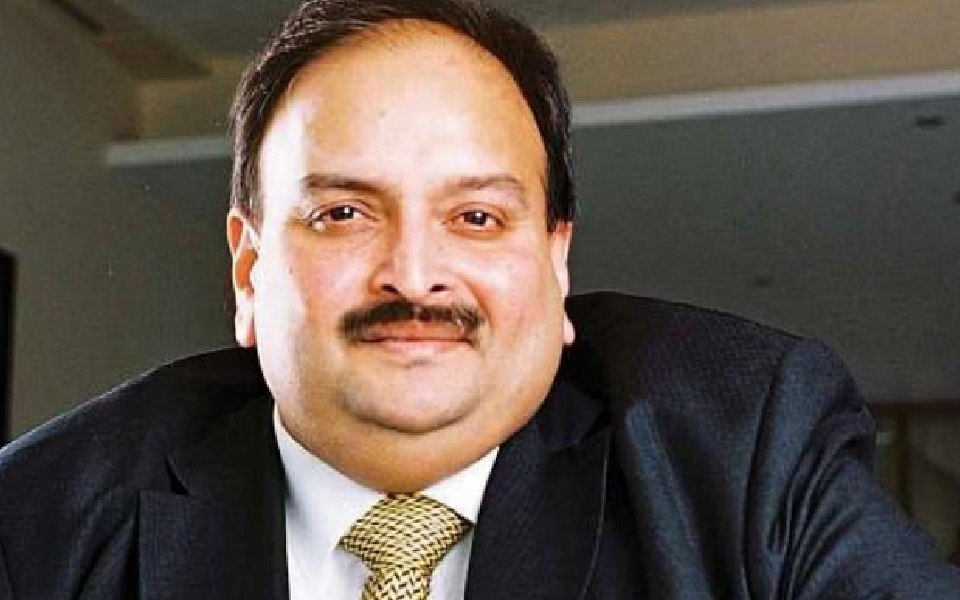
New Delhi, Apr 22 (PTI): A Belgian court on Tuesday rejected the bail plea of Mehul Choksi, the diamond merchant who is a prime accused in the Rs 13,000-crore PNB fraud case, his lawyer said.
The diamantaire was arrested in Antwerp by the Belgian police on April 12 based on an extradition request moved by the Central Bureau of Investigation (CBI) and the Enforcement Directorate (ED).
His lawyer Vijay Aggarwal said the bail plea of his client has been rejected during a court hearing on Tuesday.
Choksi will contest his extradition from jail custody now, a senior official said.
Choksi, 65, was located in Belgium last year after he reached there sometime in November 2023 on the grounds of getting medical treatment.
He had been staying in Antigua after leaving India in 2018 and had taken citizenship of the Caribbean country even though his Indian citizenship is stated to be valid.
At least two open-ended arrest warrants, issued by a special court in Mumbai in 2018 and 2021, have been shared by the Indian agencies with their Belgian counterparts as part of the extradition request, official sources had said earlier.
Aggarwal had earlier stated that Choksi was "extremely sick and undergoing treatment for cancer".
Choksi, Nirav Modi, their family members and employees, bank officials and others were booked by the CBI and the ED in 2018 for perpetrating the alleged loan fraud at the Brady House branch of the Punjab National Bank (PNB) in Mumbai.
It was alleged that Choksi, his firm Gitanjali Gems and others "committed the offence of cheating against PNB in connivance with certain bank officials by fraudulently getting the LOUs (letters of undertaking) issued and got the FLCs (foreign letter of credit) enhanced without following prescribed procedure and caused a wrongful loss to the bank".
The CBI has filed at least two chargesheets against him in this case while the ED has filed three prosecution complaints.
Let the Truth be known. If you read VB and like VB, please be a VB Supporter and Help us deliver the Truth to one and all.
Vartha Bharati–Sankalp predictions align closely with Karnataka bypoll results
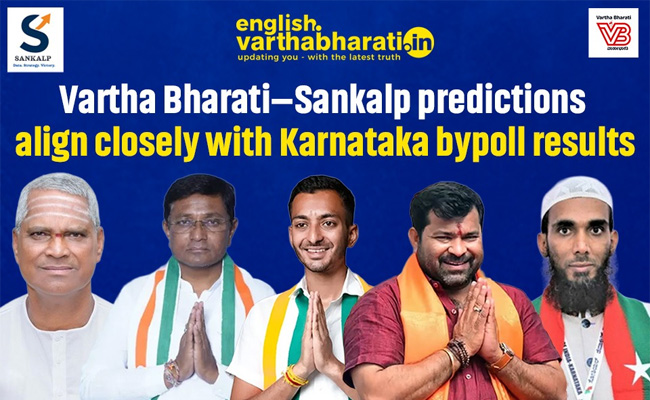
Bengaluru: The Vartha Bharati–Sankalp election analysis has shown a high level of accuracy in predicting the outcome of the recent Karnataka Assembly by-elections held in May 2026, correctly calling winners in both constituencies and closely estimating vote share trends.
The by-elections were held in Bagalkot and Davanagere South, drawing significant political attention as both seats were seen as key tests for the ruling Congress and opposition BJP.
According to the analysis, Vartha Bharati–Sankalp had made three major projections ahead of the results the winning party, vote share percentages, and margin of victory.
In both constituencies, the platform accurately predicted that the Congress would emerge victorious. The outcome matched the projections, with Congress candidates winning in Bagalkot and Davanagere South.
In terms of vote share, the predictions were largely in line with the final results. In Bagalkot, the BJP’s vote share was forecast in the range of 40 to 46 per cent, while the actual figure stood at 42.9 per cent. The Congress vote share, however, exceeded expectations, with the party securing 55.4 per cent against a projected range of 43 to 48 per cent.
The margin of victory in Bagalkot turned out to be significantly higher than anticipated. While the projection had placed the margin between 2,000 and 3,500 votes, the final margin was around 22,332 votes.
In Davanagere South, the predictions also remained largely accurate. The Congress vote share was projected between 43 and 51 per cent, and the final figure stood at 43.9 per cent. The BJP was expected to secure between 42 and 50 per cent but ended with 40.3 per cent.
The analysis had also identified the role of SDPI as a potential spoiler in the constituency. While its vote share was estimated around 6 per cent, the party eventually secured around 12 per cent of the vote.
The margin of victory in Davanagere South was predicted to be between 1,500 and 2,600 votes. The actual margin was higher at around 5,708 votes, though the contest remained relatively close as anticipated.
Overall, the performance of Vartha Bharati–Sankalp stood out for correctly identifying the winning parties in both seats and maintaining close accuracy in vote share estimates, with only limited deviations in specific cases.