China vows to stand firm against Trump's 100% tariff threat
_vb_71.jpeg)
Beijing (AP): China signalled Sunday that it would not back down in the face of a 100 per cent tariff threat from President Donald Trump, urging the US to resolve differences through negotiations instead of threats.
“China's stance is consistent,” the Commerce Ministry said in a statement posted online. “We do not want a tariff war but we are not afraid of one.”
The response came two days after Trump threatened to jack up the tax on imports from China by November 1 in response to new Chinese restrictions on the export of rare earths, a key ingredient for many consumer and military products.
The back and forth threatens to derail a possible meeting between Trump and Chinese leader Xi Jinping and end a truce in a tariff war in which new tariffs from both sides briefly topped 100 per cent in April.
Trump has raised taxes on imports from many US trading partners this year, seeking to win concessions in return for tariff reductions. China has been one of the few countries that hasn't backed down, relying on its economic clout.
“Frequently resorting to the threat of high tariffs is not the correct way to get along with China,” the Commerce Ministry said in its online post, which was presented as a series of answers from an unnamed spokesperson to questions from unspecified media outlets.
The statement called for addressing any concerns through dialogue.
“If the US side obstinately insists on its practice, China will be sure to resolutely take corresponding measures to safeguard its legitimate rights and interests,” the post said.
Both sides accuse the other of violating the spirit of the truce by imposing new restrictions on trade.
Trump said China is “becoming very hostile” and that it's holding the world captive by restricting access to rare earth metals and magnets.
China's new regulations require foreign companies to get special approval to export items that contain even small traces of rare earths elements sourced from China.
These critical minerals are needed in a broad range of products, from jet engines, radar systems and electric vehicles to consumer electronics including laptops and phones.
China accounts for nearly 70 per cent of the world's rare earths mining and controls roughly 90 per cent of global rare earths processing. Access to the material is a key point of contention in trade talks between Washington and Beijing.
The ministry post said that export licenses would be granted for legitimate civilian uses, noting that the minerals also have military applications.
The Chinese Commerce Ministry post said that the US has introduced several new restrictions in recent weeks, including expanding the number of Chinese companies subject to US export controls.
It also said that the US is ignoring Chinese concerns by going forward with new port fees on Chinese ships that take effect Tuesday. China announced Friday that it would impose port fees on American ships in response.
Let the Truth be known. If you read VB and like VB, please be a VB Supporter and Help us deliver the Truth to one and all.
4 workers die after being buried under coal slurry in Jharkhand's Dhanbad
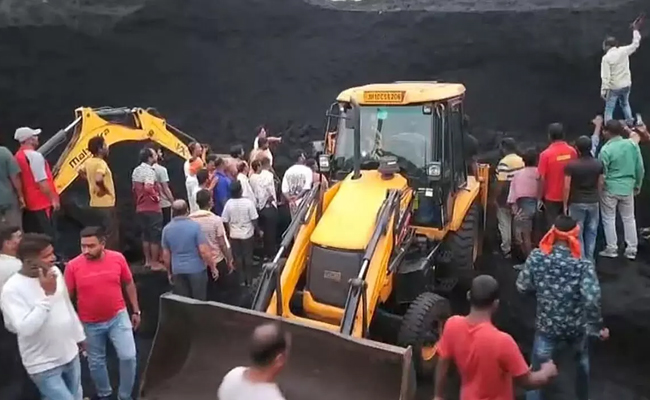
Dhanbad (Jharkhand) (PTI): At least four workers died after being buried under coal slurry in Jharkhand's Dhanbad district on Saturday, a police official said.
The incident took place at Moonidih coal washery in the command area of Bharat Coking Coal Limited (BCCL).
"Bodies of all four workers were dug out of debris during a rescue operation," Putki police station in-charge Waqar Hussain told PTI.
The incident took place when coal slurry was being loaded into trucks by workers, during which a large chunk of slurry fell and trapped several workers underneath, officials said.
The deceased have been identified as Manik Bauri, Dinesh Bauri, Deepak Bauri, and Hemlal Gope.
Meanwhile, the family members of the deceased and local villagers placed the bodies in front of the washery gate and began a protest.
They demanded compensation, jobs for dependents and action against those responsible for the incident.
Police and administration officials are trying to pacify the protesters, an official said.