COVID-19 to push 150-175 million more people into extreme poverty: UN expert
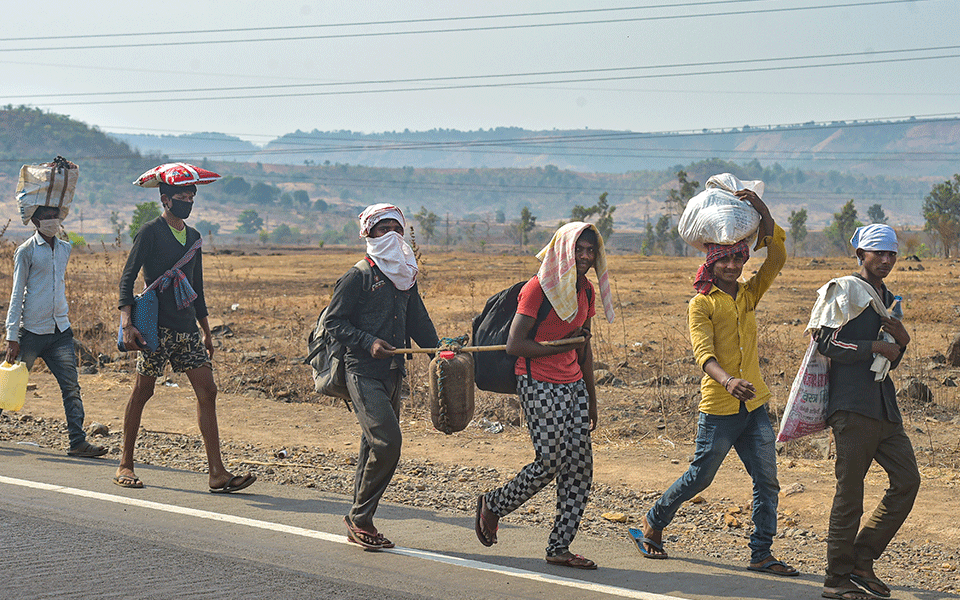
United Nations: Between 150 million and 175 million more people will fall into extreme poverty due to the COVID-19 pandemic, an expert said at the UN.
Special Rapporteur on extreme poverty and human rights Olivier De Schutter said that between 150 million and 175 million more people will fall into extreme poverty, due to the epic fallout from COVID-19.
Schutter told the UN General Assembly Third Committee (Social, Humanitarian and Cultural) Wednesday as delegates raised concerns about the plight of the world's most vulnerable in a series of interactive dialogues.
"We must rethink our development model," De Schutter said, adding that most of those who will fall into extreme poverty will be workers in the informal sector or in precarious employment conditions most of them women.
In order to emerge from the worst crisis since the 1929 Great Depression, "we cannot count, as we did in the 20th century, on economic growth as usual," he said.
Environmental sustainability and social justice must be considered prerequisites for shaping the economic recovery that countries envision, he said.
De Schutter was one of five independent experts participating in virtual dialogues with delegates, which covered topics ranging from extreme poverty and internal displacement, to the human rights to education, safe drinking water and adequate housing.
Experts described the interplay between conflict and climate change, and recommended ways to ensure that students can access water and sanitation in school during the pandemic.
Cecilia Jimenez-Damary, Special Rapporteur on the human rights of internally displaced persons, said the intersecting risks of climate change and armed conflict can push people into displacement. She focused on the slow-onset effects of climate change sea-level rise, desertification, glacial retreat and flood which can have disastrous consequences.
Most affected will be people whose livelihoods depend heavily on ecosystems: indigenous peoples, farmers, herders, pastoralists and fisherfolk.
Displaced persons also risk being exposed to COVID-19, due to their limited access to health care, water, sanitation and adequate housing, Jimenez-Damary said, according to information on the UN website.
Let the Truth be known. If you read VB and like VB, please be a VB Supporter and Help us deliver the Truth to one and all.
4 workers die after being buried under coal slurry in Jharkhand's Dhanbad
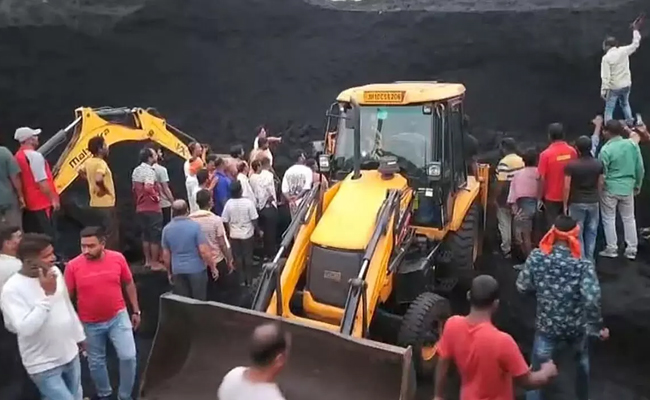
Dhanbad (Jharkhand) (PTI): At least four workers died after being buried under coal slurry in Jharkhand's Dhanbad district on Saturday, a police official said.
The incident took place at Moonidih coal washery in the command area of Bharat Coking Coal Limited (BCCL).
"Bodies of all four workers were dug out of debris during a rescue operation," Putki police station in-charge Waqar Hussain told PTI.
The incident took place when coal slurry was being loaded into trucks by workers, during which a large chunk of slurry fell and trapped several workers underneath, officials said.
The deceased have been identified as Manik Bauri, Dinesh Bauri, Deepak Bauri, and Hemlal Gope.
Meanwhile, the family members of the deceased and local villagers placed the bodies in front of the washery gate and began a protest.
They demanded compensation, jobs for dependents and action against those responsible for the incident.
Police and administration officials are trying to pacify the protesters, an official said.