Dozens arrested, hurt in clashes with police near Philippine presidential palace
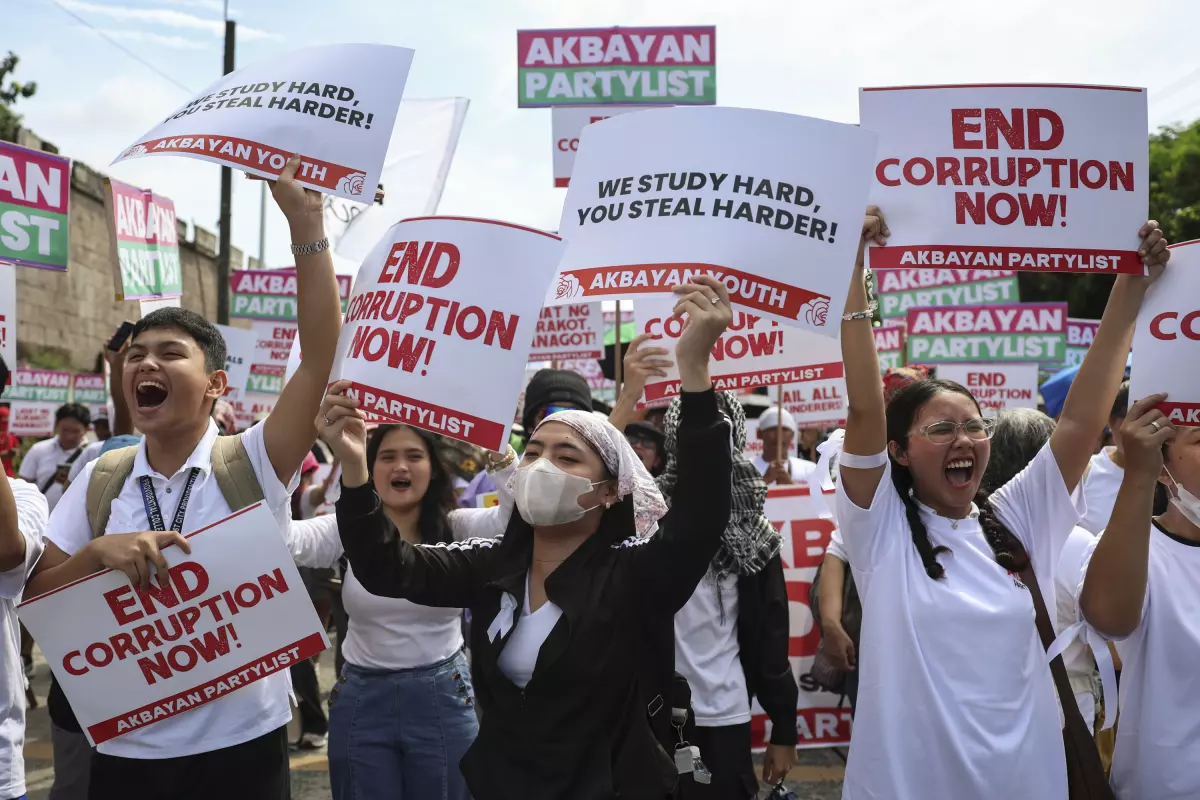
Manila (AP): Philippine police arrested 49 people suspected of hurling rocks, bottles and fire bombs at officers and blocking heavily guarded roads and bridges leading to the presidential palace Sunday while a peaceful anti-corruption rally took place in the capital, officials and witnesses said.
The melee outside the country's seat of power unfolded while more than 33,000 other protesters rallied in a historic park and a democracy monument in Manila.
They expressed outrage over a corruption scandal involving lawmakers, officials and construction company owners who allegedly pocketed huge kickbacks from flood-control projects in the impoverished Southeast Asian country that is regularly buffeted by storms and typhoons.
The hourslong rampage by about 100 mostly club-wielding people, some of whom waved Philippine flags and displayed carton posters with anti-corruption slogans, wounded about 70 Manila law enforcers, according to the Manila police. Schools were cancelled due to the violence.
Police said they lobbed tear gas to try to disperse the attackers, who sprayed graffiti on walls, toppled steel posts, shattered glass panels and ransacked the lobby of a budget inn along a popular road dotted with university campuses, banks and restaurants before dispersing at night.
Hours after the assault, police have yet to identify the attackers, some of whom carried black flags with the caricature of a skull and crossbones. It was also unclear if they had earlier participated in the peaceful protests before heading toward the presidential office. It was not immediately known if President Marcos Jr was in the Malacanang presidential palace during the chaos.
Police said in a statement after the arrests that the situation was “contained” but warned that violence and vandalism would not be tolerated.
“I feel bad that we wallow in poverty and we lose our homes, our lives and our future while they rake in a big fortune from our taxes that pay for their luxury cars, foreign trips and bigger corporate transactions,” student activist Althea Trinidad told The Associated Press in Manila.
Trinidad lives in Bulacan, a flood-prone province north of Manila where officials said the most flood-control projects were being investigated either as substandard or nonexistent.
“Our purpose is not to destabilise but to strengthen our democracy,” Cardinal Pablo Virgilio David, the head of the Catholic Bishops' Conference of the Philippines, said in a statement. He called on the public to demonstrate peacefully and demand accountability.
Marcos first highlighted the flood-control corruption scandal in July in his annual state of the nation speech.
He later established an independent commission to investigate what he said were anomalies in many of the 9,855 flood-control projects worth more than 545 billion pesos ($9.5 billion) that were supposed to have been undertaken since he took office in mid-2022.
He called the scale of corruption “horrible” and accepted his public works secretary's resignation.
Public outrage erupted when a wealthy couple who ran several construction companies that won lucrative flood-control project contracts showed dozens of European and American luxury cars they owned during media interviews.
The fleet included a British luxury car costing 42 million pesos ($737,000) that they said they bought because it came with a free umbrella.
Let the Truth be known. If you read VB and like VB, please be a VB Supporter and Help us deliver the Truth to one and all.
SC to hear on May 4 PIL seeking stringent guidelines for issuing Aadhaar to adolescents, adults
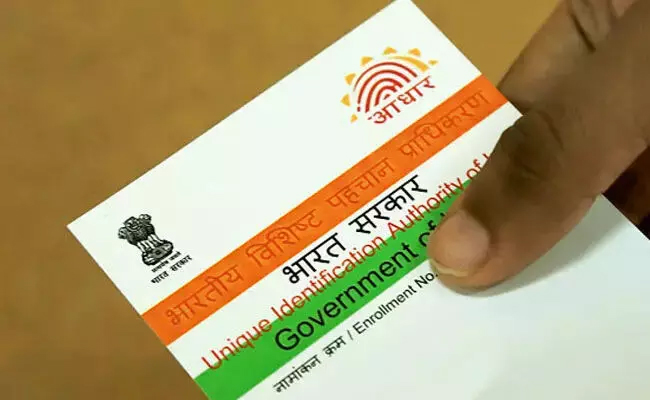
New Delhi (PTI): The Supreme Court is scheduled to hear on Monday a plea seeking a direction to the Unique Identification Authority of India to issue new Aadhaar cards only to citizens up to the age of six years, and frame stringent guidelines for its issuance to adolescents and adults to stop infiltrators from masquerading as Indian citizens.
As per the apex court's causelist of May 4, the plea would come up for hearing before a bench of Chief Justice Surya Kant and Justice Joymalya Bagchi.
The Public Interest Litigation (PIL) filed by lawyer Ashwini Upadhyay has also sought a direction to the authorities to install display boards at common service centres stating that the 12-digit unique identification number is only a "proof of identity" and not a proof of citizenship, address or date of birth.
Besides all the states and Union Territories, the plea has made the UIDAI -- which is the authority that issues Aadhaar -- and the Union ministries of home, law and justice, and electronics and information technology as parties.
The plea, filed through advocate Ashwani Dubey, said Aadhaar, originally intended as a proof of identity, has increasingly become a "foundational document" enabling individuals to obtain other identification documents, such as ration cards, domicile certificates and voter identity cards.
"The UIDAI has issued 144 crore Aadhaar and 99 percent Indians have been enrolled. Therefore, the petitioner is filing this writ petition as a PIL under Article 32, seeking a direction to UIDAI to issue new Aadhaar to children only and frame new stringent guidelines for adolescents and adults, so as to stop infiltrators from getting it and masquerading as Indian citizens," the plea said.
It said the need to file the plea arose when the petitioner came to know the manner in which infiltrators are able to procure Aadhaar through a verification process that is weak and can be easily manipulated.
"Foreigners apply for Aadhaar under the 'foreign' category. But infiltrators apply for Aadhaar under the 'Indian citizen' category and get it easily made. Thereafter, they obtain a ration card, birth and domicile certificate, driving licence, et cetera, essentially becoming indistinguishable from Indian citizens…," it said.
Besides seeking other directions, the plea has raised legal questions, including whether the Aadhaar Act 2016 has become "temporally unreasonable" for failing to keep up with the legislative intent of distinguishing foreigners from Indian citizens.
It said the alleged misuse of Aadhaar undermines targeted welfare delivery and leads to diversion of public resources.