Global growth has plateaued at 3.7 per cent; clouds on the horizon: IMF
Washington, Oct 9 : Global growth has plateaued at 3.7 per cent, the International Monetary Fund (IMF) said Tuesday, with its chief economist warning the world that there are clouds on the horizon and growth has proven to be less balanced than hoped.
"Last April, the world economy's broad-based momentum led us to project a 3.9 per cent growth rate for both this year and next. Considering developments since then, however, that number appears over-optimistic: rather than rising, growth has plateaued at 3.7 per cent," IMF Chief Economist Maurice Obstfeld said as the world body released the World Economic Outlook, its annual flagship report.
Released during the annual IMF and World Bank meeting in Bali, Indonesia, the World Economic Outlook projects that global growth will remain steady over 2018 19 at last year's rate of 3.7 per cent. This growth exceeds that achieved in any of the years between 2012 and 2016, he said.
"It occurs as many economies have reached or are nearing full employment and as earlier deflationary fears have dissipated. Thus, policymakers still have an excellent opportunity to build resilience and implement growth-enhancing reforms," Obstfeld said.
But "there are clouds on the horizon," he said. "Growth has proven to be less balanced than hoped. Not only have some downside risks that the last WEO identified been realised, the likelihood of further negative shocks to our growth forecast has risen. In several key economies, moreover, growth is being supported by policies that seem unsustainable over the long term. These concerns raise the urgency for policymakers to act," the top IMF official said.
Noting that growth in the United States, buoyed by a procyclical fiscal package, continues at a robust pace and is driving US interest rates higher, Obstfeld said US growth will decline once parts of its fiscal stimulus go into reverse.
"Notwithstanding the present demand momentum, we have downgraded our 2019 US growth forecast owing to the recently enacted tariffs on a wide range of imports from China and China's retaliation," he said, adding that China's expected 2019 growth is also marked down.
Domestic Chinese policies are likely to prevent an even larger growth decline than the one IMF projected, but at the cost of prolonging internal financial imbalances, he said.
"Overall, compared with six months ago, projected 2018 19 growth in advanced economies is 0.1 percentage point lower, including downgrades for the euro area, the United Kingdom, and Korea. The negative revisions for emerging market and developing economies are more severe, at -0.2 and -0.4 percentage point, respectively, for this year and next year," Obstfeld said.
With their core inflation rates largely quiescent, advanced economies continue to enjoy easy financial conditions. "This is not true in emerging and developing economies, where financial conditions have tightened markedly over the past six months," he said.
For emerging market and developing economies, gradually tightening US monetary policy, coupled with trade uncertainties and for countries such as Argentina, Brazil, South Africa, and Turkey distinctive factors, have discouraged capital inflows, weakened currencies, depressed equity markets, and pressured interest rates and spreads, he said.
Many emerging economies, he noted, are managing relatively well given the common tightening they face using established monetary frameworks based on exchange rate flexibility.
"But there is no denying that the susceptibility to large global shocks has risen. Any sharp reversal for emerging markets would pose a significant threat to advanced economies, as emerging market and developing economies make up about 40 per cent of world GDP at market exchange rates," the IMF chief economist warned.
Obstfeld said the impacts of trade policy and uncertainty are becoming evident at the macroeconomic level, while anecdotal evidence accumulates on the resulting harm to companies. "Trade policy reflects politics, and politics remain unsettled in several countries, posing further risks," he added.
He urged all countries to prepare their workforces for the ways that new technologies will change the nature of work.
"Ensuring that growth is inclusive is more important than ever. Unless growth can be made more inclusive than it has been, centrist and multilateral approaches to politics and policy will become increasingly vulnerable to the detriment of all," Obstfeld said.
Let the Truth be known. If you read VB and like VB, please be a VB Supporter and Help us deliver the Truth to one and all.
Karnataka MLA Vinay Kulkarni disqualified after conviction in Goudar murder case
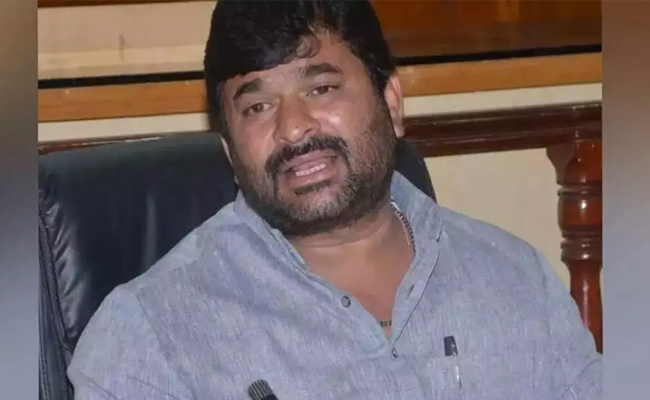
Bengaluru (PTI): The Karnataka Legislative Assembly on Saturday issued an official notification regarding the disqualification of Congress MLA Vinay Kulkarni following his conviction in the murder case of BJP leader Yogeshgouda Goudar.
The former minister is currently in prison, serving life imprisonment in the case.
“Consequent upon the conviction of Vinay Kulkarni, Member of the Karnataka Legislative Assembly representing the Dharwad constituency, by the LXXXI Additional City Civil & Sessions Judge, Bengaluru City (CCH-82), in Spl CC No. 565/2021, he stands disqualified from the membership of the Karnataka Legislative Assembly from the date of conviction, i.e, April 15, 2026,” the notification read.
“He stands disqualified in terms of the provisions of Article 191(1)(e) of the Constitution of India, read with Section 8 of the Representation of the People Act, 1951, and such disqualification shall continue for a further period of six years after his release, unless the conviction is stayed by a competent court,” it added.
Hence, one seat in the Karnataka Legislative Assembly has fallen vacant, the notification said.
Bypolls were held on April 9 to fill two other seats in the 224-member Assembly that fell vacant due to the death of sitting MLAs. The results will be declared on May 4.
On April 15, Judge Santhosh Gajanan Bhat convicted Kulkarni and others under various IPC sections, including criminal conspiracy and murder. Subsequently, on April 17, the court sentenced Kulkarni and 15 others convicted in the case to life imprisonment.
The case pertains to the killing of Goudar, a BJP Zilla Panchayat member, in Dharwad on June 15, 2016. Kulkarni was a minister at that time. Hired assailants attacked and hacked Goudar to death in his gym at Saptapur in Dharwad.
Following demands from Goudar’s family and others, the then-BJP government transferred the case to the CBI in 2019.
The CBI filed a supplementary chargesheet in 2020, naming Vinay Kulkarni as the “main conspirator.” It alleged that he perceived Yogeshgouda Goudar as a growing political rival in Dharwad and hired contract killers to eliminate him.
Kulkarni was arrested by the CBI in 2020. He was granted bail by the Supreme Court in August 2021 under certain conditions, including a ban on entering Dharwad district. However, in June 2025, the apex court cancelled his bail following allegations of witness tampering and attempts to influence prosecution witnesses.
Kulkarni again sought bail in January 2026, but the High Court rejected it, citing judicial propriety.
However, the Supreme Court granted him bail on February 27 after noting that all witnesses had been examined.