Gunmen kill six during Catholic mass in Burkina Faso
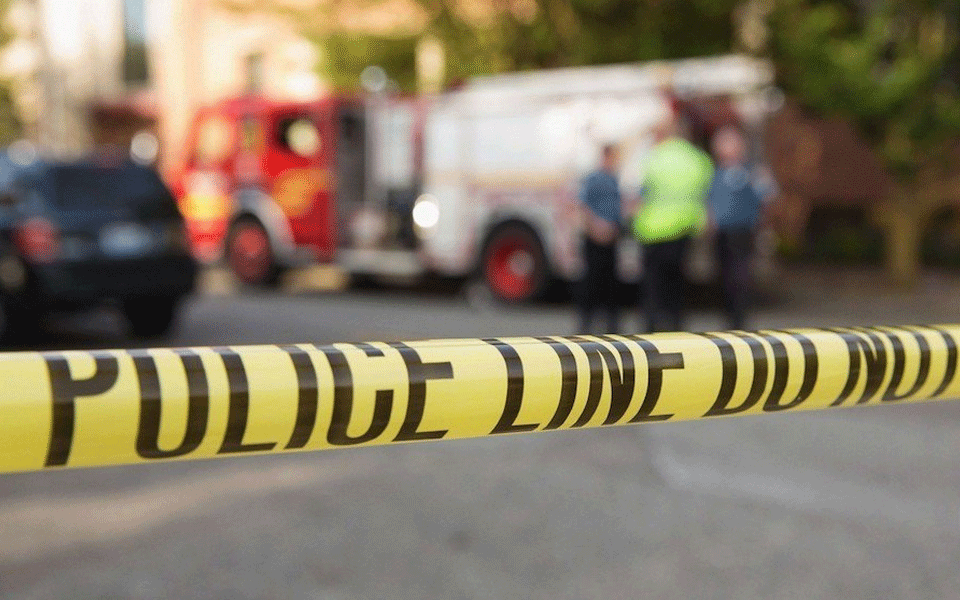
Ouagadougou, May 12: Gunmen killed a priest and five churchgoers during mass Sunday in an attack on a Catholic church in Dablo, northern Burkina Faso, security sources and a local official said.
"Towards 9.00 am, during mass, armed individuals burst into the Catholic church," the mayor of Dablo, Ousmane Zongo, told AFP. "They started firing as the congregation tried to flee."
The attackers between 20 and 30 according to a security source managed to trap some of the worshippers, Zongo added.
"They killed five of them. The priest, who was celebrating mass, was also killed, bringing the number of dead to six." The gunmen then set fire to the church, several shops and a small cafe before heading to the local health centre, which they looted, burning the chief nurse's vehicle.
"There is an atmosphere of panic in the town," said Zongo.
"People are holed up in their homes, nothing is going on. The shops and stores are closed. It's practically a ghost town," he added.
Security reinforcements were sent from Barsalogho, about 45 kilometres (30 miles) south of Dablo, and were combing the area, a security source told AFP.
The attack came two days after French special forces freed four foreign hostages in the north of the country in an overnight raid that cost the lives of two soldiers.
The operation was ordered to free French hostages Patrick Pique and Laurent Lassimouillas who disappeared while on holiday in the remote Pendjari National Park in Benin on May 1.
The team also found two other female captives, an American woman and a South Korean.
Sunday's church strike came two weeks after a similar attack against a Protestant church in Silgadji, also in the north, when gunmen on motorbikes killed a pastor and several worshippers.
Burkina Faso has suffered from increasingly frequent and deadly attacks attributed to a number of jihadist groups, including the Ansarul Islam group, the Group to Support Islam and Muslims (GSIM) and Islamic State in the Greater Sahara.
Nearly 400 people have been killed since 2015 mainly in hit-and-run raids according to an AFP tally.
Jihadist groups target both Muslim and Christian clerics, mainly in the north.
Former colonial ruler France has deployed some 4,500 troops in Mali, Burkina Faso, Niger and Chad in a mission codenamed Barkhane to help local forces try to flush out jihadist groups.
Let the Truth be known. If you read VB and like VB, please be a VB Supporter and Help us deliver the Truth to one and all.
Bengal police examining CCTV footage, multiple teams set up to trace killers of Suvendu's aide
Kolkata (PTI): West Bengal Police are examining CCTV footage and have formed multiple teams to trace the men involved in the killing of BJP leader Suvendu Adhikari’s close aide Chandranath Rath, a senior officer said on Thursday.
Police are also probing whether contract killers were engaged in the murder of Rath, who was shot dead in North 24 Parganas district on Wednesday night.
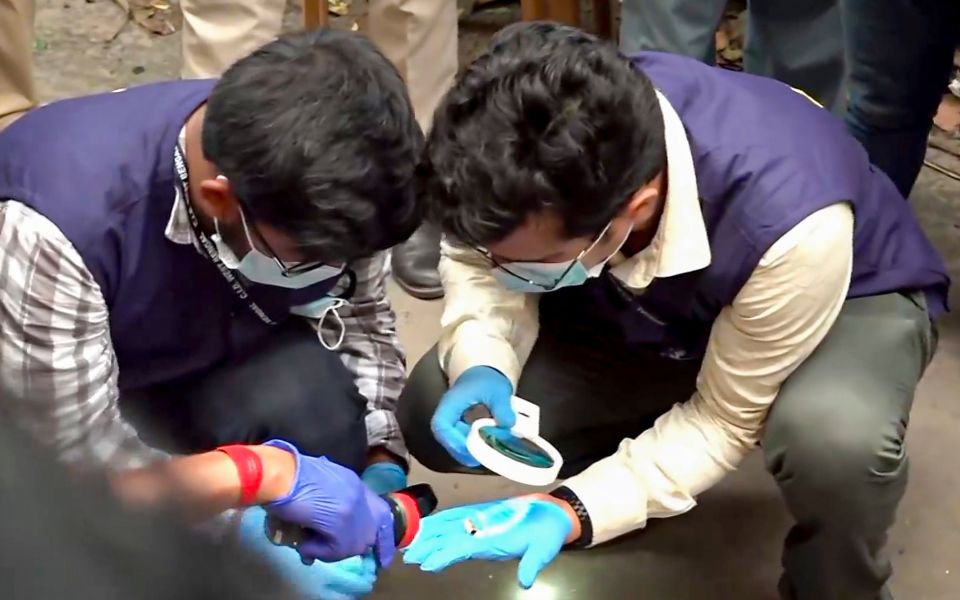
A forensic team visited the spot on Thursday morning and collected samples, while officers of the Criminal Investigation Department (CID) also joined the probe, he said.
"Going by the circumstantial evidence, it seems that the murder was pre-planned. Investigators are examining CCTV footage from the crime spot and nearby areas, while multiple police teams have been formed to trace the assailants," the officer said.
Police, however, are yet to make any arrests in connection with the crime.
According to preliminary information, Rath's car was intercepted near Doharia between Doltala and Madhyamgram Chowmatha around 10.15 pm on Wednesday by motorcycle-borne men who opened fire before fleeing.
"A detailed investigation has begun. We are pursuing several leads," the officer said.
Rath, 42, was returning to his residence in Madhyamgram from Kolkata when the incident occurred, he said. The deceased is survived by his son and wife.
The vehicle was being driven by Buddhadeb Bera, who also sustained bullet injuries and is undergoing treatment at a hospital in Kolkata, another officer said.
Bera, who underwent a couple of surgeries, remained "very critical", sources in the hospital said.
Preliminary findings suggested that the assailants intercepted Rath's vehicle in a coordinated manner before firing multiple rounds from close range, the officer said.
Investigators claimed the vehicle carrying Rath was first blocked near Doharia junction by a small four-wheeler, after which a motorcycle rider approached Rath's car and started firing from close range.
"Rath’s car was intercepted around 100 metres from the housing complex where he lived. The small car came in front of his vehicle, slowing down its pace, and it seems that was when the killers shot him," the officer said.
The occupants of the small four-wheeler later abandoned the vehicle and escaped on motorcycles, police said.
Police suspected that the killers fled on two motorcycles in two directions.
"One probably took the main road towards Jessore Road, while the other took a narrow street on the left leading to Rajarhat," the officer said.
Another police officer said CCTV footage showed the car travelling towards Madhyamgram before the attack.
Investigators said they are taking help from both Kolkata Police and Bidhannagar Police Commissionerate to check CCTV footage installed under their respective jurisdictions and study the movement of the killers.
"The number plate attached to the small car left by the assailants was found to be fake. It belongs to a person based in Siliguri, who works in a tea estate. The chassis number and engine number of the small car have been erased. It indicates that they had planned the murder," he said.
The person, in Siliguri, is being interrogated by Mothabari police, he added.
"He is claiming to have uploaded a photograph of his vehicle on an online platform with the intention of selling it. We are verifying his claims and rechecking them," the officer said.
"We have recovered empty cartridges and live ammunition from the crime spot. At this stage, the motive behind the attack is not clear," the DGP said.
Police suspect the use of sophisticated firearms during the attack.
On Thursday, police recovered a bullet shell from the streets approaching Rath's residence, the sleuth said.
According to preliminary forensic inputs, the assailants might have used Glock 47X pistols, he said.
"A weapon of this nature is generally not used by ordinary criminals. We are examining whether professional shooters were involved," a senior West Bengal Police officer said on condition of anonymity.
Meanwhile, one of the locals claimed to have seen three people on a bike "waiting" on the streets last night.
He also said that they had little clue about Rath's association with Adhikari.
"We did not know much about Rath. Whether he was an aide of Adhikari was not known to us. He used to return home in the same car with a West Bengal Assembly sticker at the same time everyday," the local resident claimed.