Hamas surprise attack out of Gaza stuns Israel and leaves hundreds dead in fighting, retaliation
Jerusalem (AP): Backed by a barrage of rockets, dozens of Hamas fighters broke out of the blockaded Gaza Strip and into nearby Israeli towns, killing dozens and abducting others in an unprecedented surprise early morning attack during a major Jewish holiday Saturday.
A stunned Israel said it is now at war with Hamas and launched airstrikes in Gaza, vowing to inflict an "unprecedented price."
In an assault of startling breadth, Hamas gunmen rolled into as many as 22 locations outside the Gaza Strip, including towns and other communities as far as 15 miles (24 kilometres) from the Gaza border. Gunbattles continued well after nightfall, and fighters held hostages in standoffs in two towns.
Israel's national rescue service said at least 200 people were killed and 1,100 wounded, making it the deadliest attack in Israel in decades. At least 198 people in the Gaza Strip have been killed and at least 1,610 wounded in Israeli strikes, the Palestinian Health Ministry said.
Hamas fighters took an unknown number of civilians and soldiers captive into Gaza, a deeply sensitive issue for Israel.
The conflict threatened to escalate to an even deadlier stage with Israel's vows of greater retaliation. Previous conflicts between Israel and Gaza's Hamas rulers brought widespread death and destruction in Gaza and days of rocket fire on Israeli towns.
The situation is potentially more volatile now, with Israel's far-right government stung by the security breach and with Palestinians in despair over a never-ending occupation in the West Bank and suffocating blockade of Gaza.
In a televised address Saturday night, Israeli Prime Minister Benjamin Netanyahu, who earlier declared Israel at war, said the military will use all of its strength to destroy Hamas' capabilities but the war will "take time."
"We will defeat them ... and take revenge for this black day," he said.
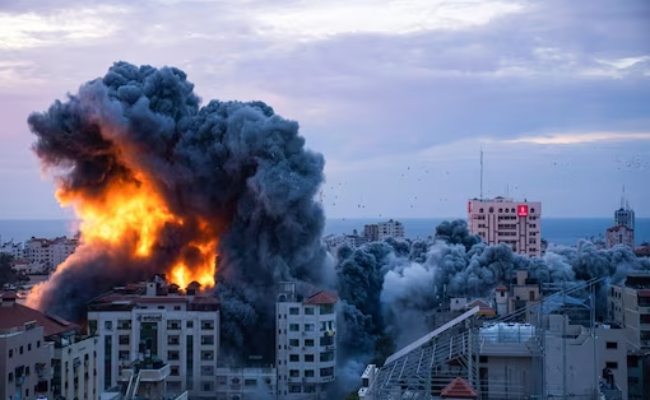
After nightfall, Israeli airstrikes in Gaza intensified, flattening several residential buildings in giant explosions, including a 14-story tower that held dozens of apartments as well as Hamas offices in central Gaza City. Israeli forces fired a warning just before, and there were no reports of casualties.
Soon after, a Hamas rocket barrage into central Israel hit four cities, including Tel Aviv and a nearby suburb, where two people were seriously injured. Throughout the day, Hamas fired more than 3,500 rockets, the Israeli military said.
The strength, sophistication and timing of the Saturday morning attack shocked Israelis. Hamas fighters used explosives to break through the border fence enclosing the Mediterranean territory, then crossed with motorcycles, pickup trucks, paragliders and speed boats on the coast.
In some towns, a trail of civilians' bodies lay where they had encountered the advancing gunmen. On the road outside the town of Sderot, a bloodied woman slumped dead in the seat of her car.
At least nine people gunned down at a bus shelter in the town were laid out on stretchers on the street, their bags still on the curb nearby. One woman, screaming, embraced the body of a family member sprawled under a sheet next to a toppled motorcycle; as she was led away, she picked up the dead person's helmet from the ground nearby.
Associated Press photos showed an abducted elderly Israeli woman being brought back into Gaza on a golf cart by Hamas gunmen and another woman squeezed between two fighters on a motorcycle. Images also showed fighters parading captured Israeli military vehicles through Gaza streets.
The shadowy leader of Hamas' military wing, Mohammed Deif, said the assault was in response to the 16-year blockade of Gaza, Israeli raids inside West Bank cities over the past year, violence at Al Aqsa the disputed Jerusalem holy site sacred to Jews as the Temple Mount increasing attacks by settlers on Palestinians and growth of settlements.
"Enough is enough," Deif, who does not appear in public, said in the recorded message. He said the attack was only the start of what he called "Operation Al-Aqsa Storm" and called on Palestinians from east Jerusalem to northern Israel to join the fight. "Today the people are regaining their revolution."
The Hamas incursion on Simchat Torah, a normally joyous day when Jews complete the annual cycle of reading the Torah scroll, revived painful memories of the 1973 Mideast war practically 50 years to the day, in which Egypt and Syria launched a surprise attack on Yom Kippur, the holiest day of the Jewish calendar, aiming to take back Israeli-occupied territories.
Comparisons to one of the most traumatic moments in Israeli history sharpened criticism of Netanyahu and his far-right allies, who had campaigned on more aggressive action against threats from Gaza. Political commentators lambasted the government over its failure to anticipate what appeared to be a Hamas attack unseen in its level of planning and coordination.
Asked by reporters how Hamas had managed to catch the army off guard, Lt. Col. Richard Hecht, an Israeli army spokesman, replied, "That's a good question."
The abduction of Israeli civilians and soldiers also raised a particularly thorny issue for Israel, which has a history of making heavily lopsided exchanges to bring captive Israelis home.
Hamas' military wing claimed it was holding dozens of Israeli soldiers captive in "safe places" and tunnels in the Gaza Strip. The Israeli military confirmed that a number of Israelis were abducted but would not give a figure. If true, the claim could set the stage for complicated negotiations on a swap with Israel, which is holding thousands of Palestinians in its prisons.
An unknown number of civilians were also taken. AP journalists saw four taken from the kibbutz of Kfar Azza, including two women. In Gaza, a black jeep pulled to a stop and, when the rear door opened, a young Israeli woman stumbled out, bleeding from the head and with her hands tied behind her back. A man waving a gun in the air grabbed her by the hair and pushed her into the vehicle's back seat.
Israeli TV reported that workers from Thailand and the Philippines were also among the captives.
In the kibbutz of Nahal Oz, just 4 kilometres (2.5 miles) from the Gaza Strip, terrified residents who were huddled indoors said they could hear constant gunfire echoing off the buildings as firefights continued.
"With rockets we somehow feel safer, knowing that we have the Iron Dome (missile defense system) and our safe rooms. But knowing that terrorists are walking around communities is a different kind of fear," said Mirjam Reijnen, a 42-year-old volunteer firefighter and mother of three in Nahal Oz.
Earlier in the day, Netanyahu vowed that Hamas "will pay an unprecedented price." A major question now was whether Israel will launch a ground assault into Gaza, a densely populated enclave of more than 2 million people, a move that in the past has brought intensified casualties.
Israel's military was bringing four divisions of troops as well as tanks to the Gaza border, joining 31 battalions already in the area, the spokesman Hagari said.
In Gaza, much of the population was thrown into darkness after nightfall, as electrical supplies from Israel which supplies almost all the territories' power was cut off.
Hamas said it had planned for a potentially long fight. "We are prepared for all options, including all-out war," the deputy head of the Hamas political bureau, Saleh al-Arouri, told Al-Jazeera TV. "We are ready to do whatever is necessary for the dignity and freedom of our people."
Saudi Arabia, which has been in talks with the U.S. about normalising relations with Israel, called on both sides to exercise restraint. The kingdom said it had repeatedly warned about the danger of "the situation exploding as a result of the continued occupation (and) the Palestinian people being deprived of their legitimate rights."
The attack comes at a time of historic division within Israel over Netanyahu's proposal to overhaul the judiciary. Mass protests over the plan have sent hundreds of thousands of Israeli demonstrators into the streets and prompted hundreds of military reservists to avoid volunteer duty turmoil that has raised fears over the military's battlefield readiness and raised concerns about its deterrence over its enemies.
It also comes at a time of mounting tensions between Israel and the Palestinians, with the peace process effectively dead for years. Over the past year Israel's far-right government has ramped up settlement construction in the occupied West Bank, Israeli settler violence has displaced hundreds of Palestinians there, and tensions have flared around a flashpoint Jerusalem holy site.
Israel has maintained a blockade over Gaza since Hamas seized control of the territory in 2007. The bitter enemies have fought four wars since then.
Let the Truth be known. If you read VB and like VB, please be a VB Supporter and Help us deliver the Truth to one and all.
Karnataka MLA Vinay Kulkarni disqualified after conviction in Goudar murder case
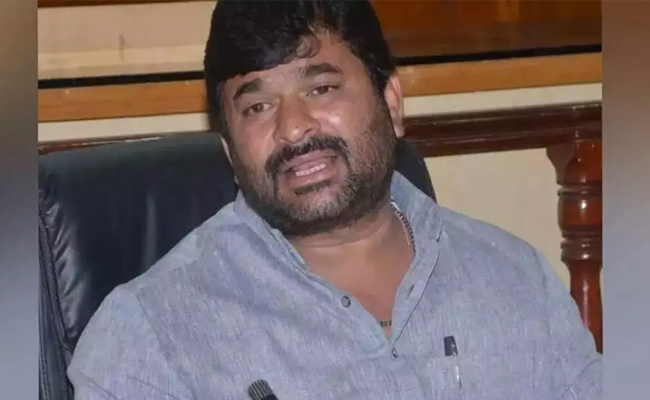
Bengaluru (PTI): The Karnataka Legislative Assembly on Saturday issued an official notification regarding the disqualification of Congress MLA Vinay Kulkarni following his conviction in the murder case of BJP leader Yogeshgouda Goudar.
The former minister is currently in prison, serving life imprisonment in the case.
“Consequent upon the conviction of Vinay Kulkarni, Member of the Karnataka Legislative Assembly representing the Dharwad constituency, by the LXXXI Additional City Civil & Sessions Judge, Bengaluru City (CCH-82), in Spl CC No. 565/2021, he stands disqualified from the membership of the Karnataka Legislative Assembly from the date of conviction, i.e, April 15, 2026,” the notification read.
“He stands disqualified in terms of the provisions of Article 191(1)(e) of the Constitution of India, read with Section 8 of the Representation of the People Act, 1951, and such disqualification shall continue for a further period of six years after his release, unless the conviction is stayed by a competent court,” it added.
Hence, one seat in the Karnataka Legislative Assembly has fallen vacant, the notification said.
Bypolls were held on April 9 to fill two other seats in the 224-member Assembly that fell vacant due to the death of sitting MLAs. The results will be declared on May 4.
On April 15, Judge Santhosh Gajanan Bhat convicted Kulkarni and others under various IPC sections, including criminal conspiracy and murder. Subsequently, on April 17, the court sentenced Kulkarni and 15 others convicted in the case to life imprisonment.
The case pertains to the killing of Goudar, a BJP Zilla Panchayat member, in Dharwad on June 15, 2016. Kulkarni was a minister at that time. Hired assailants attacked and hacked Goudar to death in his gym at Saptapur in Dharwad.
Following demands from Goudar’s family and others, the then-BJP government transferred the case to the CBI in 2019.
The CBI filed a supplementary chargesheet in 2020, naming Vinay Kulkarni as the “main conspirator.” It alleged that he perceived Yogeshgouda Goudar as a growing political rival in Dharwad and hired contract killers to eliminate him.
Kulkarni was arrested by the CBI in 2020. He was granted bail by the Supreme Court in August 2021 under certain conditions, including a ban on entering Dharwad district. However, in June 2025, the apex court cancelled his bail following allegations of witness tampering and attempts to influence prosecution witnesses.
Kulkarni again sought bail in January 2026, but the High Court rejected it, citing judicial propriety.
However, the Supreme Court granted him bail on February 27 after noting that all witnesses had been examined.