Hungarian writer Laszlo Krasznahorkai wins Nobel Prize in literature
_vb_78.jpeg)
Stockholm (AP): Hungarian writer Laszlo Krasznahorkai, whose philosophical, bleakly funny novels often unfold in single sentences, won the Nobel Prize in literature Thursday for his “compelling and visionary oeuvre.”
Krasznahorkai follows in the footsteps of literary greats including Ernest Hemingway, Albert Camus and Toni Morrison in winning the prestigious award.
The literature prize has been awarded by the Nobel committee of the Swedish Academy 117 times to a total of 121 winners. Last year's prize was won by South Korean author Han Kang for her body of work that the committee said “confronts historical traumas and exposes the fragility of human life.”
The literature prize is the fourth to be announced this week, following the 2025 Nobels in medicine, physics and chemistry.
The winner of the Nobel Peace Prize will be announced on Friday. US President Donald Trump is considered a long shot despite recently telling United Nations delegates “everyone says that I should get the Nobel Peace Prize.”
The final Nobel, the Nobel Memorial Prize in Economic Sciences, is to be announced on Monday.
Nobel Prize award ceremonies are held on December 10, the anniversary of Alfred Nobel's death in 1896. Nobel was a wealthy Swedish industrialist and the inventor of dynamite who founded the prizes.
Each prize carries an award of 11 million Swedish kronor (nearly USD 1.2 million), and the winners also receive an 18-carat gold medal and a diploma.
Let the Truth be known. If you read VB and like VB, please be a VB Supporter and Help us deliver the Truth to one and all.
4 workers die after being buried under coal slurry in Jharkhand's Dhanbad
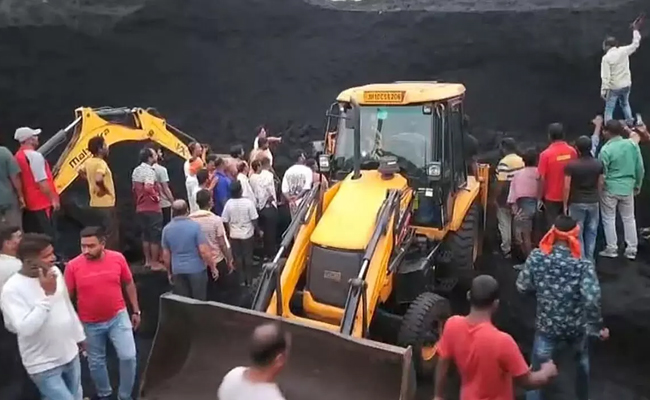
Dhanbad (Jharkhand) (PTI): At least four workers died after being buried under coal slurry in Jharkhand's Dhanbad district on Saturday, a police official said.
The incident took place at Moonidih coal washery in the command area of Bharat Coking Coal Limited (BCCL).
"Bodies of all four workers were dug out of debris during a rescue operation," Putki police station in-charge Waqar Hussain told PTI.
The incident took place when coal slurry was being loaded into trucks by workers, during which a large chunk of slurry fell and trapped several workers underneath, officials said.
The deceased have been identified as Manik Bauri, Dinesh Bauri, Deepak Bauri, and Hemlal Gope.
Meanwhile, the family members of the deceased and local villagers placed the bodies in front of the washery gate and began a protest.
They demanded compensation, jobs for dependents and action against those responsible for the incident.
Police and administration officials are trying to pacify the protesters, an official said.