ICJ orders Israel to prevent genocidal acts in Palestine
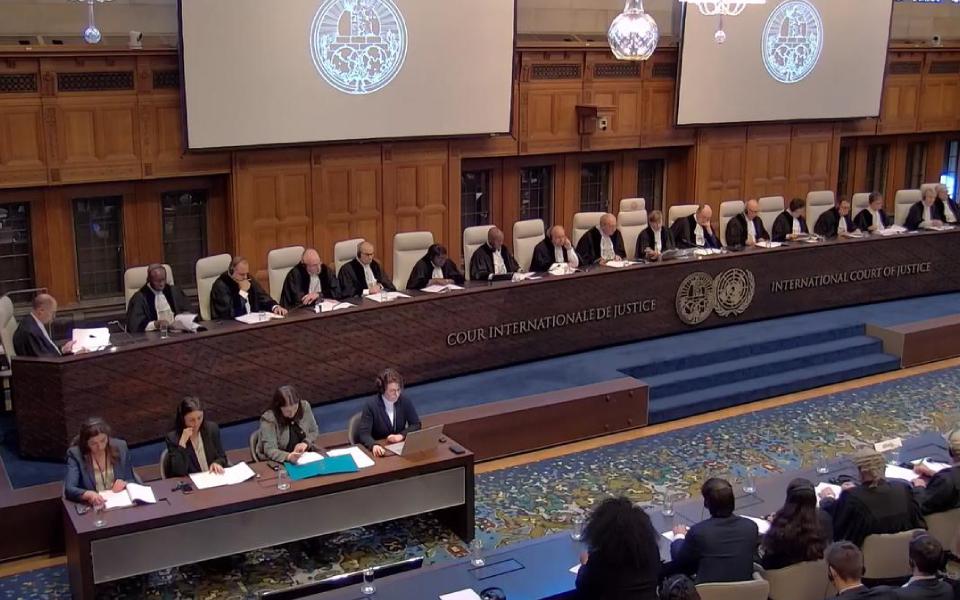
The Hague, Jan 26: The top UN court stopped short Friday of ordering a cease-fire in Gaza but demanded that Israel try to contain death and damage in its military offensive in the tiny coastal enclave.
South Africa, which brought the case, had asked for the court to order Israel to halt its operation.
The top UN Court court decided not to throw out genocide charges against Israel for its military offensive in Gaza, as part of a preliminary decision in a case that goes to the core of one of the world's most intractable conflicts.
South Africa, which brought the case, has asked for the court to order Israel to halt its operation in the tiny coastal enclave.
In the highly anticipated decision made by a panel of 17 judges, the International Court of Justice decided not to throw out the case. The reading of the ruling is ongoing.
"The court is acutely aware of the extent of the human tragedy that is unfolding in the region and is deeply concerned about the continuing loss of life and human suffering," Joan E. Donoghue, the court's president, said.
Friday's decision is only an interim one; it could take years for the full case brought by South Africa to be considered. Israel rejects the genocide accusation and had asked the court to throw the charges out.
While the case winds its way through the court, South Africa has asked the judges "as a matter of extreme urgency" to impose so-called provisional measures to protect Palestinians in Gaza and the court could order those on Friday.
Top of the South African list is a request for the court to order Israel to "immediately suspend its military operations in and against Gaza." It is also asking for Israel to take "reasonable measures" to prevent genocide and allow access for desperately needed aid.
In a statement Thursday, Palestinian Prime Minister Mohammed Shtayyeh said he hoped the decision would "include immediate action to stop the aggression and genocide against our people in the Gaza Strip ... and a rapid flow of relief aid to save the hungry, wounded and sick from the threat of slow death that threatens them."
On Thursday, Israeli government spokesperson Eylon Levy had said that Israel expected the court to toss out the "spurious and specious charges."
Israel often boycotts international tribunals and UN investigations, saying they are unfair and biased. But this time, it took the rare step of sending a high-level legal team a sign of how seriously it regards the case and likely the fear that any court order to halt operations would be a major blow to the country's international standing.
An Israeli official said that Prime Minister Benjamin Netanyahu huddled with top legal, diplomatic and security officials on Thursday in anticipation of the ruling. He said Israel is confident in its case but discussed "all scenarios." The official spoke on condition of anonymity because he was discussing confidential meetings.
Israel launched its massive air and ground assault on Gaza after Hamas members stormed through Israeli communities on October 7 killing some 1,200 people, mainly civilians, and abducting another 250.
The offensive has decimated vast swaths of the territory and driven nearly 85% of its 2.3 million people from their homes.
More than 26,000 Palestinians have been killed, the Health Ministry in the Hamas-run enclave said on Friday. The ministry does not differentiate between combatants and civilians in its death toll, but has said about two-thirds of those killed were women and children.
The Israeli military claims at least 9,000 of those killed in the nearly four-month conflict are Hamas group members.
UN officials have expressed fears that even more people could die from disease, with at least one-quarter of the population facing starvation.
Ahead of the ruling, Marieke de Hoon, an associate professor of international law at the University of Amsterdam, said she thought the court was unlikely to throw the case out since the legal bar South Africa has to clear at this early stage is lower than the one that would be applied for ruling on the merits of the accusation.
"The standard ... is not, has there been genocide? But a lower standard," she said. "Is it plausible that there could have been a risk of genocide that would invoke Israel's responsibility to prevent genocide?"
But De Hoon also did not expect the world court to order an end to Israel's military operation.
"I think that they will shy away from actually calling for a full cease-fire, because I think they will find that beyond their abilities right now," she said in a telephone interview.
Provisional measures by the world court are legally binding, but it is not clear if Israel would comply with any order.
Top Hamas official Osama Hamdan, meanwhile, said his group would abide by a cease-fire if ordered and would be ready to release the hostages it is holding if Israel releases Palestinian prisoners.
How the US, Israel's top ally, responds to any order will be key, since it wields veto power at the UN Security Council and thus could block measures there aimed at forcing Israel's compliance.
The US has said Israel has the right to defend itself, but also spoken about the need for the country to protect civilians in Gaza and allow more aid in.
The genocide case strikes at the national identity of Israel, which was founded as a Jewish state after the Nazi slaughter of 6 million Jews during World War II.
South Africa's own identity is key to it bringing the case. Its governing party, the African National Congress, has long compared Israel's policies in Gaza and the West Bank to its own history under the apartheid regime of white minority rule, which restricted most Black people to "homelands" before ending in 1994.
Let the Truth be known. If you read VB and like VB, please be a VB Supporter and Help us deliver the Truth to one and all.
Caste census will form basis for future policy decision, says CM Siddaramaiah
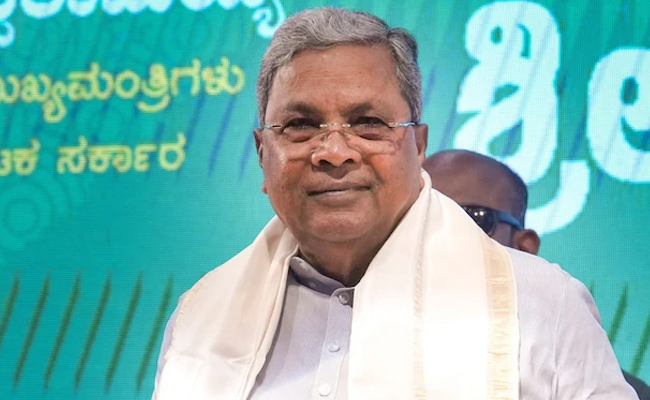
Mysuru (Karnataka) (PTI): Karnataka Chief Minister Siddaramaiah on Wednesday said that the ongoing caste census would form the basis for future policy decisions, asserting that the exercise was crucial to advancing social justice in the state.
Addressing a gathering at the Siddarameshwara Jayanti celebrations here, he said caste enumeration was being carried out for the first time since 1931 and would be followed by deliberations once the report is submitted.
"At present, a caste census (Jaati Sameekshe) is underway. After the report comes, we will discuss it and take necessary decisions," Siddaramaiah said.
He underlined the government’s commitment to equality, stating, "We are committed to social justice. No one should face injustice. Even if not 100 per cent, we will strive to ensure 99 per cent justice."
Referring to measures aimed at addressing intra-caste disparities, the chief minister said the government had already implemented internal reservation based on revised classifications.
"We have gone beyond the Nagamohan Das report and implemented internal reservation… now it has been revised to 5.25 per cent, 5.25 per cent, and 4.5 per cent. This has been approved by the Cabinet," he said.
Siddaramaiah said the broader objective was to ensure equitable distribution of resources and opportunities, while reiterating that policy interventions would be guided by constitutional principles.
"Our objective is equal share and equal life for all," he said.
He also emphasised the role of education in eliminating inequalities, particularly among marginalised communities, and said empowerment was essential to dismantle entrenched caste hierarchies.
"Only when people gain such empowerment can caste divisions be eradicated. Education is essential for this," he added.
The CM said the government would examine demands raised by various communities and take decisions based on feasibility, while ensuring that benefits reached all sections without discrimination.