In a first, Trump says two leaders of India-Pak 'decided' to stop conflict
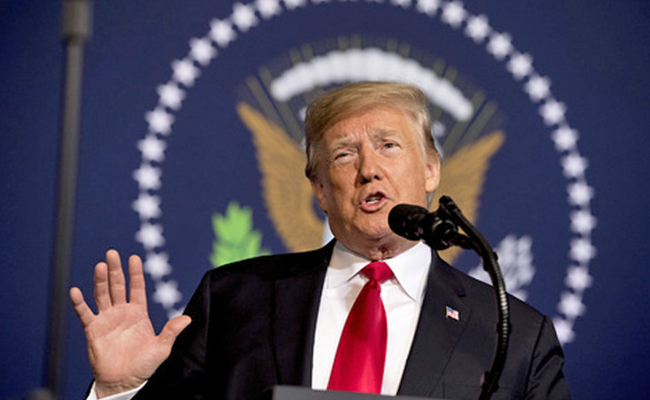
New York/Washington (PTI): US President Donald Trump said the two “very smart” leaders of India and Pakistan “decided” not to continue a war that could have turned nuclear, the first time in weeks he did not credit himself for stopping of hostilities between the two neighbouring nations.
Trump made the remarks while speaking to the media in the Oval Office after hosting Pakistan's Chief of Army Staff, Asim Munir, for lunch at the White House on Wednesday.
Trump said he was “honoured" to meet Munir.
When asked if Iran was discussed in his meeting with Munir, Trump said: “Well, they know Iran very well, better than most, and they're not happy about anything. It's not that they're bad with Israel. They know them both, actually, but they probably, maybe they know Iran better, but they see what's going on, and he agreed with me."
“The reason I had him here, I want to thank him for not going into the war, ending the war. And I want to thank, as you know, Prime Minister Modi just left a little while ago, and we're working on a trade deal with India. We're working on a trade deal with Pakistan," the president said.
“They were both here, but I was with Modi a few weeks ago. He was here actually, but now we speak to him. And I'm so happy that two smart people, plus you know, people on their staff too, but two smart people, two very smart people decided not to keep going with that war. That could have been a nuclear war. Those are two nuclear powers, big ones, big, big nuclear powers, and they decided that.”
This is the first time in weeks when Trump did not take credit for stopping the military conflict between India and Pakistan.
Since May 10, when India and Pakistan decided to stop the military conflict, Trump has repeatedly claimed on multiple occasions that he “helped settle” tensions between the two countries and that he told the nuclear-armed South Asian neighbours that America would do a “lot of trade” with them if they stopped the conflict.
Modi and Trump were scheduled to meet on the sidelines of the G7 Leaders’ Summit in Kananaskis, Canada, but the American president returned to Washington early.
Before departing Kananaskis and wrapping up his first visit to Canada in a decade, Modi had a 35-minute phone conversation with Trump.
Foreign Secretary Vikram Misri, in a video message from Kananaskis, said Modi conveyed to Trump that at “no point” during Operation Sindoor was there any discussion, at any level, on an India-US trade deal or any proposal for mediation by the US between India and Pakistan.
The discussion to cease military action took place directly between India and Pakistan through the existing channels of communication between the two armed forces, and it was initiated at Islamabad's request.
Modi firmly said India will never accept the mediation of a third party, and there is complete political consensus in India on this matter, Misri said.
Misri also noted that following the April 22 Pahalgam attack, Trump expressed his condolences to Modi over a phone call and expressed his support against terrorism.
The phone call on Tuesday in Kananaskis was the “first conversation” between the two leaders since April.
Misri said Trump listened carefully to the points conveyed by the prime minister and expressed his support towards India’s fight against terrorism.
Modi conveyed that India no longer views terrorism as a proxy war, but as a war itself, and that Operation Sindoor is still ongoing.
Trump enquired if Modi could stop over in the US on his way back from Canada, but the prime minister was scheduled to depart for Croatia, the last leg of his three-nation tour that began in Cyprus.
Misri said that due to prior commitments, Modi expressed his inability to visit Washington, and both leaders agreed to make efforts to meet soon.
Earlier in the day, Trump said he spoke to Modi, “a fantastic man”, and stressed the two countries will have a trade deal while repeating his claim that he stopped a war between India and Pakistan.
"Well, I stopped the war. I love Pakistan. I think Modi is a fantastic man. I spoke to him last night. We're going to make a trade deal with Modi of India. But I stopped the war between Pakistan and India,” Trump said on Wednesday.
Trump was asked what he was looking to achieve diplomatically from the meeting with Munir. “This man was extremely influential in stopping it from the Pakistan side,” Trump said, referring to the army chief.
“Modi, from the Indian side, and others. They were going at it, and they're both nuclear countries. I got it stopped. I don't think I had one story. Did I have one story written? I stopped the war between two major nations, major nuclear nations. I don't think I had a story written about it,” he said, adding that the people know.
About two weeks after the April 22 terror attack, which claimed 26 lives, India launched Operation Sindoor targeting terror infrastructure in Pakistan and Pakistan-occupied Kashmir.
India and Pakistan reached an understanding on May 10 to end the conflict after four days of intense cross-border drone and missile strikes.
Sources in New Delhi have since maintained that the Director Generals of Military Operations (DGMOs) of India and Pakistan reached an understanding to stop the military action with immediate effect. They said no third party was involved.
Let the Truth be known. If you read VB and like VB, please be a VB Supporter and Help us deliver the Truth to one and all.
Two injuries, one DNF, a DQ as India end messy World Relays campaign
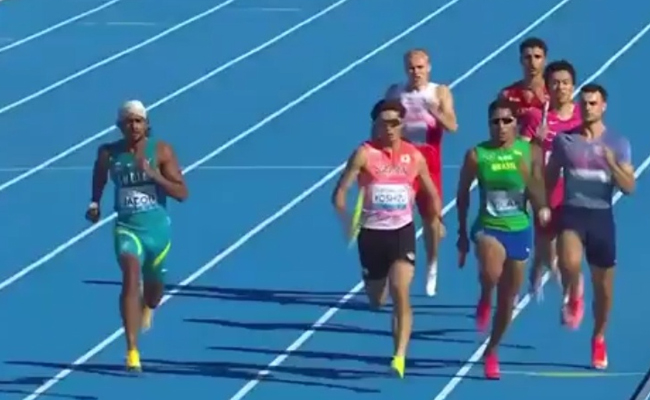
Gaborone (Botswana) (PTI): Amoj Jacob and Ragul Kumar got injured during the men's 4x400m and 4x100 races respectively as India ended their World Athletics Relays campaign in disappointment on the second day of competitions here on Sunday.
The Indian camp had high hopes of making the 2027 World Championships in the men's 4x400m relay but the team did not finish (DNF) the race as Jacob suffered cramps and pulled out of the race after taking the baton from the first leg runner Dharamveer Choudhary. Rajesh Ramesh and Vishal TK were to run in the third and fourth legs.
Those teams which could not qualify for the 2027 Beijing World Championships by reaching the final round of each of the six relay events on Saturday were given another chance in the second qualification round on Sunday.
The top two teams in each of the two heats (in all six relay events) booked the Beijing ticket on Sunday.
India will now have to try and qualify for the World Championships through the Top Lists of the World Athletics, which is a long and tedious process.
In the men's 4x100m race, third leg runner Ragul Kumar fell down the track after failing to hand over the baton inside the exchange zone to fourth leg runner Gurindervir Singh, which clearly showed the lack of coordination among the runners.
Harsh Santosh Raut and Animesh Kujur ran the first two legs.
The Indian quartet was disqualified and Kumar was seen being taken away from the Field of Play with the help of the volunteers.
It was a comedy of errors in the case of the women's 4x100m race, which saw the baton being dropped during an exchange between first leg runner Tamanna and second runner Nithya Gandhe, though the Indians finished the race in 53.09 seconds.
Gandhe started running quite a distance, but after realising that the baton was not in her hand, she turned and ran back to pick it up.
The only silver-lining for the Indian contingent was the national record time in the mixed 4x100m relay race, though the quartet of Ragul Kumar, Nithya Gandhe, Animesh Kujur and Sneha SS finished sixth in heat number two with a time of 41.35 seconds, bettering the previous national mark of 42.30 seconds set in March in Chandigarh.
The mixed 4x400m relay quartet of Theerthesh P Shetty, Kumari Saloni, Nihal William and Rashdeep Kaur ended at fifth in heat number one with a time of 3 minutes and 19.40 seconds.
On Saturday, all the five Indian relay teams had failed to make it to the respective final rounds and thus missed out on the 2027 World Championships berths.