India-born media veteran Dr Samir Shah selected as new BBC chairman
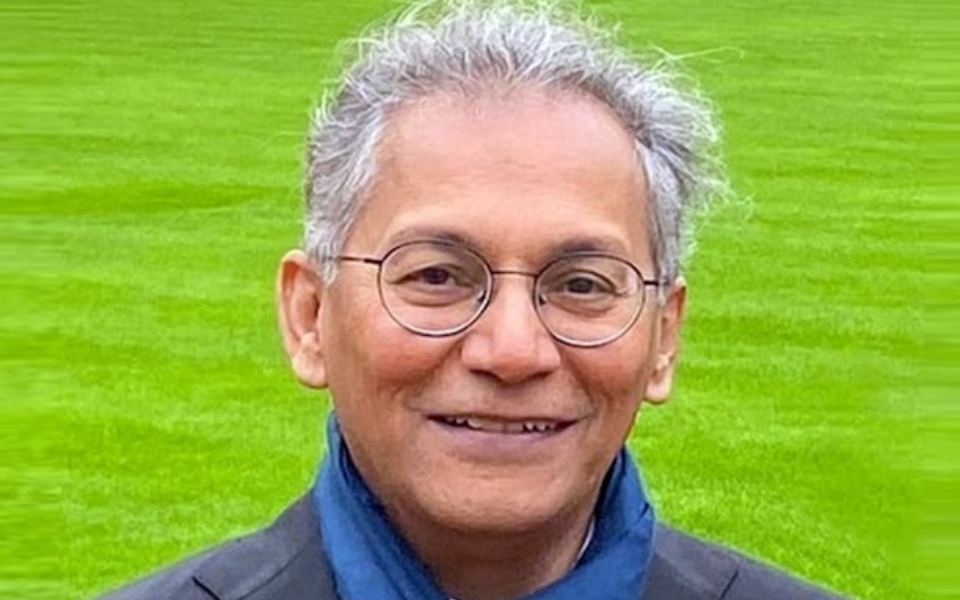
London, Dec 7: An India-born media executive who has worked in UK broadcasting for over 40 years, Dr Samir Shah, has been announced as the UK government's preferred candidate to take over as the new BBC chairman.
The 71-year-old, who was honoured with a CBE by Queen Elizabeth II in 2019 for services to television and heritage, will replace Richard Sharp, who had been forced to resign after his communication with former prime minister Boris Johnson came under scrutiny.
Shah will now be quizzed by cross-party MPs of the House of Commons Media Culture, Media and Sport Select Committee for pre-appointment scrutiny before formally taking charge.
"With a career spanning more than 40 years in TV production and journalism, Dr Shah has a wealth of experience to bring to the position of BBC Chair," UK Culture Secretary Lucy Frazer said on Wednesday, confirming the selection as per the appointment process.
"He has a clear ambition to see the BBC succeed in a rapidly changing media landscape, and I have no doubt he will provide the support and scrutiny that the BBC needs to meet the challenges and opportunities of the future," she said.
The minister said Shah's knowledge of the British Broadcasting Corporation and his belief in its role as a national broadcaster alongside his extensive work to promote diversity in broadcasting will be invaluable in helping to ensure that the BBC reflects, represents and serves communities across the whole of the UK.
"The BBC is, without doubt, one of the greatest contributions we have made to global culture and one of our strongest calling cards on soft power," Shah said.
"If I am able to put what skills, experience, and understanding of public service broadcasting I have built up during my career to help this brilliant organisation meet the complex and diverse challenges it faces over the coming years, it would be an honour," he added.
"The BBC has a great place in British life and a unique duty to reach a wide audience right across the country and I will do all I can to ensure it fulfils this in an increasingly competitive market," Shah further said.
Born in Aurangabad, Shah came to England in 1960 and has previously been the head of current affairs and political programmes at the BBC.
The CEO and owner of Juniper, an independent television and radio production company, Shah has also served as a non-executive director of the BBC between 2007 and 2010.
Besides, the Oxford University alumnus is a race relations expert who co-authored the government's Commission on Race and Ethnic Disparities report in 2021.
More recently, he was named on a three-member panel set up by the government to independently review the unrest that took place in the city of Leicester last year, as community groups clashed in the aftermath of an India-Pakistan cricket match.
As BBC chairman, a three-day-a-week role with an annual salary of GBP 160,000, Shah will be responsible for upholding and protecting the taxpayer-funded licence fee-operated public broadcaster and ensuring it fulfils its mission to "inform, educate and entertain".
"We welcome the announcement that Samir Shah has been selected as the government's preferred candidate to take up the role of BBC chair and look forward to him joining the board once the formal process has been completed," a BBC spokesperson said.
Shah's half-brother, Mohit Bakaya, is also a BBC veteran as controller of BBC Radio 4.
Let the Truth be known. If you read VB and like VB, please be a VB Supporter and Help us deliver the Truth to one and all.
Trump pauses Project Freedom, claims great progress for final agreement with Iran
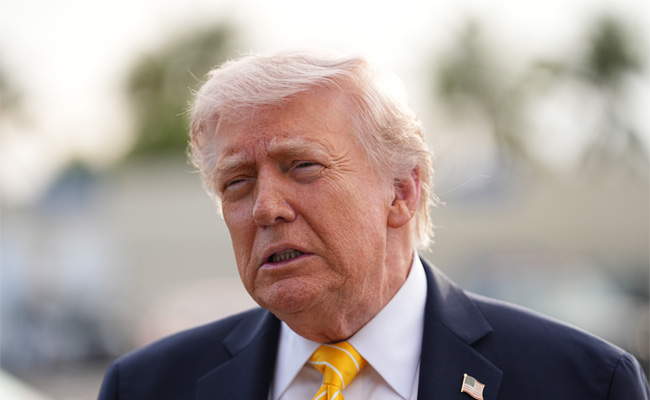
Washington (PTI): President Donald Trump has suspended “Project Freedom,” to escort ships through the Strait of Hormuz, claiming progress in negotiations with Iran toward an agreement to end the war.
In a post on Truth Social on Tuesday, Trump said, “Great progress has been made toward a complete and final agreement with representatives of Iran.”
“Based on the request of Pakistan and other Countries, the tremendous Military Success that we have had during the Campaign against the Country of Iran and, additionally, the fact that Great Progress has been made toward a Complete and Final Agreement with Representatives of Iran, we have mutually agreed that, while the Blockade will remain in full force and effect, Project Freedom (The Movement of Ships through the Strait of Hormuz) will be paused for a short period of time to see whether or not the Agreement can be finalized and signed," Trump said.
Project Freedom was launched on Monday to escort ships, stranded due to the closure of the Strait of Hormuz, out to safety. Trump had announced the operation on Sunday and the US Central Command began implementing it the next day.
However, the Project led to friction in the vicinity of the narrow seaway, a key route for transporting one-fifth of the global oil supplies, with the UAE claiming that its ships were attacked by Iran. The US also claimed to have destroyed several Iranian small boats.
Trump’s statement on Truth Social came hours after US Secretary of State Marco Rubio announced that Operation Epic Fury, launched on February 28, had concluded as its objectives have been achieved.
"Operation Epic Fury is concluded. We achieved the objectives of that operation. We're not cheering for an additional situation to occur. We would prefer the path of peace. What @POTUS would prefer is a deal... that is, so far, not the route that Iran has chosen," Rubio told a press conference at the White House on Tuesday.
On Project Freedom, Rubio said the goal was to rescue almost 23,000 civilians from 87 different countries who were trapped inside the Persian Gulf and left for dead by the Iranian regime.
"This is not an offensive operation. This is a defensive operation, and what that means is very simple: there’s no shooting unless we're shot at first. We’re not attacking them, but if they're attacking us or they’re attacking a ship, you need to respond to that," Rubio said.