India expands presence in global university rankings, but drops out of top 300
London, Sep 12: Indian universities have expanded their presence in the annual rankings of the leading global educational institutions from 49 to 56 but dropped out of the top 300 bracket in this year's 'Times Higher Education World University Rankings'.
India's top-ranked university, Bangalore's Indian Institute of Science (IISc) declined, marking the first time that India is not in top 300 since 2012 in the tally once again topped by the UK's University of Oxford.
IISc still ranks the highest for India but has dropped into the 301-350 bracket (from 251-300 cohort), due to what has been described as a significant fall in its citation impact score offsetting improvements in research environment, teaching environment and industry income.
"India has a huge amount of potential in global higher education, given its rapidly growing youth population and economy and use of English-language instruction. However, it is disappointing to see the country fall out of the top 300 of the rankings this year, with only a small number of institutions registering progress, said Ellie Bothwell, THE' rankings editor.
"The Indian government has strong ambitions to boost the global standing of its top universities and attract foreign students, academics and research collaboration. It now needs to back up these aspirations with high levels of investment or risk declining further amid increasing global competition, especially from other parts of Asia, she said on Wednesday.
Overall, 56 Indian universities feature in the table, up from 49 last year. As a result, India holds on to its place as the fifth most-represented nation in the world and the third most-represented in Asia, behind Japan and mainland China. It has eight more universities than Germany, which is sixth in the country ranking, but 25 fewer than China.
Let the Truth be known. If you read VB and like VB, please be a VB Supporter and Help us deliver the Truth to one and all.
PM Modi to address the nation tonight at 8.30 PM
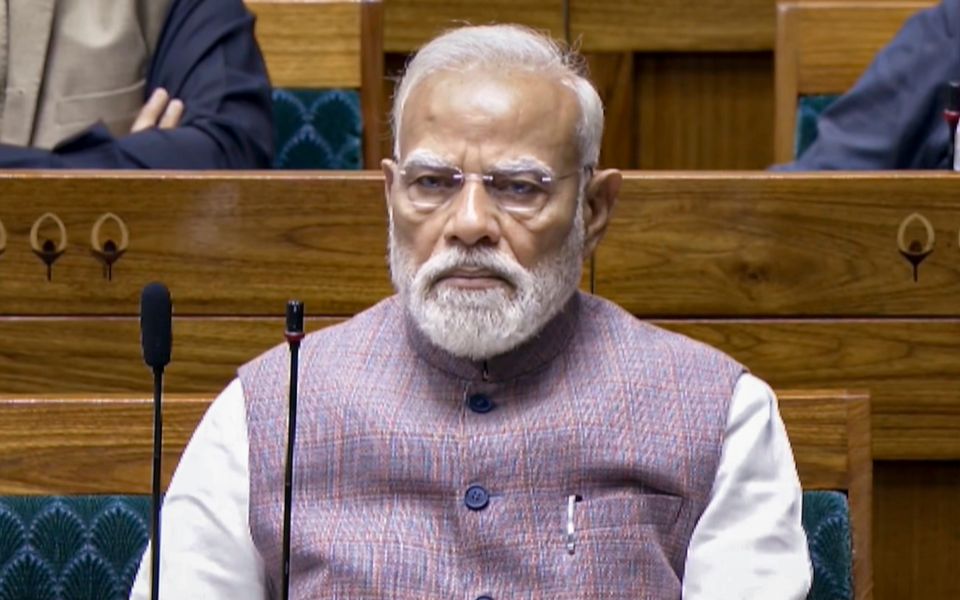
New Delhi (PTI): Prime Minister Narendra Modi will address the nation tonight at 8.30 PM, a day after a bill to implement women's reservation in legislatures was defeated in the Lok Sabha.
"The Prime Minister will address the nation at 8.30 PM (April 18, Saturday)," an official said.
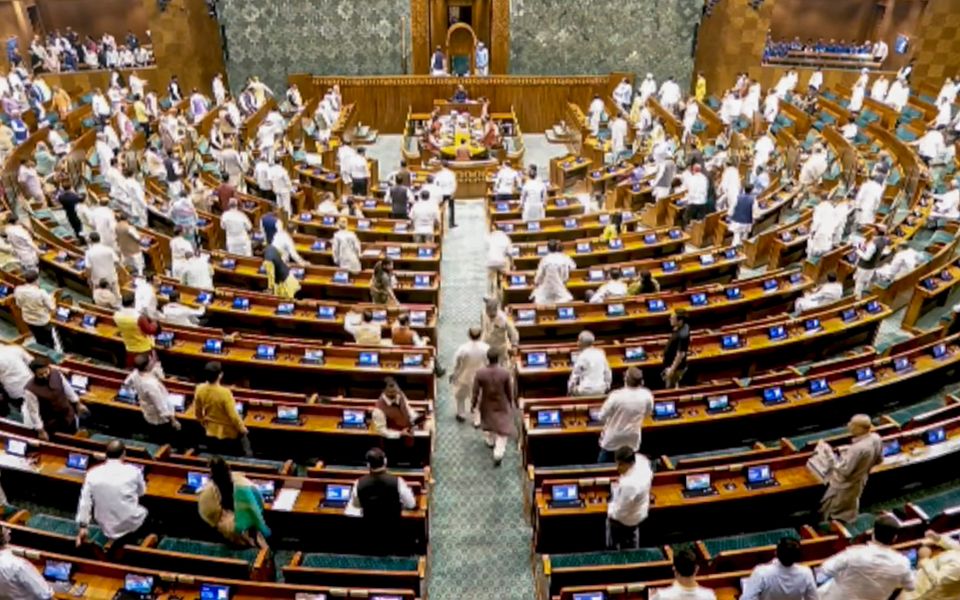
Modi is expected to delve into the issue of implementation of women's quota and the happenings in Parliament, where opposition parties on Friday voted against the Constitution (131st Amendment) Bill.
Under the Bill, Lok Sabha seats were to be increased up to 816 from the current 543 to "operationalise" the women's reservation law before the 2029 parliamentary polls, following a delimitation exercise based on the 2011 Census. Seats were also to be increased in state and UT assemblies to accommodate 33 per cent reservation for women.
A two-thirds majority was required for the passage of the crucial bill but the ruling BJP-led alliance could not muster the numbers.
During polling on the bill in the Lok Sabha on Friday night, 298 members voted in its support, while 230 MPs voted against it.
Out of 528 members who voted, the bill required 352 votes for a two-thirds majority.