India will not be buying oil from Russia: Trump reiterates
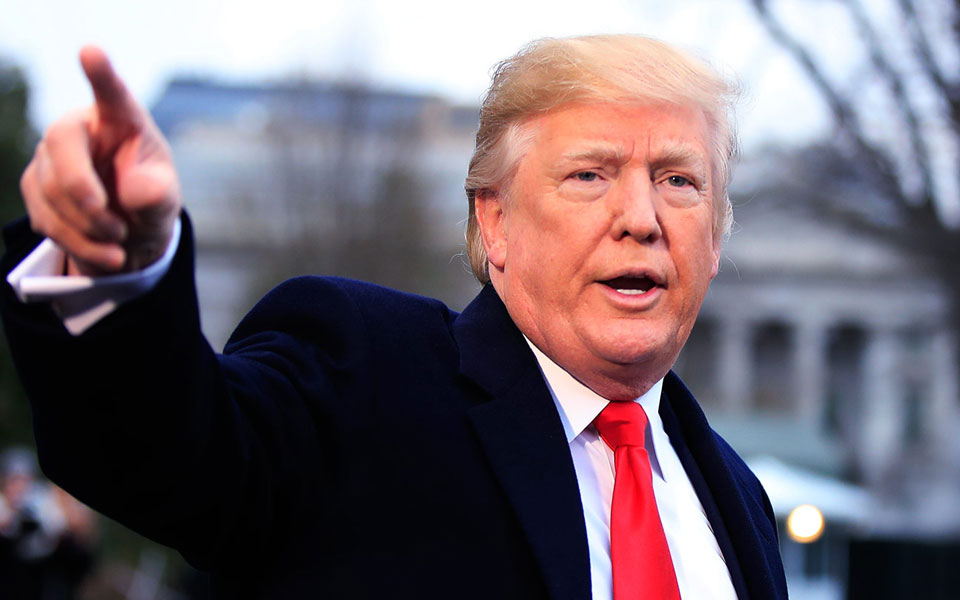
Washington (PTI): US President Donald Trump reiterated that India will not be buying oil from Russia, saying that New Delhi has already “de-escalated” and “more or less stopped” its oil purchases from Moscow.
While speaking to the media during a bilateral lunch with the President of Ukraine, Volodymyr Zelenskyy, on Friday, “Trump said India will not be buying oil from Russia, they have already de-escalated and they have more or less stopped.”
“They are pulling back. They have bought about 38 per cent of the oil, and they won’t be doing it anymore,” Trump said while replying to a question.
India on Thursday said it is "broad-basing and diversifying" its sourcing of energy to meet market conditions, hours after US President Donald Trump claimed that Prime Minister Narendra Modi assured him that New Delhi will stop procuring Russian crude oil.
Washington has been maintaining that India is helping Putin to finance the war through its purchase of Russian crude oil.
The relations between New Delhi and Washington have been reeling under severe stress after Trump doubled tariffs on Indian goods to a whopping 50 per cent, including a 25 per cent additional duty for India's purchase of Russian crude oil.
India described the US action as "unfair, unjustified and unreasonable".
Meanwhile, Trump has once again repeated his claims about resolving the war between India and Pakistan, adding that Prime Minister of Pakistan Shehbaz Sharif has said, “I have saved millions of lives.”
“The Prime Minister of Pakistan said I saved millions of lives by interceding … you look at Pakistan and India as an example that would have been a bad one for two nuclear nations,” the US President said.
Since May 10, when Trump announced on social media that India and Pakistan had agreed to a “full and immediate” ceasefire after a “long night” of talks mediated by Washington, he has repeated his claim dozens of times that he “helped settle” the conflict between India and Pakistan.
India has consistently maintained that the understanding on cessation of hostilities with Pakistan was reached following direct talks between the Directors General of Military Operations (DGMOs) of the two militaries.
India launched Operation Sindoor on May 7, targeting terror infrastructure in Pakistan and Pakistan-occupied Kashmir in retaliation for the April 22 Pahalgam attack that killed 26 civilians.
India and Pakistan reached an understanding on May 10 to end the conflict after four days of intense cross-border drone and missile strikes.
Let the Truth be known. If you read VB and like VB, please be a VB Supporter and Help us deliver the Truth to one and all.
4 workers die after being buried under coal slurry in Jharkhand's Dhanbad
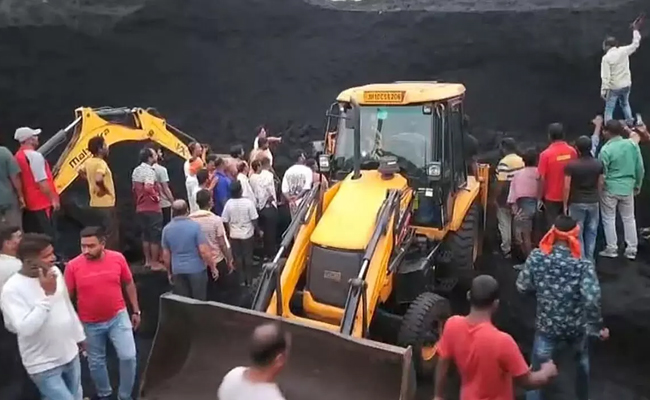
Dhanbad (Jharkhand) (PTI): At least four workers died after being buried under coal slurry in Jharkhand's Dhanbad district on Saturday, a police official said.
The incident took place at Moonidih coal washery in the command area of Bharat Coking Coal Limited (BCCL).
"Bodies of all four workers were dug out of debris during a rescue operation," Putki police station in-charge Waqar Hussain told PTI.
The incident took place when coal slurry was being loaded into trucks by workers, during which a large chunk of slurry fell and trapped several workers underneath, officials said.
The deceased have been identified as Manik Bauri, Dinesh Bauri, Deepak Bauri, and Hemlal Gope.
Meanwhile, the family members of the deceased and local villagers placed the bodies in front of the washery gate and began a protest.
They demanded compensation, jobs for dependents and action against those responsible for the incident.
Police and administration officials are trying to pacify the protesters, an official said.