Indian-American Sabrina Singh named Kamala Harris' Dy Press Secretary
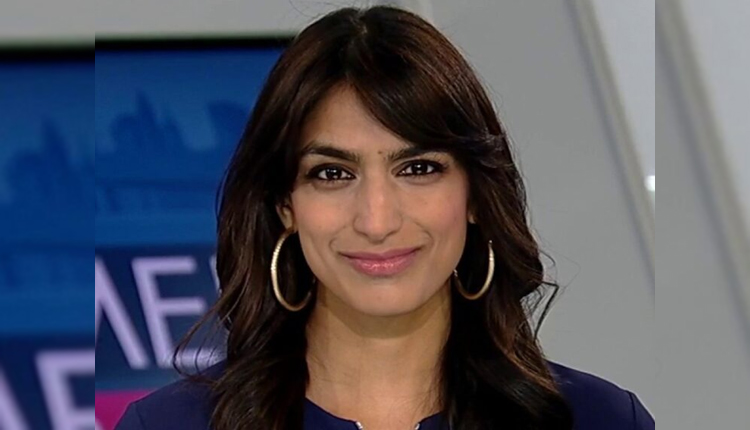
Washington: Indian-American Sabrina Singh would serve as Deputy Press Secretary to the Vice President in the White House, according to an announcement made by the Biden-Harris Transition.
Singh was Press Secretary to Vice President-elect Kamala Harris on the Biden-Harris campaign. Prior to her role on the campaign, she served as a senior spokesperson for Mike Bloomberg's presidential campaign and National Press Secretary for Cory Booker's presidential campaign.
She previously served as deputy communications director for the Democratic National Committee, spokesperson for American Bridge's Trump War Room, and Regional Communications Director on Hillary Clinton's 2016 presidential campaign.
Singh has also worked at SKDKnickerbocker, served as Communications Director for Representative Jan Schakowsky, and worked at various Democratic committees, said the Biden-Harris Transition as it announced additional members of the Vice President's Office at the White House.
Prominent among them being Yael Belkind, Assistant to the Chief of Staff to the Vice President; Vincent Evans as Deputy Director of the Office of Public Engagement and Intergovernmental Affairs; Michael Fuchs as Deputy Chief of Staff; Kate Childs Graham as Director of Speech Writing and Dr Ike Irby as Policy Advisor to the Vice President.
Deanne Millison has been named Deputy Policy Director to the Vice President; Rachel Palermo as Assistant Press Secretary; Mike Pyle as Chief Economic Advisor; Peter Velz as Director of Press Operations; and Herbie Ziskend as Deputy Communications Director.
These diverse, experienced, and talented individuals will join the Office of the Vice President.
The appointments demonstrate that the president and vice president-elect are building an administration that looks like America and is ready to deliver results for the American people on day one, the transition said.
Building our nation back better requires having the best and the brightest in our administration. These accomplished individuals have the knowledge and expertise to hit the ground running on day one and will work each day in service to the American people, President-elect Joe Biden said.
With their varied and diverse backgrounds, they bring a shared commitment to tackling the crises facing America, helping us become a stronger, more united nation, he said.
These deeply experienced public servants reflect the very best of the US and they will be ready to get to work building a country that lifts up all Americans. Their counsel and expertise are grounded in a commitment to making sure the economy works for working people and all those looking to work, said Harris.
And their leadership will be critical as we work to meet the challenges facing the American people -- from the coronavirus pandemic to this economic recession to our climate crisis and long-overdue reckoning on racial injustice. I am proud to announce these individuals will be joining my team and look forward to working alongside them each and every day, she said.
Biden and Harris will take the oath of office on January 20.
President-elect Biden and Vice President-elect Harris have a bold agenda that will build our nation back better than before. These appointees will work tirelessly for the American people, and I am proud to have them join our White House team, said incoming Chief of Staff to Vice President Tina Flournoy.
Singh is the granddaughter of Sardar J J Singh of the India League of America.
In the 1940s, Sardar along with a small group of fellow Indians mounted a nationwide campaign against racially discriminatory policies of the US. This culminated in then-president Harry Truman signing the Luce-Celler Act on July 2, 1946. The signing of the act allowed a quota of 100 Indians to immigrate to the United States per annum.
Let the Truth be known. If you read VB and like VB, please be a VB Supporter and Help us deliver the Truth to one and all.
MP boat tragedy: Death toll climbs to 13; body of last missing person recovered

Jabalpur (PTI): The bodies of a five-year-old boy and his uncle were recovered from Bargi Dam in Madhya Pradesh's Jabalpur district on Sunday morning, raising the death toll in the cruise boat tragedy to 13, police said.
The boat, around 20 years old and operated by the state tourism department, capsized during a storm on Thursday evening.
"The bodies of Mayuram (5) and his uncle Kamraj (around 50), an employee of the Ordnance Factory in Khamaria, were found floating and were fished out of the dam," Bargi Sub Divisional Officer of Police Anjul Ayank Mishra told PTI over the phone.
ALSO READ: Passenger held after opening emergency exit on taxiing flight at Chennai airport
All 13 missing persons identified have now been accounted for, he said, adding the bodies were sent to a government hospital for postmortem.
Teams comprising around 20 Army divers airlifted from Agra, along with personnel from the National Disaster Response Force, State Disaster Response Force and local divers, were involved in the search operation, the police said.
Of the 41 identified passengers on board the vessel, 28 were rescued after the incident, according to the police.
The CCTV footage near the boarding point showed 43 people heading towards the boat, though the identities of 41 passengers have been confirmed so far, they said.
The state government on Friday ordered a probe into the incident and dismissed three crew members. It also banned the operation of similar vessels in the state.