Iran says at least 103 people killed, 141 wounded in blasts at ceremony honouring slain general
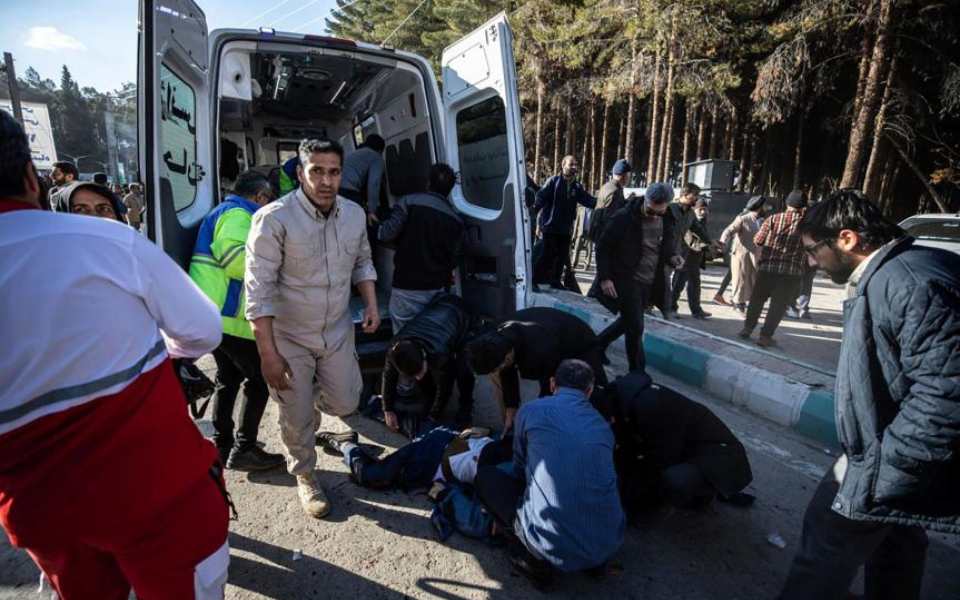
Dubai, Jan 3: Two explosions minutes apart on Wednesday in Iran targeted a commemoration for a prominent general slain in a US drone strike in 2020, killing at least 103 people and wounding at least 141 others as the Middle East remains on edge over Israel's war on Hamas in the Gaza Strip.
No group immediately claimed responsibility for what Iranian state media called a "terroristic" attack shortly after the blasts in Kerman, about 820 kilometres southeast of the capital, Tehran.
While Israel has carried out attacks in Iran over its nuclear programme, it has conducted targeted assassinations, not mass-casualty bombings.
Iran also has seen mass protests in recent years, including those over the death of 22-year-old Mahsa Amini in 2022. The country also has been targeted by exile groups in attacks dating back to the turmoil surrounding its 1979 Islamic Revolution.
The blasts struck an event marking the the fourth anniversary of the killing of Gen. Qassem Soleimani, the head of the Revolutionary Guard's elite Quds Force who died in a US drone strike in Iraq in January 2020. The explosions occurred near his grave site in Kerman.
Iranian state television quoted Babak Yektaparast, a spokesman for the country's emergency services, for the casualty figure. Authorities said some people were injured while fleeing afterward.
Footage suggested that the second blast occurred some 15 minutes after the first. A delayed second explosion is often used by suspected militants to target emergency personnel responding to the scene and inflict more casualties.
People could be heard screaming in state TV footage.
Kerman's deputy governor, Rahman Jalali, called the attack "terroristic," without elaborating.
Soleimani was the architect of Iran's regional military activities and is hailed as a national icon among supporters of Iran's theocracy. He also helped secure Syrian President Bashar Assad's government after the 2011 Arab Spring protests against him turned into a civil, and later a regional, war that still rages today.
Relatively unknown in Iran until the 2003 US invasion of Iraq, Soleimani's popularity and mystique grew after American officials called for his killing over his help arming groups with penetrating roadside bombs that killed and maimed US troops.
A decade and a half later, Soleimani had become Iran's most recognizable battlefield commander, ignoring calls to enter politics but growing as powerful, if not more, than its civilian leadership.
Ultimately, a drone strike launched by the Trump administration killed the general, part of escalating incidents that followed America's 2018 unilateral withdrawal from Tehran's nuclear deal with world powers.
Soleimani's death has drawn large processions in the past. At his funeral in 2020, a stampede broke out in Kerman and at least 56 people were killed and more than 200 were injured as thousands thronged the procession. Otherwise, Kerman largely has been untouched in the recent unrest and attacks that have struck Iran. The city and province of the same name sits in Iran's central desert plateau.
Let the Truth be known. If you read VB and like VB, please be a VB Supporter and Help us deliver the Truth to one and all.
Sujit Nair raises concerns over speculation of DMK-AIADMK understanding to block TVK
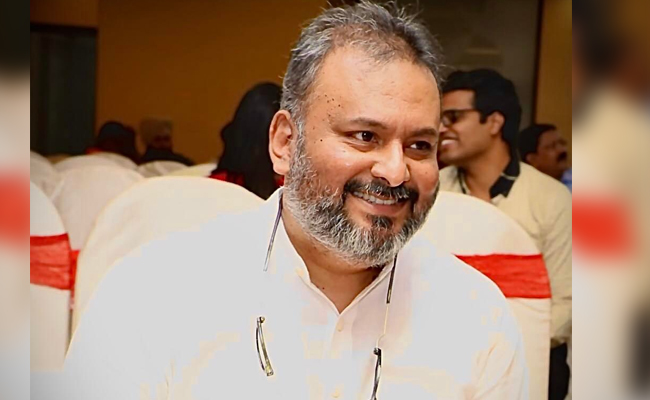
Chennai: Journalist and political commentator Sujit Nair has expressed concern over speculation that the Dravida Munnetra Kazhagam and the All India Anna Dravida Munnetra Kazhagam could explore a post-poll understanding to prevent Vijay-led Tamilaga Vettri Kazhagam from forming the government in Tamil Nadu.
In a social media post, Sujit Nair said the election verdict in Tamil Nadu reflected a clear public demand for political change and argued that the mandate should be respected irrespective of political preferences.
Referring to reports and political discussions surrounding a possible understanding between the DMK and AIADMK, he said he hoped such developments remained only speculative conversations and did not turn into reality.
Nair stated that if such an alliance were to take shape, it would raise serious questions about ideological politics in the country. He said TVK had emerged through a democratic electoral process and that the legitimacy to govern in a parliamentary democracy comes from the people’s verdict.
According to him, attempts to prevent an electoral winner from forming the government through unexpected political arrangements may be constitutionally valid, but many people could view them as politically opportunistic.
He further said that such a move could particularly affect the political image of the DMK, which has historically projected itself around ideology, social justice and opposition politics. Nair said that in ideological terms, the DMK appeared closer to TVK than to the AIADMK, and joining hands with its long-time political rival only to remain in power could weaken its broader political narrative.
He added that the same questions would apply to the AIADMK as well, as the party had spent decades positioning itself against the DMK and such an arrangement could create discomfort among its cadre and supporters.
Drawing a comparison with Maharashtra politics in 2019, Nair said he had expressed similar views when the Shiv Sena formed an alliance with the Indian National Congress and the Nationalist Congress Party after the Assembly elections.
He said post-poll alliances between long-standing political rivals often create a public perception that ideology and electoral mandates become secondary when political power equations come into play.
Nair also said such developments increase public cynicism towards politics and reinforce the belief among voters that ideology is often sidelined after elections.
He maintained that the Tamil Nadu verdict was emphatic and said respecting both the spirit and substance of the mandate was important for the credibility of democratic politics.