Israeli army kills 16 Palestinians
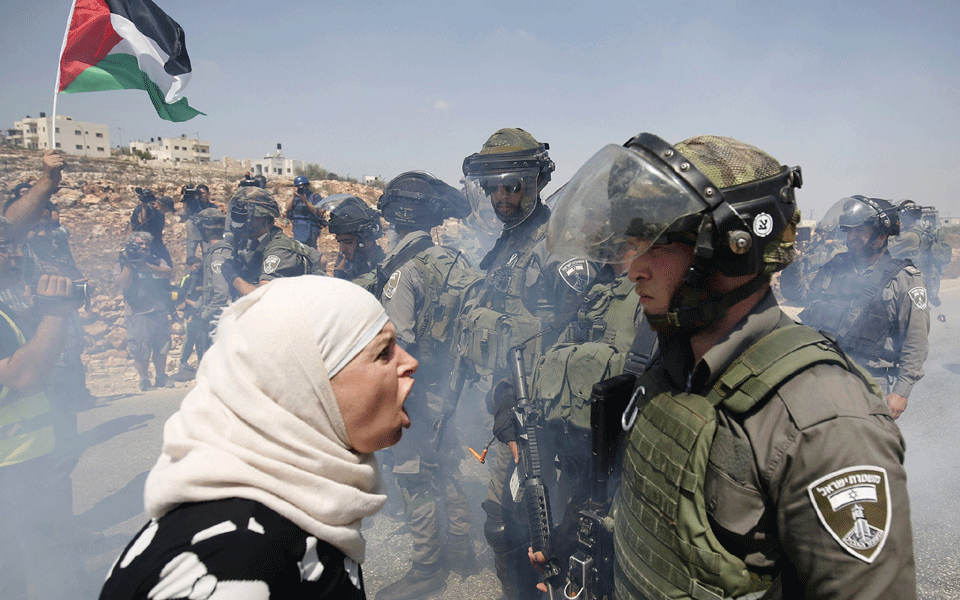
Gaza: Sixteen Palestinian protesters were killed in clashes with Israeli security forces along the Gaza border as residents marked Land Day, a Health Ministry spokesman said here.
The spokesman told Efe news that about 2,000 other Palestinians were injured during the protests called by Hamas in observance of Land Day on Friday, which symbolises the demand of Palestinian refugees and their descendants to be allowed to return to their homeland.
More than half of Gaza's 2 million people are refugees or their descendants, according to the UN.
The Israeli Defence Forces (IDF) said in a statement that "17,000 Palestinians are rioting in five locations along the Gaza Strip security fence".
"The rioters are rolling burning tires and hurling firebombs and rocks at the security fence and IDF troops, who are responding with riot dispersal means and firing towards main instigators," the statement added.
Israel announced earlier this week that 100 snipers would be posted along the Gaza border.
Youths hurled stones at soldiers, who fired tear gas in order to disperse the thousands of men, women and children gathered in the area, witnesses told Efe news.
The witnesses estimated the number of participants at around 40,000.
Other Palestinian factions have joined Hamas in promoting the "Great Return March", which envisions maintaining a presence of hundreds of protesters along the Gaza border between now and May 15, when Palestinians commemorate what they call the Nakba (Catastrophe), referring to the exile and dispossession of Arabs that accompanied the founding of Israel in 1948.
Earlier on Friday, a Palestinian was killed and another injured by Israeli tank fire in southern Gaza.
"Two suspects approached the Southern Gaza Strip border in the morning in a suspicious manner. In response, the army tank fired at them," an IDF spokesman told Efe news.
The Land Day tradition was spurred by the events of March 30, 1976, when Israeli forces fatally shot six Palestinian protesters.
Let the Truth be known. If you read VB and like VB, please be a VB Supporter and Help us deliver the Truth to one and all.
Chhattisgarh: FIR against Vedanta group chairman Anil Agarwal, others after blast kills 20 workers
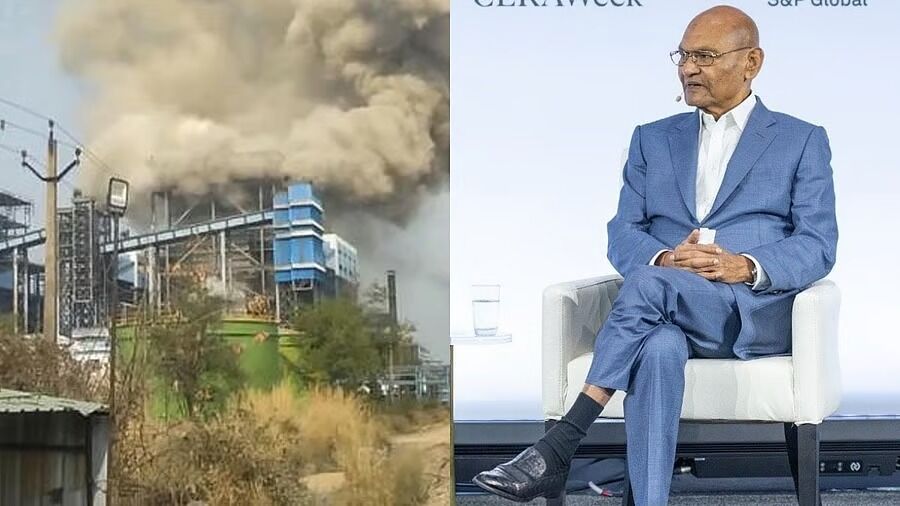
Sakti (Chhattisgarh) (PTI): The Chhattisgarh police on Thursday registered an FIR against Vedanta Group chairman Anil Agarwal and others in connection with the blast at the firm's power plant in Sakti district that claimed 20 lives, an official said.
The explosion occurred on April 14 at the Vedanta plant in Singhitarai village when a steel tube carrying high-pressure steam from the boiler to the turbine burst, leaving several workers with severe burn injuries. The incident claimed 20 lives and left 16 persons injured.
A case has been registered at Dabhra police station under sections 106 (causing death by negligence), 289 (negligent conduct with respect to machinery) and 3(5) (common intention) of the Bharatiya Nyaya Sanhita, Sakti Superintendent of Police Prafull Thakur said.
"Eight to ten individuals, including Vedanta Group chairman Anil Agarwal, have been named in the FIR. If more persons are found responsible during the investigation, their names will be added," Thakur told PTI.
Investigation into the incident is underway and several reports are awaited, including post-mortem reports of the deceased and findings from the forensic science laboratory and the industrial health and safety department, he said.
"A technical team has also been constituted to probe the cause of the blast. Further sections will be added if required after all reports are received," the SP said.
Following the incident, the opposition Congress had demanded registration of an FIR against the plant management and a judicial inquiry into it.