'It is based on India's national interest': Russia on its energy ties with New Delhi
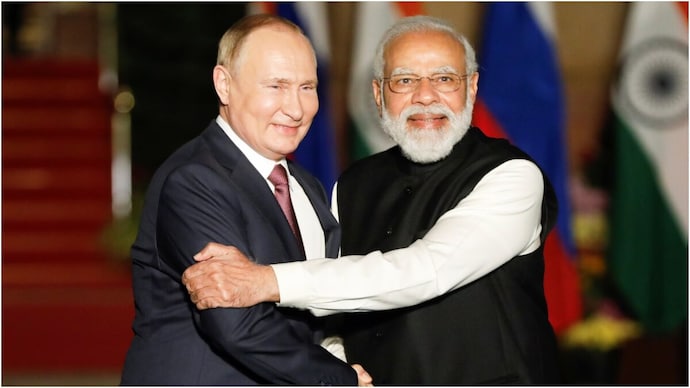
New Delhi (PTI): Russian crude oil remains the most cost effective option on the global market and Russia's energy ties with India are in tune with New Delhi's national interests, Russian ambassador Denis Alipov said on Thursday.
Alipov's remarks came hours after US President Donald Trump claimed that Prime Minister Narendra Modi assured him that New Delhi will stop procuring Russian crude oil.
"Russian energy remains the most cost-effective option on the global market, and Russia has consistently honoured its commitments while showing flexibility in developing alternative logistics and payment systems in the face of attempts to disrupt this cooperation," he said.
In his address at an event, Alipov also said that Russian crude oil accounts for around one-third of India's total hydrocarbon imports.
The Russian ambassador also described Russia as India's "most reliable energy partner" and said there is scope for enhancing the overall ties, including in areas of defence, trade, connectivity and technology.
Alipov said the India-Russia strategic partnership is a "stabilising force" in global affairs and a powerful driver of economic growth".
"This kind of relationship is in increasing demand worldwide as we collectively navigate an era of unprecedented geopolitical turbulence," he said.
Later, Alipov, while responding to a question on Trump's remarks and if India will continue to procure Russian crude oil, said: "this is a question for the Indian government (to answer)."
The Indian government is dealing with the matter having in mind the national interests of this country in the first place, he said.
"Our cooperation in the energy sector is very much in tune of those interests," he said.
In response to the US president's comments, India said it is "broad-basing and diversifying" its sourcing of energy to meet market conditions.
External Affairs Ministry spokesperson Randhir Jaiswal, responding to Trump's remarks, said it has been New Delhi's consistent priority to safeguard the interests of the Indian consumer in a volatile energy scenario.
He said India's import policies are guided entirely by the national interest, adding India has been looking at expanding energy ties with the US as well.
"Ensuring stable energy prices and secured supplies have been the twin goals of our energy policy," Jaiswal said.
"This includes broad-basing our energy sourcing and diversifying as appropriate to meet market conditions," he added.
India's continuing purchase of petroleum products from Russia notwithstanding Western sanctions has become a major issue that resulted in severe downturn in ties between New Delhi and Washington.
In Washington, Trump told reporters that "he (Modi) has assured me there will be no oil purchases from Russia."
The US president said India may not be able to cut the procurement immediately but the process has started.
"It (process) has started. He can't do it immediately. It's a little bit of a process, but the process is going to be over soon," the US president said.
Let the Truth be known. If you read VB and like VB, please be a VB Supporter and Help us deliver the Truth to one and all.
4 workers die after being buried under coal slurry in Jharkhand's Dhanbad
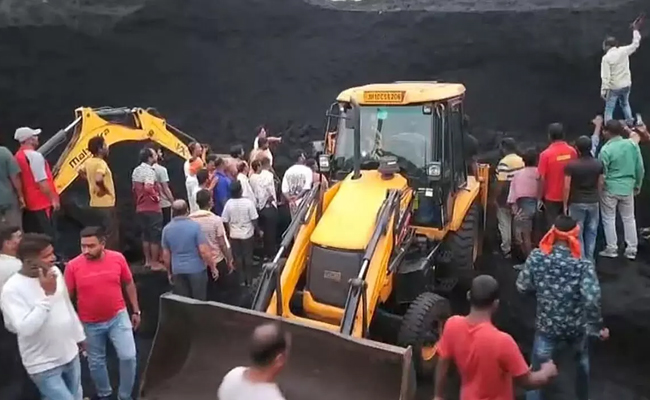
Dhanbad (Jharkhand) (PTI): At least four workers died after being buried under coal slurry in Jharkhand's Dhanbad district on Saturday, a police official said.
The incident took place at Moonidih coal washery in the command area of Bharat Coking Coal Limited (BCCL).
"Bodies of all four workers were dug out of debris during a rescue operation," Putki police station in-charge Waqar Hussain told PTI.
The incident took place when coal slurry was being loaded into trucks by workers, during which a large chunk of slurry fell and trapped several workers underneath, officials said.
The deceased have been identified as Manik Bauri, Dinesh Bauri, Deepak Bauri, and Hemlal Gope.
Meanwhile, the family members of the deceased and local villagers placed the bodies in front of the washery gate and began a protest.
They demanded compensation, jobs for dependents and action against those responsible for the incident.
Police and administration officials are trying to pacify the protesters, an official said.