Italy government demands resignations after bridge collapse kills 39
Rome, Aug 15 : The Italian government on Wednesday demanded the resignation of the heads of the company that manages the country's highways, after the death toll in Genoa city's bridge collapse rose to 39, with rescuers continuing their search for possible survivors.
"The leaders of Autostrade per l'Italia must resign, first of all. And given that there have been serious breaches, we have activated procedures for the possible revocation of their concessions and to impose fines of up to 150 million euro ($170 million)," said Transport Minister Danilo Toninelli.
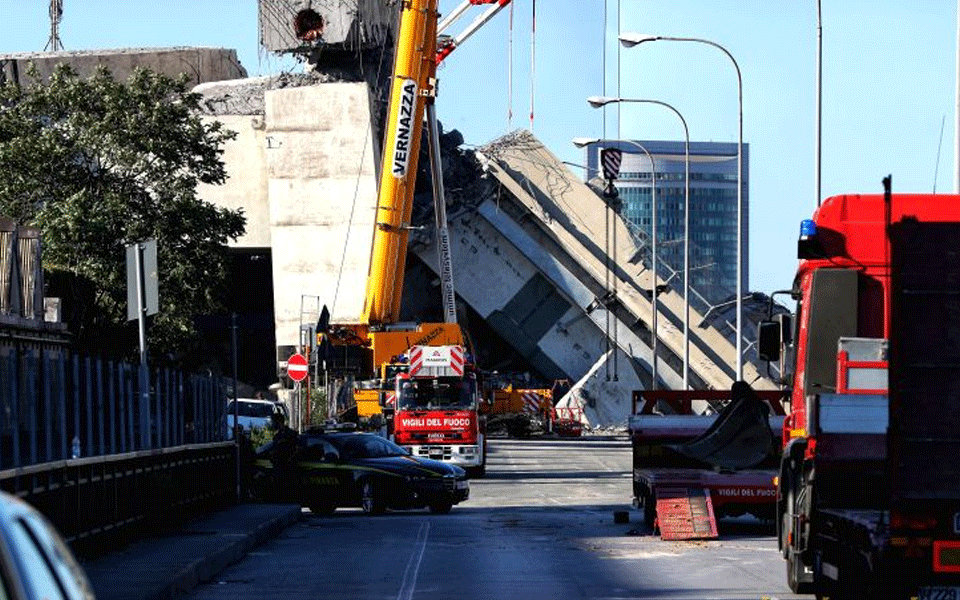
A roughly 100-metre segment of Morandi bridge in Genoa collapsed on Tuesday noon during heavy rain, causing at ;east 40 vehicles to plunge to the ground. The local prefecture raised the death toll on Wednesday, with 37 of them identified, the BBC reported.
At least three children aged 8, 12 and 13, lost their lives. The city's authorities declared two days of mourning. Rescuers said there was little hope for more survivors underneath the bridge.
A huge tower and sections of the bridge fell on to railway lines, a river and a warehouse. There were 16 people being treated in hospital, 12 of them in a serious condition.
About 440 people were evacuated from the area amid fears other parts of the bridge might fall.
The cause of the disaster was not immediately clear but questions were raised about the safety of the structure. The Morandi Bridge, built in the 1960s, stands on the A10 toll motorway, an important conduit for goods traffic from local ports, which also serves the Italian Riviera and southern coast of France.
Interior Minister Matteo Salvini vowed to bring anyone responsible for the collapse to book. Three French people were among the dead, the country's Foreign Ministry said.
The car of Davide Capello, 33, a former goalkeeper for Serie A side Cagliari, came down in the collapse but he survived, according to the BBC.
"I was able to get out... I don't know how my car wasn't crushed. It seemed like a scene from a film, it was the apocalypse," he said.
Italy's Ansa news agency quoted a witness as saying they heard "an incredible roar and first we thought it was thunder very close by".
"We live about 5 kilometre from the bridge but we heard a crazy bang... We were very scared... Traffic went completely haywire and the city was paralyzed."
The collapse of the bridge was an "incident of vast proportions on a vital arterial road, not just for Genoa, but for the whole country", said Liguria region Governor Giovanni Toti.
Let the Truth be known. If you read VB and like VB, please be a VB Supporter and Help us deliver the Truth to one and all.
Fire breaks out in residential building in east Delhi, nine killed
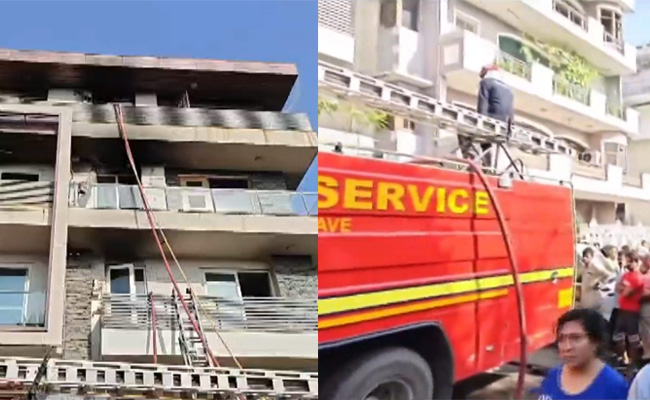
New Delhi (PTI): At least nine people were killed after a fire broke out in a residential building in east Delhi's Vivek Vihar early Sunday, officials said.
The incident was reported around 3.48 am at a four-storey building in Vivek Vihar Phase-I, following which police, fire and disaster management teams rushed to the spot.
According to the police, the blaze engulfed flats on the second, third and fourth floors of the building, prompting a large-scale rescue operation.
The cause of the fire is yet to be ascertained.
"Around 10 to 15 people were rescued from the premises during the firefighting operation. Two of them, who sustained minor injuries, were shifted to the Guru Teg Bahadur Hospital," a senior police officer said.
A total of 12 fire tenders were pressed into service to douse the flames, while teams from the Delhi Disaster Management Authority (DDMA), traffic police and local police assisted in the rescue and evacuation efforts.
Police said the fire was brought under control after several hours.
The identities of the deceased are yet to be ascertained, and efforts are underway to determine the cause of the fire, police said.
Further investigation and proceedings are underway.