Jane Goodall jokes about sending Trump, Musk, Putin, Xi, Netanyahu to space in final interview
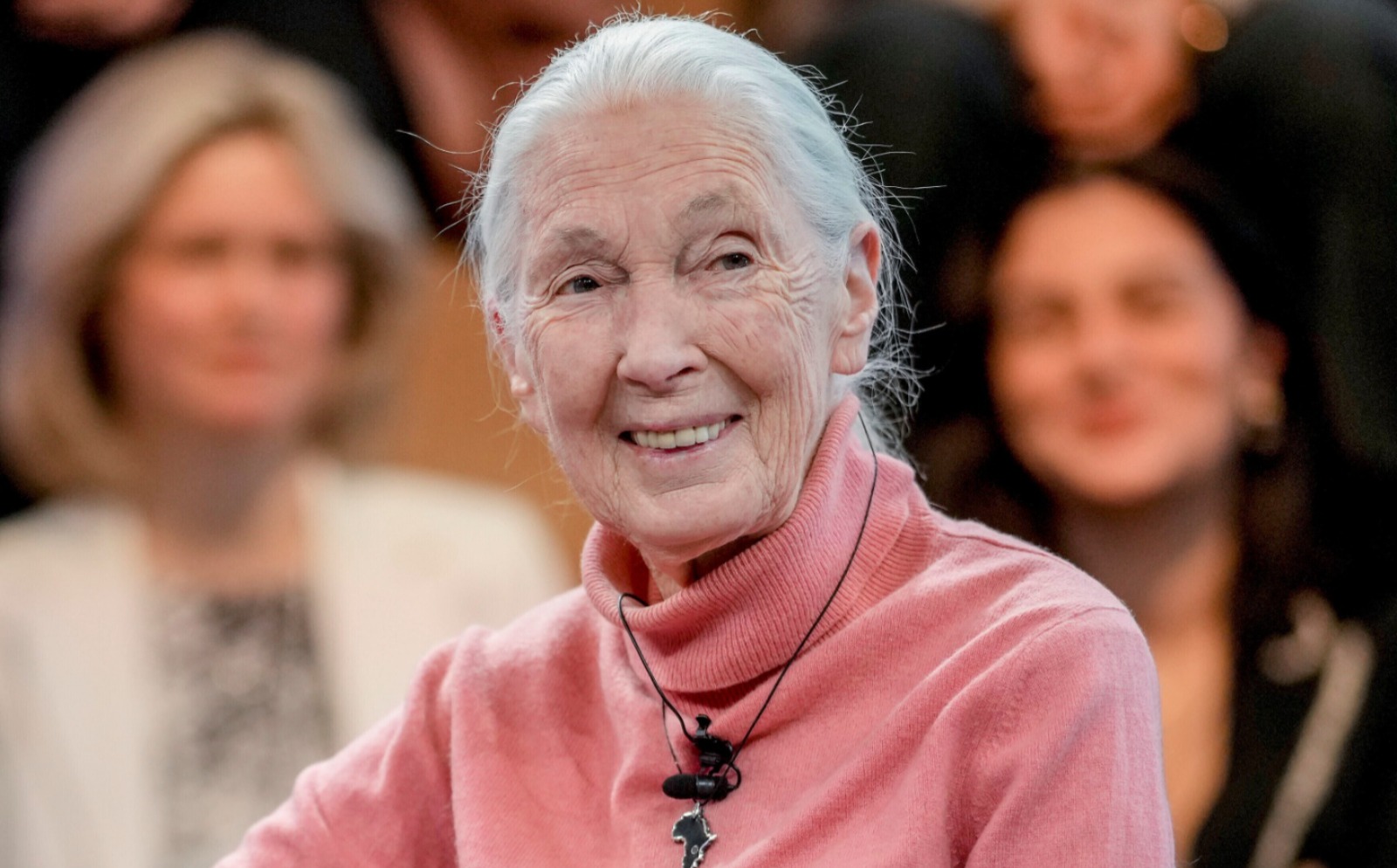
London: In one of her final recorded interviews, legendary primatologist Jane Goodall humorously suggested sending several world leaders and billionaires on a one-way trip into space, comparing their aggressive traits to those of alpha male chimpanzees.
The remarks appear in Famous Last Words, a new Netflix documentary released after Goodall’s death last week at the age of 91. Speaking to interviewer Brad Falchuk, Goodall said she would launch Donald Trump, Elon Musk, Vladimir Putin, Xi Jinping, and Benjamin Netanyahu “all on one of Musk’s spaceships” bound for a distant planet.
“There are people I don’t like, and I would like to put them on one of Musk’s spaceships and send them all off to the planet he’s sure he’s going to discover,” Goodall said. Asked if Musk himself would be aboard, she quipped, “Oh, absolutely. He’d be the host.”
Goodall, known for her pioneering research on chimpanzee behavior and lifelong environmental advocacy, drew parallels between aggressive human leaders and alpha chimpanzees. “We get two types of alpha,” she explained. “One rules through aggression and doesn’t last long. The other uses intelligence and alliances — they endure much longer.”
In earlier interviews, Goodall had likened Trump’s behavior to that of dominant chimpanzees, noting their tendency to “swagger” and intimidate rivals.
The documentary also captures her reflections on mob aggression in both humans and chimpanzees. “It’s contagious,” she observed. “When one becomes aggressive, the rest catch that feeling. They’re protecting territory or fighting for dominance.”
Despite her critical tone toward some world figures, Goodall ended the interview with hope. “Even today, when the planet is dark, there still is hope. Don’t lose hope. If you lose hope, you become apathetic,” she urged viewers.
Comparing the current global crises to Britain’s wartime resilience under Winston Churchill, Goodall said, “You have moments of depression, but then you say, ‘I’m not going to let them win.’”
Her final message called for small, collective acts to protect the planet: “If you want to save what is still beautiful in this world, think about the actions you take each day. Multiplied a million times, even small actions will make for great change.”
Let the Truth be known. If you read VB and like VB, please be a VB Supporter and Help us deliver the Truth to one and all.
4 workers die after being buried under coal slurry in Jharkhand's Dhanbad
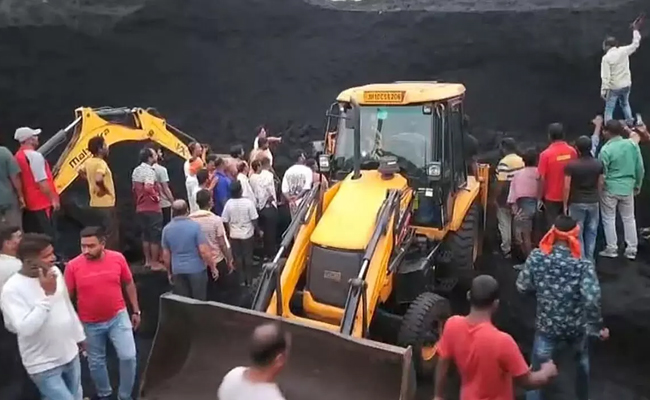
Dhanbad (Jharkhand) (PTI): At least four workers died after being buried under coal slurry in Jharkhand's Dhanbad district on Saturday, a police official said.
The incident took place at Moonidih coal washery in the command area of Bharat Coking Coal Limited (BCCL).
"Bodies of all four workers were dug out of debris during a rescue operation," Putki police station in-charge Waqar Hussain told PTI.
The incident took place when coal slurry was being loaded into trucks by workers, during which a large chunk of slurry fell and trapped several workers underneath, officials said.
The deceased have been identified as Manik Bauri, Dinesh Bauri, Deepak Bauri, and Hemlal Gope.
Meanwhile, the family members of the deceased and local villagers placed the bodies in front of the washery gate and began a protest.
They demanded compensation, jobs for dependents and action against those responsible for the incident.
Police and administration officials are trying to pacify the protesters, an official said.