Japan holds off on recognising Palestinian state, cites need for comprehensive review
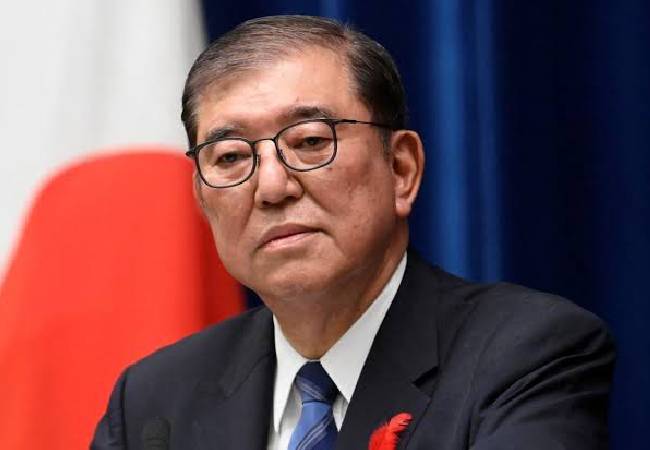
Tokyo: Japan has decided not to recognise a Palestinian state for now, opting instead to continue its review of the issue amid pressure from both allies and international partners.
According to a report in the Asahi Shimbun, Prime Minister Shigeru Ishiba will skip a United Nations General Assembly meeting this month that will focus on Palestinian statehood. The decision, citing unnamed government sources, underscores Japan’s cautious stance.
Japan’s position currently aligns with the United States, which has rejected calls for recognition. This contrasts with several Group of Seven (G7) members, including France, Britain, Canada, and Australia, which have announced plans to recognise Palestine during the UN assembly to step up pressure on Israel. In contrast, Germany and Italy have described immediate recognition as “counterproductive.”
The Asahi report suggested that Japan’s decision was influenced by its efforts to maintain strong ties with the United States and avoid provoking a harder stance from Israel. U.S. officials reportedly urged Tokyo not to proceed with recognition, while France’s Foreign Minister Jean-Noel Barrot lobbied Japan to support the move, Kyodo news agency reported last week.
Foreign Minister Takeshi Iwaya confirmed on Tuesday that Japan was conducting “a comprehensive assessment, including appropriate timing and modalities, of the issue of recognising Palestinian statehood.” Chief Cabinet Secretary Yoshimasa Hayashi echoed this statement on Wednesday when asked about the report.
Despite holding back on recognition, Hayashi voiced grave concern over Israel’s military operations in Gaza, warning that “the very foundations of a two-state solution could be collapsing.” He urged Israel to take steps to end the worsening humanitarian crisis, including famine.
At a UN session last Friday, Japan voted in favour of a declaration calling for “tangible, timebound, and irreversible steps” toward a two-state solution. However, Prime Minister Ishiba is expected to skip the related meeting on September 22 in New York.
Let the Truth be known. If you read VB and like VB, please be a VB Supporter and Help us deliver the Truth to one and all.
SC to hear on May 4 PIL seeking stringent guidelines for issuing Aadhaar to adolescents, adults
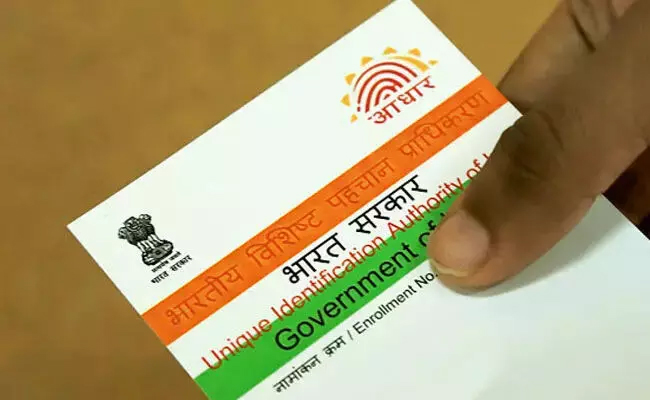
New Delhi (PTI): The Supreme Court is scheduled to hear on Monday a plea seeking a direction to the Unique Identification Authority of India to issue new Aadhaar cards only to citizens up to the age of six years, and frame stringent guidelines for its issuance to adolescents and adults to stop infiltrators from masquerading as Indian citizens.
As per the apex court's causelist of May 4, the plea would come up for hearing before a bench of Chief Justice Surya Kant and Justice Joymalya Bagchi.
The Public Interest Litigation (PIL) filed by lawyer Ashwini Upadhyay has also sought a direction to the authorities to install display boards at common service centres stating that the 12-digit unique identification number is only a "proof of identity" and not a proof of citizenship, address or date of birth.
Besides all the states and Union Territories, the plea has made the UIDAI -- which is the authority that issues Aadhaar -- and the Union ministries of home, law and justice, and electronics and information technology as parties.
The plea, filed through advocate Ashwani Dubey, said Aadhaar, originally intended as a proof of identity, has increasingly become a "foundational document" enabling individuals to obtain other identification documents, such as ration cards, domicile certificates and voter identity cards.
"The UIDAI has issued 144 crore Aadhaar and 99 percent Indians have been enrolled. Therefore, the petitioner is filing this writ petition as a PIL under Article 32, seeking a direction to UIDAI to issue new Aadhaar to children only and frame new stringent guidelines for adolescents and adults, so as to stop infiltrators from getting it and masquerading as Indian citizens," the plea said.
It said the need to file the plea arose when the petitioner came to know the manner in which infiltrators are able to procure Aadhaar through a verification process that is weak and can be easily manipulated.
"Foreigners apply for Aadhaar under the 'foreign' category. But infiltrators apply for Aadhaar under the 'Indian citizen' category and get it easily made. Thereafter, they obtain a ration card, birth and domicile certificate, driving licence, et cetera, essentially becoming indistinguishable from Indian citizens…," it said.
Besides seeking other directions, the plea has raised legal questions, including whether the Aadhaar Act 2016 has become "temporally unreasonable" for failing to keep up with the legislative intent of distinguishing foreigners from Indian citizens.
It said the alleged misuse of Aadhaar undermines targeted welfare delivery and leads to diversion of public resources.