Japan successfully launches H3 rocket carrying next-generation cargo craft to ISS
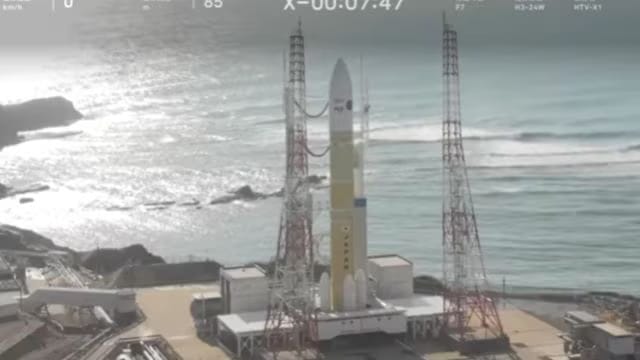
Tokyo: The Japan Aerospace Exploration Agency (JAXA) has successfully launched its H3 rocket from the Tanegashima Space Center in southern Japan, on Sunday. The mission transported the newly developed unmanned cargo spacecraft, HTV-X1, on its first trip to deliver supplies to the International Space Station and is expected to arrive at the ISS in a few days.
According to an Associated Press report, the spacecraft was placed in its assigned orbit after 14 minutes of its launch and the HTV-X1 was later separated as planned. Japanese astronaut Kimiya Yui, who is currently aboard the International Space Station, will use a robotic arm to grasp the spacecraft early Thursday.
The HTV-X1 is the successor to JAXA's previous unmanned supply vehicle, Kounotori, the H-II Transfer Vehicle. It completed nine successful missions between 2009 and 2020. This new vehicle can carry a larger payload and still generating electricity during transit. It will also allow it to transport temperature-sensitive laboratory materials.
It is designed to remain docked at the ISS for up to six months. The HTV-X1 will deliver cargo, collect waste, and later conduct independent orbital missions for an additional three months after departing the station.
Iwao Igarashi who heads the Space Business Department at Mitsubishi Heavy Industries—which co-developed and operates the H3 with JAXA—said that the successful launch demonstrated Japan’s reliability and precision in space missions. He further added that Mitsubishi plans to expand its launch operations to meet growing global demand, as reported by Associated Press.
The H3 replaces Japan’s long-serving H-2A rocket, which completed its final flight in June. The latest launch was the seventh overall and the sixth consecutive success since a failed debut in 2023, when the rocket was destroyed mid-flight after a malfunction.
Let the Truth be known. If you read VB and like VB, please be a VB Supporter and Help us deliver the Truth to one and all.
4 workers die after being buried under coal slurry in Jharkhand's Dhanbad
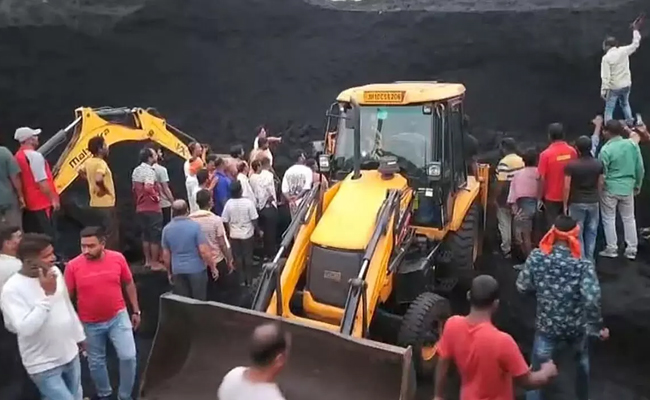
Dhanbad (Jharkhand) (PTI): At least four workers died after being buried under coal slurry in Jharkhand's Dhanbad district on Saturday, a police official said.
The incident took place at Moonidih coal washery in the command area of Bharat Coking Coal Limited (BCCL).
"Bodies of all four workers were dug out of debris during a rescue operation," Putki police station in-charge Waqar Hussain told PTI.
The incident took place when coal slurry was being loaded into trucks by workers, during which a large chunk of slurry fell and trapped several workers underneath, officials said.
The deceased have been identified as Manik Bauri, Dinesh Bauri, Deepak Bauri, and Hemlal Gope.
Meanwhile, the family members of the deceased and local villagers placed the bodies in front of the washery gate and began a protest.
They demanded compensation, jobs for dependents and action against those responsible for the incident.
Police and administration officials are trying to pacify the protesters, an official said.