Japan's Yuji Iwasawa elected ICJ judge
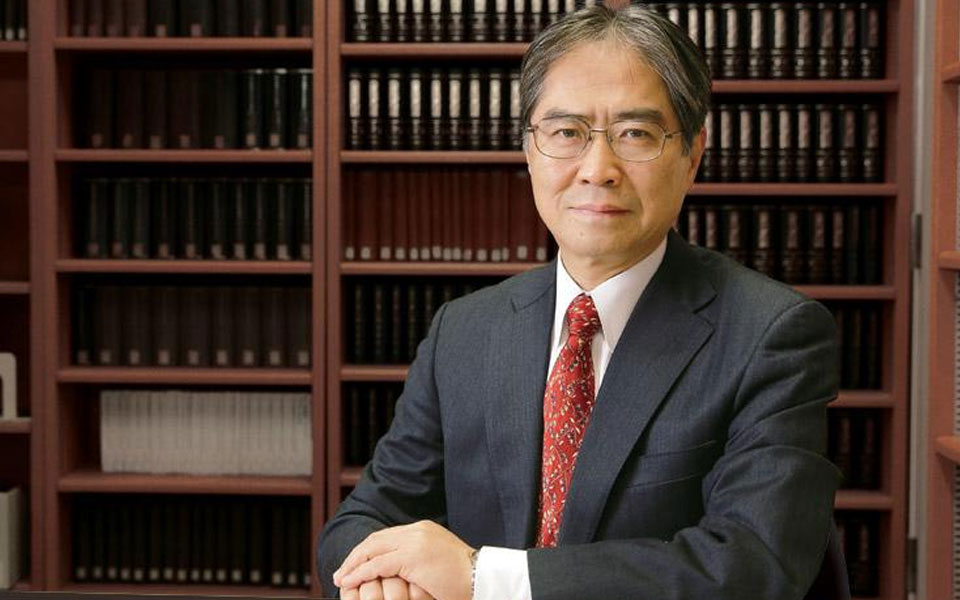
United Nations, June 23: Jurist Yuji Iwasawa of Japan has been elected judge of the International Court of Justice (ICJ) to succeed retired judge Hisashi Owada, also from Japan.
Iwasawa on Friday won 15 out of 15 votes at the Security Council and 184 out of 189 votes at the General Assembly. Five member states did not turn out to vote at the General Assembly, Xinhua news agency reported.
The 15 ICJ judges serve for nine-year terms. However, the election was called as Owada resigned before the end of his term in 2021, which Iwasawa will complete, according to UN News.
The ICJ settles legal disputes between states in addition to providing UN entities with advisory opinions on legal matters. Located in The Hague, in the Netherlands, it is one of the six principal organs of the UN and the only one not situated in New York.
Iwasawa's term of office starts immediately on Friday and ends on February 5, 2021, Xinhua reported.
Iwasawa, 64, is a professor of international law at the University of Tokyo.
Since 2017, he has served as chair of the UN Human Rights Committee, a UN body of 18 experts that meets three times a year to oversee compliance with the International Covenant on Civil and Political Rights. He has been a member of the committee since 2007.
He has been president of the Japanese Society of International Law since 2016. Owada, the father of Crown Princess Masako of Japan, retired from the ICJ at the age of 85.
He offered to resign in February 2018 and his resignation became officially effective on June 7, 2018.
It is believed that Owada's retirement was partly because of his age, and partly because his daughter will become Japanese empress next year with the planned abdication of Emperor Akihito and Crown Prince Naruhito's enthronement.
Under the Statute of the International Court of Justice, the principal judicial organ of the United Nations, the election of ICJ judges is through secret balloting at the Security Council and the General Assembly.
A candidate has to obtain absolute majority in both chambers to get elected. Voting in the two chambers must be held concurrently but separately.
The 15 judges must come from 15 different countries. The court as a whole must represent the main forms of civilisation and the principal legal systems of the world.
Let the Truth be known. If you read VB and like VB, please be a VB Supporter and Help us deliver the Truth to one and all.
Two injuries, one DNF, a DQ as India end messy World Relays campaign
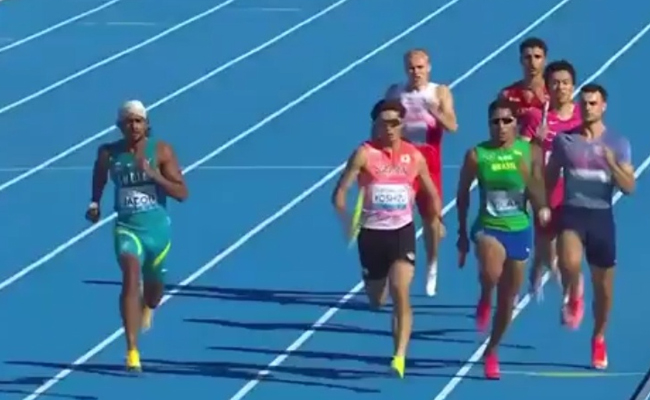
Gaborone (Botswana) (PTI): Amoj Jacob and Ragul Kumar got injured during the men's 4x400m and 4x100 races respectively as India ended their World Athletics Relays campaign in disappointment on the second day of competitions here on Sunday.
The Indian camp had high hopes of making the 2027 World Championships in the men's 4x400m relay but the team did not finish (DNF) the race as Jacob suffered cramps and pulled out of the race after taking the baton from the first leg runner Dharamveer Choudhary. Rajesh Ramesh and Vishal TK were to run in the third and fourth legs.
Those teams which could not qualify for the 2027 Beijing World Championships by reaching the final round of each of the six relay events on Saturday were given another chance in the second qualification round on Sunday.
The top two teams in each of the two heats (in all six relay events) booked the Beijing ticket on Sunday.
India will now have to try and qualify for the World Championships through the Top Lists of the World Athletics, which is a long and tedious process.
In the men's 4x100m race, third leg runner Ragul Kumar fell down the track after failing to hand over the baton inside the exchange zone to fourth leg runner Gurindervir Singh, which clearly showed the lack of coordination among the runners.
Harsh Santosh Raut and Animesh Kujur ran the first two legs.
The Indian quartet was disqualified and Kumar was seen being taken away from the Field of Play with the help of the volunteers.
It was a comedy of errors in the case of the women's 4x100m race, which saw the baton being dropped during an exchange between first leg runner Tamanna and second runner Nithya Gandhe, though the Indians finished the race in 53.09 seconds.
Gandhe started running quite a distance, but after realising that the baton was not in her hand, she turned and ran back to pick it up.
The only silver-lining for the Indian contingent was the national record time in the mixed 4x100m relay race, though the quartet of Ragul Kumar, Nithya Gandhe, Animesh Kujur and Sneha SS finished sixth in heat number two with a time of 41.35 seconds, bettering the previous national mark of 42.30 seconds set in March in Chandigarh.
The mixed 4x400m relay quartet of Theerthesh P Shetty, Kumari Saloni, Nihal William and Rashdeep Kaur ended at fifth in heat number one with a time of 3 minutes and 19.40 seconds.
On Saturday, all the five Indian relay teams had failed to make it to the respective final rounds and thus missed out on the 2027 World Championships berths.