Lashkar-e-Taiba terrorist Razaullah Nizamani Khalid killed by unidentified gunmen in Sindh
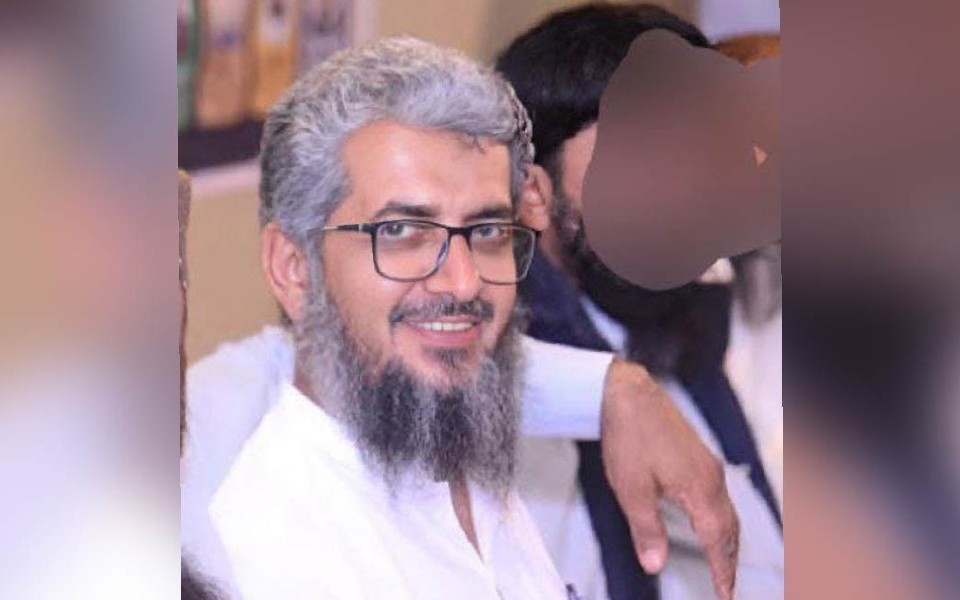
New Delhi, May 18 (PTI): Lashkar-e-Taiba terrorist Razaullah Nizamani Khalid alias Abu Saifullah Khalid, who was the brain behind the 2006 attack on the RSS headquarters, was killed by three unidentified gunmen in Sindh province of Pakistan on Sunday, officials here said.
Khalid used to head the terror operations of Lashkar-e-Taiba (LeT) from Nepal in early 2000 and had many aliases including Vinode Kumar, Mohammed Salim and Razaullah. He was involved in multiple terror strikes in India, they said.
He left his residence at Matli this afternoon and was gunned down by assailants near a crossing at Badni in Sindh province, the officials said.
A close associate of Abu Anas of Lashkar, Khalid was the mastermind of the attack on the Rashtriya Swayamsevak Sangh (RSS) headquarters at Nagpur in which all three terrorists were shot dead.
Besides the RSS attack, the Lashkar operative was involved in the Indian Institute of Science terror attack of 2005 in Bengaluru, in which IIT professor Munish Chandra Puri was killed and four others injured.
The terrorists had escaped from the scene. Later, police investigated the case and chargesheeted Abu Anas, who is still at large.
Khalid was also the mastermind of the 2008 attack on a CRPF camp at Rampur in Uttar Pradesh in which seven personnel and a civilian were killed. The two terrorists escaped under the cover of darkness.
From mid-2000, Khalid was the in-charge of the Nepal module of LeT, responsible for the recruitment of cadres, providing financial and logistic support and facilitating the movement of LeT operatives across the Indo-Nepal border.
Khalid was working closely with LeT's so-called "launching commanders" -- Azam Cheema alias Babaji and Yaqoob (LeT's chief accountant).
Khalid left Nepal and returned to Pakistan after Indian security agencies exposed the module. He later worked closely with several leaders of LeT and Jamaat-ud-Dawah, including Yusuf Muzammil, LeT commander for Jammu and Kashmir, Muzammil Iqbal Hashmi and Muhammad Yusuf Taibi.
Khalid was tasked by the LeT and JuD leadership in Pakistan to undertake the recruitment of fresh cadres from the areas of Badin and Hyderabad districts of Sindh and collect funds for the organisation.
According to media reports from Sindh, Khalid was declared brought dead at hospital after being shot. These reports also termed it a case of personal enmity.
Let the Truth be known. If you read VB and like VB, please be a VB Supporter and Help us deliver the Truth to one and all.
Thunderstorm hits Lucknow, IMD issues red alert across multiple UP districts
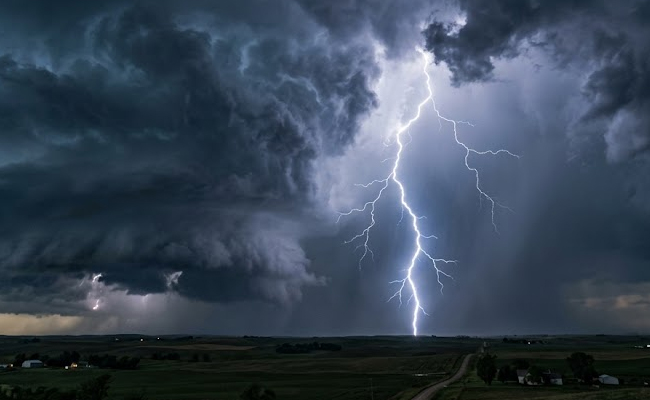
Lucknow: Shortly after the India Meteorological Department issued a red alert warning of severe weather conditions in the region, a sudden thunderstorm hit Lucknow and adjoining districts on Monday morning.
The Indian Express reported that the skies turned dark around 8:45 am as strong winds lashed parts of the city. Incidents of tree falls were reported from several locations, disrupting traffic and normal movement.
The weather department said thunderstorms accompanied by lightning, hail and gusty winds of 40 to 60 kmph are likely to continue over the next three hours across several districts.
A red alert has been issued for districts including Unnao, Barabanki, Hardoi, Sitapur, Bahraich, Gonda, Shravasti and Lakhimpur Kheri, where moderate thunderstorms with hail and strong winds may damage trees, power lines and temporary structures.
An orange alert is in place for Rae Bareli, Amethi, Kanpur Nagar, Ayodhya, Kanpur Dehat, Auraiya, Kannauj, Farrukhabad, Shahjahanpur and Balrampur, where thunderstorms with lightning and winds up to 60 kmph could lead to localised disruptions.
Major parts of the state remains under yellow alert, including districts such as Prayagraj, Agra, Bareilly, Aligarh and Moradabad, where light rain, lightning and winds of 30 to 40 kmph are expected.
Authorities have advised residents to remain indoors, avoid open areas and trees during lightning, and secure loose objects.