Macron is set to appoint new French prime minister in last-ditch move to tackle turmoil
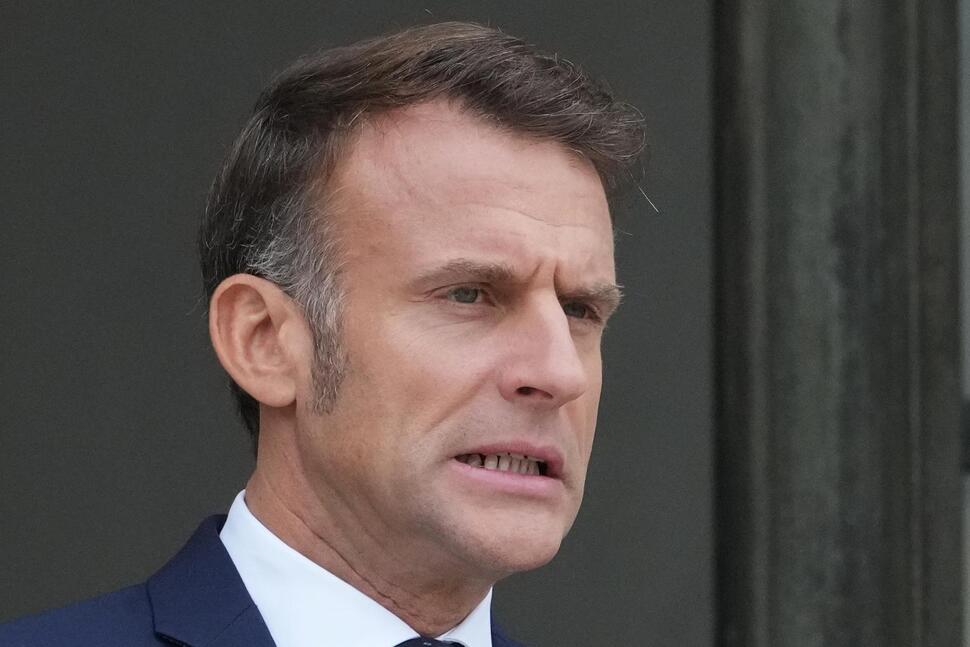
Paris (AP): After a week of intense political turmoil, French President Emmanuel Macron is set to appoint a new prime minister on Friday in his latest bid to break the political deadlock that has gripped the country for more than a year, as France struggles with mounting economic challenges and ballooning debt.
The appointment is widely seen as the president's last chance to revive his second term, which runs until 2027. With no majority in the National Assembly to push through his agenda, Macron faces increasingly fierce criticism, even from within his own camp, and has little room to manoeuvre.
Outgoing Prime Minister Sebastien Lecornu abruptly resigned on Monday, only hours after unveiling a new Cabinet. The shock resignation prompted calls for Macron to step down or dissolve parliament again. But they remained unanswered, with the president instead announcing on Wednesday that he would name a successor within 48 hours.
Over the past year, Macron's successive minority governments have collapsed in quick succession, leaving the European Union's second-largest economy mired in political paralysis as France is faced with a debt crisis. At the end of the first quarter of 2025, France's public debt stood at 3.346 trillion euros (USD 3.9 trillion), or 114 per cent of gross domestic product.
France's poverty rate also reached 15.4 per cent in 2023, its highest level since records began in 1996, according to the latest data available from the national statistics institute.
The economic and political struggles are worrying financial markets, ratings agencies and the European Commission, which has been pushing France to comply with EU rules limiting debt.
Uncertainty surrounds the choice of the next PM
Macron may turn to a figure from the left, who managed to form a coalition in the 2024 legislative elections, or opt for a technocratic government to sidestep partisan deadlock.
In any case, the new prime minister will have to seek compromises to avoid an immediate vote of no confidence and may even be forced to abandon the pension reform that gradually raises the retirement age from 62 to 64. Macron fought fiercely for the deeply unpopular measure, which was enacted into law in 2023 despite mass protests.
Lecornu argued that Macron's centrist bloc, its allies, and parts of the opposition could still rally to form a working majority. “There's a majority that can govern,” he said. “I feel that a path is still possible. It is difficult.”
The stalemate stems from Macron's shock decision in June 2024 to dissolve the National Assembly. The snap elections produced a hung parliament, with no bloc able to command a majority in the 577-seat chamber. The gridlock has unnerved investors, infuriated voters, and stalled efforts to curb France's spiralling deficit and public debt.
Without stable support, Macron's governments have stumbled from one crisis to the next, collapsing as they sought backing for unpopular spending cuts. Lecornu's resignation, just 14 hours after announcing his Cabinet, underscored the fragility of the president's coalition amid deep political and personal rivalries.
Let the Truth be known. If you read VB and like VB, please be a VB Supporter and Help us deliver the Truth to one and all.
4 workers die after being buried under coal slurry in Jharkhand's Dhanbad
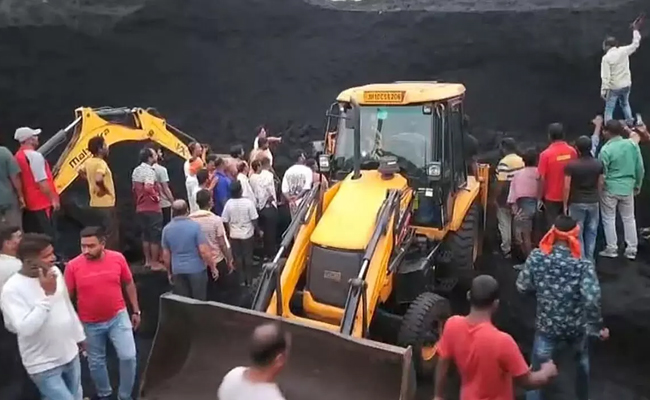
Dhanbad (Jharkhand) (PTI): At least four workers died after being buried under coal slurry in Jharkhand's Dhanbad district on Saturday, a police official said.
The incident took place at Moonidih coal washery in the command area of Bharat Coking Coal Limited (BCCL).
"Bodies of all four workers were dug out of debris during a rescue operation," Putki police station in-charge Waqar Hussain told PTI.
The incident took place when coal slurry was being loaded into trucks by workers, during which a large chunk of slurry fell and trapped several workers underneath, officials said.
The deceased have been identified as Manik Bauri, Dinesh Bauri, Deepak Bauri, and Hemlal Gope.
Meanwhile, the family members of the deceased and local villagers placed the bodies in front of the washery gate and began a protest.
They demanded compensation, jobs for dependents and action against those responsible for the incident.
Police and administration officials are trying to pacify the protesters, an official said.