Made consistent efforts to exclude India from UN report on children in armed conflict, says govt
_vb_36.jpeg)
New Delhi: The government was consistently making efforts to exclude India from the UN's annual report on the impact of armed conflict on children, the Women and Child Development Ministry has said after the country did not feature in the report for the first time since 2010.
The United Nations has removed India from its annual report on the impact of armed conflict on children, citing "measures taken by the government to better protect" them.
In a statement, the Women and Child Development Ministry said, "The ongoing engagement of the Government of India with the Special Representative of the Secretary-General sped up after an inter-ministerial meeting in November 2021."
The meeting was attended by Secretary of the Ministry of Women and Child Development Indevar Pandey, Ministry of External Affairs, Permanent Mission of India at New York, the Ministry of Home Affairs, and Virginia Gamba, the special representative of the Secretary-General for Children and the UN officials in New Delhi.
The move led to an agreement to appoint a national focal point to identify priority national interventions to enhance the protection of children, a joint technical mission to hold inter-ministerial technical-level meetings with the UN to identify areas of enhanced cooperation for child protection, the statement said.
"A roadmap for cooperation and collaboration on child protection issues was developed by the ministry," it said.
UN Secretary-General Antonio Guterres said in his report last year that he had welcomed the engagement of the Indian government with his special representative and noted that it might lead to the removal of India as a situation of concern.
In his 2023 report on Children and Armed Conflict, the UN chief said, "In view of the measures taken by the government to better protect children, India has been removed from the report in 2023."
Guterres highlighted the technical mission of the office of his special representative in July 2022 to identify areas of cooperation for child protection and the workshop on strengthening child protection held in Jammu and Kashmir last November by the government with the United Nations' participation.
Let the Truth be known. If you read VB and like VB, please be a VB Supporter and Help us deliver the Truth to one and all.
Trump says he ‘hasn’t even thought about’ continuing Iran ceasefire
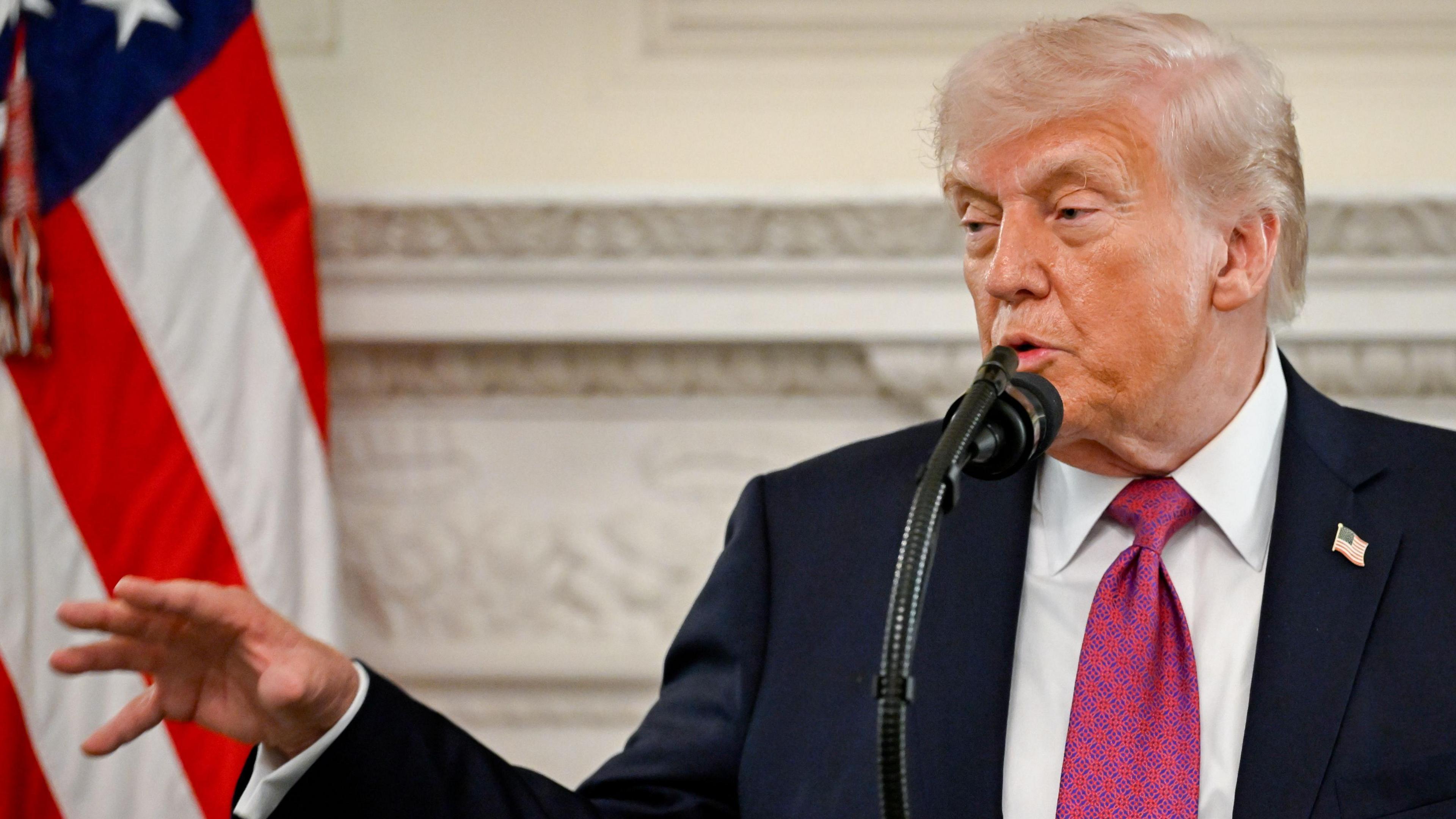
Washington: US President Donald Trump has said he has not yet considered whether he would continue the ceasefire involving Iran, while also claiming the United States holds the advantage in negotiations.
Speaking to reporters, Trump said he was prepared to make a deal with “whoever is running the show” in Iran.
“They are fighting with each other, there’s tremendous infighting. They’re probably fighting for leadership in many cases. I think they’re fighting not to be leader because we knocked out two levels of leaders,” he said.
Trump added, “When they want they can call me. We have all the cards, we’ve won everything.”
Referring to ongoing negotiations, he said, “They gave us a paper that should’ve been better. And, interestingly, immediately when I cancelled it [envoy trip to Pakistan], within 10 minutes we got a new paper that was much better.”
“We talked about they will not have a nuclear weapon, very simple … They offered a lot, but not enough,” he added.
When asked whether he would continue the ceasefire, Trump replied, “I haven’t even thought about it.”
The remarks come as uncertainty remains over the future of the temporary truce and broader negotiations between Washington and Tehran.