Malaysian royals pick new king after historic abdication
Kuala Lumpur, Jan 24: Malaysia's royal families were electing a king Thursday after the last monarch abdicated following his reported marriage to a Russian ex-beauty queen, with a sports-loving sultan in pole position for the role.
The previous king, Sultan Muhammad V, stepped aside this month following just two years on the throne after reports surfaced he had married the former Miss Moscow while on medical leave.
There was great shock across Malaysia at the first abdication of a monarch in the Muslim-majority country's history.
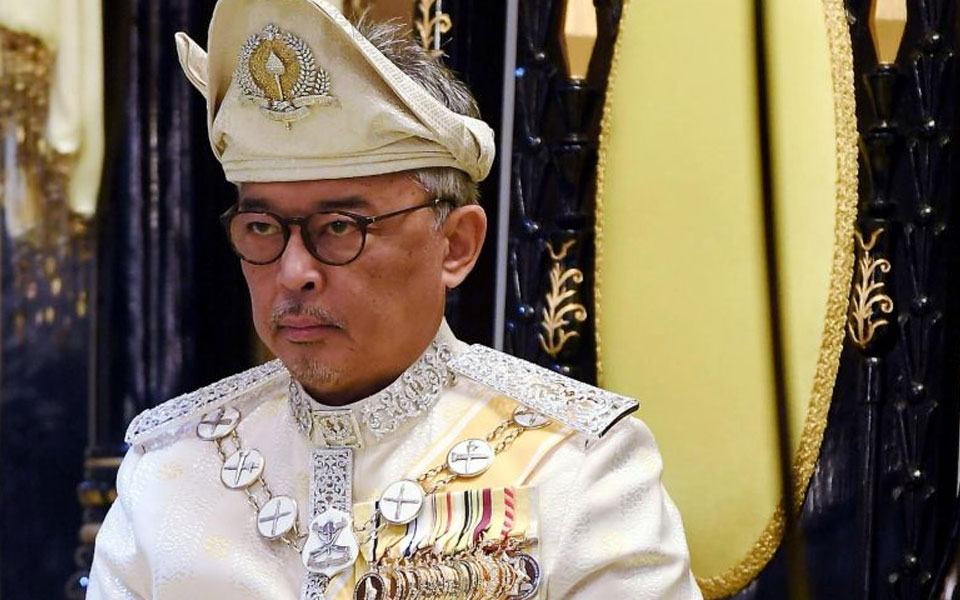
His likely replacement is Sultan Abdullah of Pahang state, a keen athlete who holds a string of positions on sporting bodies, including on the council of world football governing body FIFA.
Malaysia is a constitutional monarchy, with a unique arrangement where the national throne changes hands every five years between rulers of the country's nine states headed by Islamic royalty.
Eight of the state sultans arrived at the national palace in Kuala Lumpur for the Conference of Rulers, a special meeting during which they will pick a new king for a five-year term, official news agency Bernama reported.
The meeting got under way at 11:15 am (local time), Bernama said. The only one absent was Muhammad V, who remains the sultan of the northeastern state of Kelantan, despite having abdicated as the national monarch.
Under the rotation system, the central state of Pahang is next in line to provide the monarch.
Sultan Abdullah, 59, was named the state's new ruler -- replacing his elderly, ailing father -- several days after Muhammad V's abdication, in a step viewed as paving the way for him to become the next national monarch.
As well as being a member of the FIFA council -- which lays out the vision for global football he is president of the Asian Hockey Association and a former head of the Football Association of Malaysia.
After attending school in Malaysia, the keen polo player went on to study in Britain, where he attended the Sandhurst military academy, according to a biography published on Bernama.
If he does not become king he could refuse the post, or be deemed unsuitable -- then the next in line for the throne is the sultan of Johor state.
The sultan of Johor, which borders Singapore, is one of the country's most wealthy and powerful Islamic rulers, and has his own private army.
To be elected as the national king, a sultan must be supported by at least five of the state rulers.
The new king will be sworn in on January 31 in a lavish ceremony.
While their role is ceremonial, Malaysia's royalty command great respect, especially from the country's Muslim Malay majority, and criticising them is strictly forbidden.
Portraits of the king and queen adorn government buildings throughout the country. The king is also the symbolic head of Islam in the nation, as well as the nominal chief of the military.
Malaysia's sultans trace a lineage back to the Malay sultanates of the 15th century. The king is referred to as Yang di-Pertuan Agong, or "He Who Is Made Lord".
Let the Truth be known. If you read VB and like VB, please be a VB Supporter and Help us deliver the Truth to one and all.
First direct US-Venezuela commercial flight in 7 years to land in Caracas
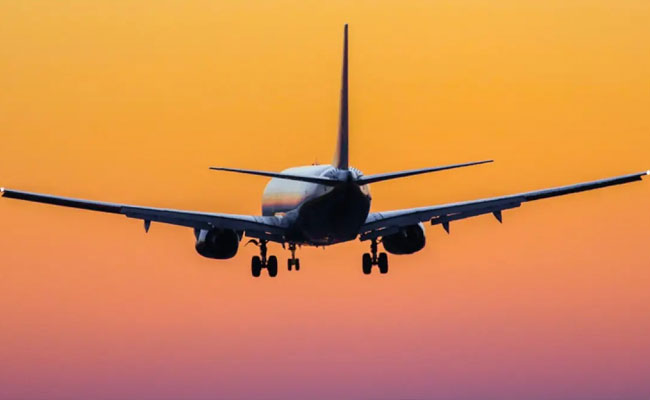
Caracas (Venezuela) (AP): The first direct commercial flight between the United States and Venezuela is scheduled to land on Thursday in the Venezuelan capital, Caracas, seven years after the US Department of Homeland Security ordered an indefinite suspension, citing security concerns.
The resumption of a commercial flight between the two countries comes in the wake of the US capture of Nicolás Maduro in a stunning nighttime raid on his residence in Caracas, Venezuela's capital, in early January.
It also comes a month after the US formally reopened its embassy in Caracas following the restoration of full diplomatic relations with the South American country.
Flight AA3599 operated by Envoy Air, a subsidiary of American Airlines, was scheduled to depart from Miami at 10:16 a.m. local time and arrive three hours later in the Venezuelan capital, returning to Florida later in the afternoon.
Earlier, the airline said a second daily flight between Miami and Caracas will start on May 21.
In late January, US President Donald Trump said he informed Venezuela's acting President Delcy Rodríguez that he would open up all commercial airspace over Venezuela, allowing Americans to visit.
“American citizens will be very shortly able to go to Venezuela, and they'll be safe there,” Trump said at the time.
The flights mark the resumption of nonstop travel between the US and Venezuela for the first time since diplomatic ties were severed in 2019. For the past seven years, passengers have relied on international airlines and indirect routes through neighbouring Latin American countries.
In January, when the airline announced the resumption of flights it said it would give customers the opportunity to reunite with families and pursue new business opportunities.
American Airlines was the last US airline flying to Venezuela. It suspended flights in 2019 between Miami and Caracas, as well as flights to the oil hub city of Maracaibo. Delta and United Airlines pulled out in 2017 amid a political crisis that forced millions to flee the country.