Massive oil, gas reserves found in Pakistani waters: Report

Islamabad (PTI): A substantial deposit of petroleum and natural gas has been discovered in Pakistan’s territorial waters, a cache so large its exploitation could change the country’s destiny, according to a media report.
A three-year survey was undertaken in collaboration with a friendly country to verify the presence of the oil and gas reserves, DawnNewsTV quoted a senior security official as saying on Friday.
The geographic survey has allowed Pakistan to identify the location of the deposits, and the relevant departments have informed the government of the resources found in Pakistani waters.
Terming it an effort to benefit from what he called the ‘blue water economy’, the official said that proposals for bidding and exploration were being studied, meaning that the exploration work can be started in the near future.
However, he said the work of digging wells and actually getting oil out could take several years.
But the ‘blue water economy’ can yield more than just oil and gas; there are several other valuable minerals and elements that can be mined from the ocean.
The official said that taking the initiative and acting quickly could help turn around the country’s economic fortunes.
Some estimates suggest that this discovery constitutes the fourth-largest oil and gas reserves in the world.
Currently, Venezuela is thought to be the leader in oil reserves with around 3.4 billion barrels, while the US has the most untapped shale oil reserves.
Saudi Arabia, Iran, Canada and Iraq constitute the rest of the top five.
While talking to DawnNewsTV, former Ogra (Oil and Gas Regulatory Authority) member Muhammad Arif said even though the country should remain optimistic, there’s never 100 per cent certainty that the reserves would be discovered as expected.
When asked if these reserves are enough to meet the country’s energy needs, he said it depends on the size and recovery rate of the production.
“If this is a gas reserve, it can replace LNG imports and if these are oil reserves, we can substitute imported oil.” However, he cautioned that it is “wishful thinking” until the prospects for the reserves are analysed and the drilling process begins.
He pointed out that exploration alone required a hefty investment of around $5 billion and it might take four to five years to extract reserves from an offshore location.
He said if the exploration resulted in the discovery of reserves, then further investment would be needed for wells and laying down the infrastructure to extract the reserves and produce fuel, reported Dawn.
Let the Truth be known. If you read VB and like VB, please be a VB Supporter and Help us deliver the Truth to one and all.
CM Siddaramaiah alleges ‘criminal conspiracy’ in Sringeri recount, vows legal action
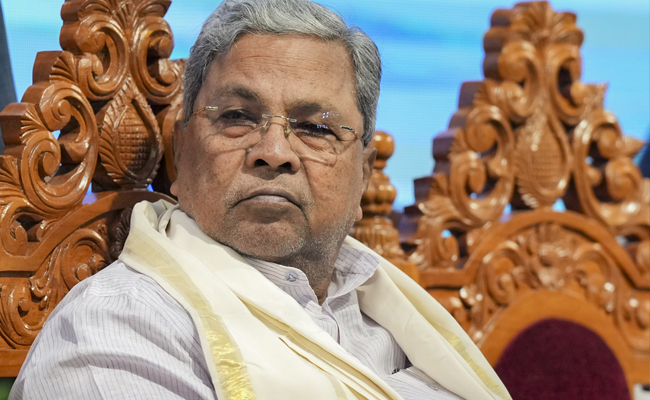
Bengaluru (PTI): Alleging a “criminal conspiracy” by BJP candidate D N Jeevaraj in the Sringeri Assembly poll recounting, Karnataka CM Siddaramaiah on Tuesday said the outcome was manipulated after valid postal ballot votes in favour of Congress leader T D Raje Gowda were tampered with during the recounting process.
Following a Karnataka High Court order on an election petition filed by Jeevaraj, challenging Raje Gowda’s election, the reverification and recounting were conducted on Saturday.
After the reverification and recount of postal ballots for the Sringeri Assembly constituency, votes polled in favour of Raje Gowda were reduced by 255, the returning officer said.
A report on the matter has been submitted to the Election Commission of India for further action, the officer added.
Congress leader Raje Gowda had won the 2023 Assembly polls from Sringeri by 201 votes, defeating his nearest rival Jeevaraj.
Addressing a press conference in Bengaluru, Siddaramaiah said the High Court had directed the recounting of postal ballots and that irregularities were noticed during the exercise conducted on May 2.
“This is a clear case of criminal conspiracy,” Siddaramaiah said, alleging that valid votes cast in favour of Raje Gowda were altered after being accepted by counting agents of all parties, including Congress, BJP, and JD(S).
He claimed that during the recounting of postal ballots, 255 votes were initially accepted as valid by all agents but were later tampered with by subordinate officials.
“There is a second mark on the votes polled in favour of Raje Gowda. They had accepted these as valid votes. Subsequently, another mark was made by officials. This is a clear case of criminal conspiracy,” he said.
When asked who was behind the alleged conspiracy, the CM replied, “It was hatched by Jeevaraj and others. It is planned.”
Siddaramaiah further alleged that the returning officer acted improperly by declaring the result despite the presence of an Election Commission observer during the recounting.
“Immediately after the counting, the returning officer announced the result. He should not have done so; this is against the law,” he said.
He pointed out that Raje Gowda had originally won by 201 votes, but after the recounting, the BJP candidate was declared the winner by 52 votes.
“The BJP has committed a criminal act of conspiracy. This is not vote chori but vote dacoity,” he alleged.
The CM said a police complaint had already been filed by Raje Gowda’s election agent, Sudhir Kumar, and emphasised the need for electoral integrity.
“We want transparency and free and fair elections. That is what our Constitution mandates,” he added.
Stating that the government would pursue legal remedies, Siddaramaiah said, “We are preparing an appeal challenging the returning officer’s announcement in a court of law.”
Responding to a separate query on elections in other states, the CM said there appeared to be an anti-incumbency factor in West Bengal, while results in Tamil Nadu were “surprising,” adding that Vijay’s party was emerging as the largest there.
Following the victory of party candidates in Bagalkote and Davanagere South, Siddaramaiah expressed confidence about future electoral prospects in Karnataka.
“Even in 2028, we will win the Assembly elections. We will come back,” the CM said.
Siddaramaiah added that he would order a forensic examination into the alleged tampering of postal ballots.