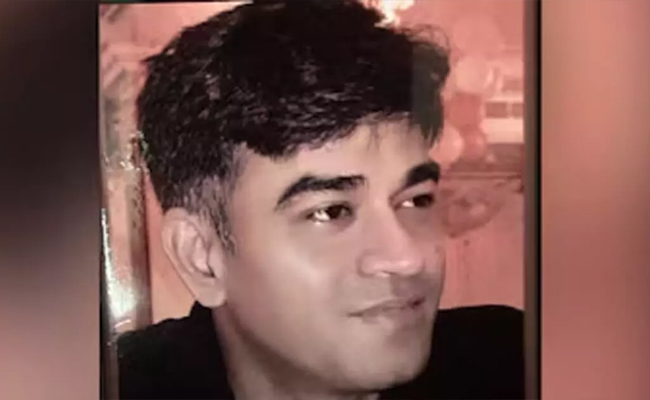
Nawaz Sharif back in jail after massive show of strength

Lahore: Pakistan's deposed prime minister Nawaz Sharif has returned to prison to serve his sentence in a corruption case after the end of his six-week bail which was granted to him on medical grounds.
On March 26, the Supreme Court suspended Sharif's seven-year sentence in the Al-Azizia Steel Mills corruption case and granted him bail for six weeks with a condition that he would not leave Pakistan.
Last month, the 69-year-old three-time prime minister sought the apex court's permission to go abroad for medical treatment. However, the permission was not granted.
On Tuesday, Sharif left his Jati Umra residence here for the Kot Lakhpat Jail with a procession of Pakistan Muslim League-Nawaz (PML-N) workers led by his daughter Maryam.
Maryam and his nephew Hamza Shehbaz along with hundreds of PML-N workers accompanied him. The supporters gathered outside Sharif's Jati Umra residence and accompanied him to jail.
The procession took four hours to reach the Kot Lakhpat Jail, which is otherwise just 30 minutes away. The bail expired on Tuesday midnight (May 7) with the apex court rejecting his review petition, seeking permission to go London for further treatment.
After reaching jail, Sharif thanked his party workers for turning up in large numbers. "I do not have words to thank the workers who turned up in thousands to express solidarity. It is midnight but the workers are still here with me. It is an amazing scene," he said in a message.
The massive support for the PML-N leader included a large number of party workers from different parts of Punjab province who turned up for the rally en-route to the jail. Sharif's daughter Maryam accompanied her father in his car and posted images online of the reception their entourage got form the public.
"The roads to the jail from Jati Umra were jampacked. Only heads and long queues of motorists," Maryam tweeted. Amidst sloganeering in support of Sharif, party workers were seen showering rose petals at his car.
"The people know why I am being punished. What sin I have committed... they know. But I am optimistic that soon the black night of this oppression will end and I will get released from jail," Sharif said.
Though Sharif was to reach jail before midnight, he reported half-an-hour late. The Punjab Home Department directed the jail authorities to receive Sharif and shift him to the barrack, officials said. He was imprisoned in Adiyala Jail and shifted to Kot Lakhpat Jail on request.
Sharif has been serving a seven-year prison term at the jail since December 24, 2018 when an accountability court convicted him in one of the three corruption cases filed in the wake of the apex court's July 28, 2017 order in Panama Papers case. Sharif and his family have denied any wrongdoing and allege that the corruption cases against them were politically motivated.
Let the Truth be known. If you read VB and like VB, please be a VB Supporter and Help us deliver the Truth to one and all.
Sujit Nair raises concerns over speculation of DMK-AIADMK understanding to block TVK
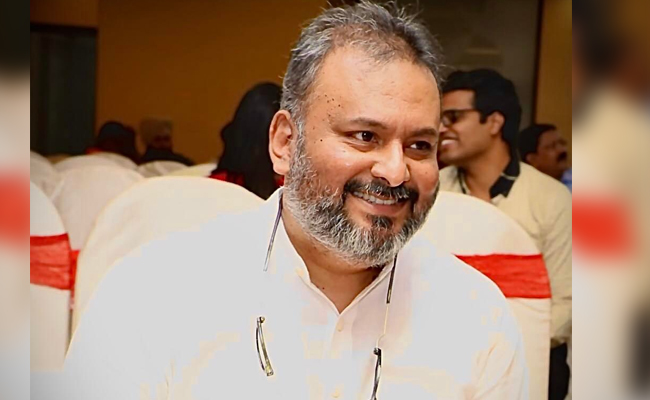
Chennai: Journalist and political commentator Sujit Nair has expressed concern over speculation that the Dravida Munnetra Kazhagam and the All India Anna Dravida Munnetra Kazhagam could explore a post-poll understanding to prevent Vijay-led Tamilaga Vettri Kazhagam from forming the government in Tamil Nadu.
In a social media post, Sujit Nair said the election verdict in Tamil Nadu reflected a clear public demand for political change and argued that the mandate should be respected irrespective of political preferences.
Referring to reports and political discussions surrounding a possible understanding between the DMK and AIADMK, he said he hoped such developments remained only speculative conversations and did not turn into reality.
Nair stated that if such an alliance were to take shape, it would raise serious questions about ideological politics in the country. He said TVK had emerged through a democratic electoral process and that the legitimacy to govern in a parliamentary democracy comes from the people’s verdict.
According to him, attempts to prevent an electoral winner from forming the government through unexpected political arrangements may be constitutionally valid, but many people could view them as politically opportunistic.
He further said that such a move could particularly affect the political image of the DMK, which has historically projected itself around ideology, social justice and opposition politics. Nair said that in ideological terms, the DMK appeared closer to TVK than to the AIADMK, and joining hands with its long-time political rival only to remain in power could weaken its broader political narrative.
He added that the same questions would apply to the AIADMK as well, as the party had spent decades positioning itself against the DMK and such an arrangement could create discomfort among its cadre and supporters.
Drawing a comparison with Maharashtra politics in 2019, Nair said he had expressed similar views when the Shiv Sena formed an alliance with the Indian National Congress and the Nationalist Congress Party after the Assembly elections.
He said post-poll alliances between long-standing political rivals often create a public perception that ideology and electoral mandates become secondary when political power equations come into play.
Nair also said such developments increase public cynicism towards politics and reinforce the belief among voters that ideology is often sidelined after elections.
He maintained that the Tamil Nadu verdict was emphatic and said respecting both the spirit and substance of the mandate was important for the credibility of democratic politics.