Nawaz Sharif, Maryam to be arrested upon arrival in Pakistan
London, July 13 : Former Pakistani Prime Minister Nawaz Sharif and his daughter Maryam Nawaz, both sentenced to long jail terms in Avenfield properties corruption case, are due to return home from London on Friday to begin their prison sentence.
Upon their arrival at Lahore's Allama Iqbal International Airport at 6.15 p.m., both will be arrested and taken to Islamabad by helicopter to be imprisoned at the Rawalpindi Central Jail, Dawn online reported.
Authorities deployed 10,000 policemen and blocked several roads in Lahore hours ahead of their arrival.
"The authorities have ordered the police to help the National Accountability Bureau in arresting Sharif and his daughter when they arrive here. So of course police will help in this regard," senior Lahore police officer Shehzad Akbar told Efe news.
The three-time Prime Minister was ousted from office last year after a corruption investigation.
He was sentenced in absentia to 10 years last week over his family's ownership of four luxury flats in London. His daughter and son-in-law Captain (retired) Muhammad Safdar Awan were sentenced for seven years and one year respectively.
The Avenfield corruption case is among the multiple graft cases filed against the former Premier and his children by the anti-corruption body on the Supreme Court's directives in the landmark Panamagate verdict last year.
The government of Punjab province, of which Lahore is the capital, banned Sharif's party the Pakistan Muslim League (PML-N) from holding protests and announced it will also ban mobile phones for the day.
However, PML-N President Shahbaz Sharif said he will lead a peaceful protest to receive his brother.
Thousands of supporters are expected to flock to the airport while hundreds of party activists in Lahore were reportedly detained ahead of his return.
Nawaz Sharif has called for a "mass gathering of the people".
Sharif has accused Pakistan's security establishment of conspiring against him ahead of the July 25 general election. In a video message, tweeted by Maryam Nawaz, the former leader urged his followers to stand with him and "change the fate of the country".
"The country is at a critical juncture right now. I have done what I could. I am aware that I have been sentenced to 10 years (in prison) and I will be taken to a jail cell straight away. But I want the Pakistani nation to know that I am doing this for you," Sharif said.
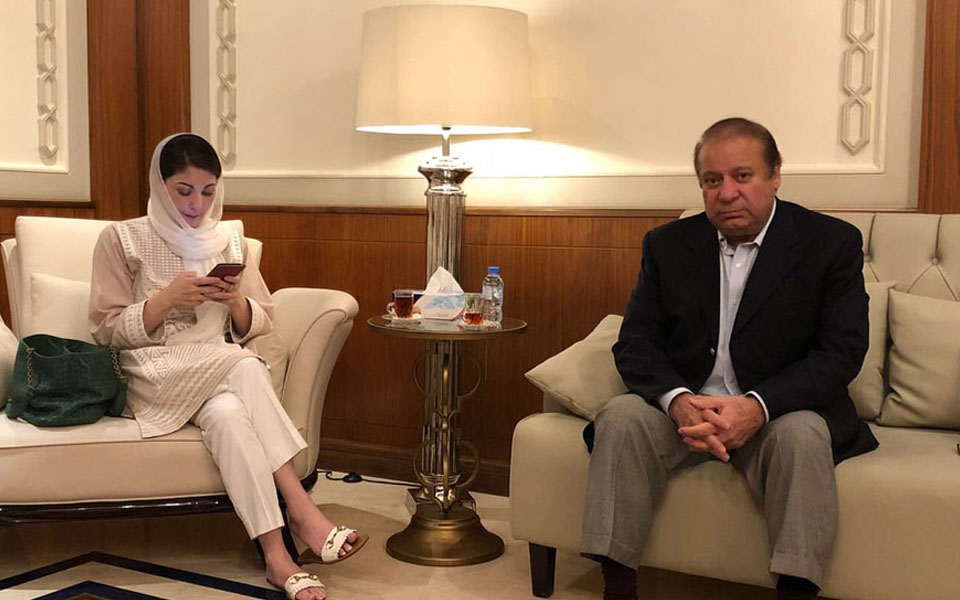
Maryam posted pictures on Twitter before their departure. In one picture, the father and daughter are seen bidding a teary farewell with Kulsoom Nawaz, who is said to be comatose and admitted at a London hospital.
Sharif has earlier argued that he was disqualified because his government had accused ex-military dictator Pervez Musharraf of treason in court. He has called the graft charges "politically motivated".
Let the Truth be known. If you read VB and like VB, please be a VB Supporter and Help us deliver the Truth to one and all.
India-bound LPG tanker clears Hormuz
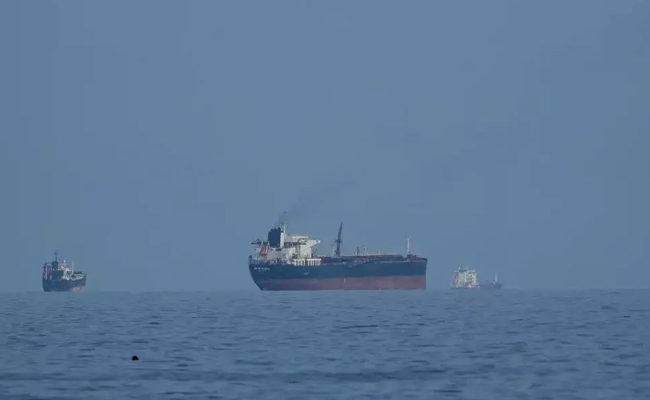
New Delhi (PTI): A tanker carrying liquefied petroleum gas (LPG) for India has sailed out of the Strait of Hormuz and is now headed towards the country, an official statement said on Sunday.
The Marshall Islands-flagged LPG carrier MT Sarv Shakti, loaded with 46,313 tonnes of LPG and staffed by 20 crew, including 18 Indians, cleared the key shipping chokepoint on May 2 and is expected to reach Visakhapatnam on May 13, it said.
The cargo -- enough to meet half a days requirement of the country -- will partly tide over supply constraints being faced since the start of the West Asia conflict more than two months back.
Ship-tracking data showed its position in Oman Gulf on Sunday evening.
The very large gas carrier has previously made runs between the Persian Gulf and Indian ports, has been chartered by state-owned Indian Oil Corporation (IOC).
Sarv Shakti is the first India-linked tanker to cross the war zone since a weeks-old US blockade of ships tied to Iran began, pushing transits through Hormuz back down to almost zero.
There are as many as 14 Indian flagged or India-owned vessels still stranded on the west side of the Strait of Hormuz.
The statement said no incident involving Indian-flagged vessels has been reported in the past 24 hours. The Ministry of Ports, Shipping and Waterways is working closely with the Ministry of External Affairs, Indian missions and maritime stakeholders to ensure crew welfare and uninterrupted operations.
The Directorate General of Shipping (DG Shipping) control room has handled 8,373 calls and more than 17,965 emails since activation, including 38 calls and 127 emails in the last 24 hours.
India has also facilitated the repatriation of more than 2,953 seafarers so far, including 31 in the past day from across the Gulf region.
Port operations across the country remain normal with no congestion reported, the statement added.