New footage shows Iranian missiles hitting Ukraine plane

Washington: New video footage has emerged showing two Iranian missiles tearing through the night sky and hitting a Ukrainian passenger plane, sending the aircraft down in flames and killing all 176 passengers and crew on board.
The projectiles were fired 30 seconds apart and explain why the plane's transponder was not working as it hurtled to the ground -- it was disabled by the first strike, before being hit by a second, said the New York Times, which published the verified security camera footage Tuesday.
The blurry film, shot from a rooftop in a village four miles from an Iranian military site, shows the Kiev-bound plane on fire and circling back to Tehran's airport, the Times said. Minutes later, the aircraft exploded and crashed.
Iran had for days denied Western claims that the Boeing 737 had been downed by its missiles.
Tehran came clean on Saturday when Revolutionary Guards aerospace commander Brigadier General Amirali Hajizadeh acknowledged a missile operator had mistaken the Ukraine International Airlines plane for a cruise missile and opened fire.
The incident happened when Iran's armed forces were on heightened alert after launching a volley of missiles at Iraqi bases hosting US troops in retaliation for the killing of top general Qasem Soleimani on January 3.
Iran has struggled to contain the fallout over its handling of the air disaster and the tragedy has seen hundreds of angry protesters, most of them students, take to the streets.
New videos circulating on social media purported to show fresh protests on Tuesday evening at universities in Tehran, along with clashes between students and Basij militia loyal to the establishment. It was not possible to immediately verify the videos.
Earlier, AFP correspondents said around 200 mainly masked students gathered at Tehran University and were locked in a tense standoff with youths from the Basij.
Kept apart by security forces, the groups eventually parted ways. Around 30 people have been arrested in the protests over the air disaster, according to judiciary spokesman Gholamhossein Esmaili.
On Tuesday Tehran said it had made its first arrests over the shooting down of the plane, though it gave no details.
Recent protests have been much smaller than nationwide demonstrations against fuel price hikes that turned deadly in November. But one commentator said the latest rallies showed there was a "real rift between the people and the authorities".
"I hope that (police restraint) will continue and that no lives are lost, because this could be a catalyst for more protests," Mehdi Rahmanian, director of reformist daily Shargh, told AFP.
In another sign of growing dissent, a group of artists cancelled their participation in the Fajr festival, held each year on the anniversary of the 1979 Islamic Revolution, according to Hamshahri newspaper.
President Hassan Rouhani said Tuesday Iran's judiciary "must form a special court with a high-ranking judge and dozens of experts... The whole world will be watching." "Anyone who should be punished must be punished".
The office of Ukraine's President Volodymyr Zelenskyy said he spoke to Canada's premier Justin Trudeau on Tuesday for a third time since the crash, with the latter asking for help from Kiev in liaising with Iranian authorities to help identify bodies of Canadian citizens.
Let the Truth be known. If you read VB and like VB, please be a VB Supporter and Help us deliver the Truth to one and all.
Ladakh a living land of dharma for centuries: Amit Shah
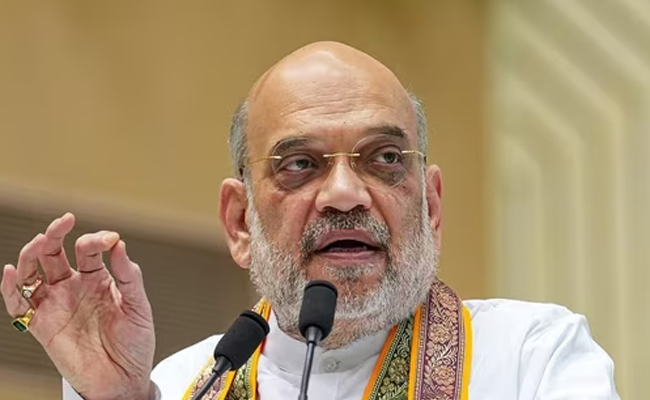
Leh/Jammu (PTI): Union Home Minister Amit Shah on Friday described the return of sacred relics of Lord Buddha to Ladakh after 75 years as a "historic reunion" and said that the Union Territory has remained a "living land of dharma", preserving and nurturing Buddhist knowledge for centuries.
Stressing the relevance of Buddha's teachings in modern times, Shah said the message of peace, compassion and the middle path was even more important today than it was 2,500 years ago.
"Ladakh has been a living land of dharma for centuries. When the Dalai Lama comes here, he says this land is not merely a geographical land but a living laboratory of Buddhist culture and compassion," Shah said, speaking after the inauguration of the sacred holy relics exposition of Tathagata Buddha and the 2569th Buddha Purnima celebrations at Jivetsal in Leh during his two-day visit to Ladakh.
Calling Ladakh a land of compassion, he said this land has preserved and nurtured knowledge. "Whenever Buddhism faced crises, this land worked to protect the teachings of Buddha. And when peace returned, it helped to expand and carry forward that preserved wisdom," he added.
"Unless one internalises knowledge and makes it a part of oneself, liberation is not possible. Knowledge is incomplete without spiritual practice, while spiritual practice without knowledge is blind. Therefore, the union of spiritual practice and knowledge is the right path. Even after all this, if there is no moral discipline, one cannot lead a truly wise life. The basis of a life of wisdom is moral discipline," he said.
Shah said it was through Ladakh and adjoining routes that the teachings of Tathagata Buddha, which originated in India, spread to China and several other countries.
"The message that emerged from the land of Ladakh has become a guiding force for many people around the world to take their lives forward. The presence of these sacred relics in Ladakh reminds us that India's civilisation has, for thousands of years, given the message of peace and coexistence," he said.
He said that in a diverse region like Ladakh and Kargil, this message becomes even more relevant. "This heritage still tells us today that amidst conflict and unrest, only the path of peace and compassion can provide solutions."
He said the return of the relics on Buddha Purnima had enhanced the significance of the festival for the people of Ladakh.
"These sacred relics have come to Ladakh after 75 years. It is as if Buddha himself is present here today," Shah said, adding that followers of Buddhism and people of other faiths in Ladakh and Kargil would draw spiritual energy from the relics.
Highlighting Ladakh's role in the spread of Buddhism, Shah said Kashmir was once an ancient centre of Buddhist studies, Mahayana philosophy and Buddhist art, from where Ladakh first came into close contact with Buddhism.
He said Emperor Ashoka's envoys laid the foundation of Buddhist influence in Ladakh through Kashmir and Gandhara, while Mahayana Buddhism expanded in the region during the Kushan period between the first and third centuries CE.
The Silk Route linking Kashmir, Leh, Yarkand, Khotan and Tibet became a channel not only for trade but also for ideas, monks, manuscripts and artistic traditions, Shah said.
He added that later, Tibetan influence between the seventh and tenth centuries further enriched Ladakh through Mahayana and Vajrayana traditions.
Stressing the relevance of Buddha's teachings in modern times, Shah said the message of peace, compassion and the middle path was even more important today than it was 2,500 years ago.
"Amid conflict and unrest, only the path of peace and compassion can provide solutions," he said.
Shah also appealed to the Ladakh administration to ensure complete arrangements so that followers of all faiths, especially Buddhists, could visit and pay obeisance to the relics.
#WATCH लेह, लद्दाख: केंद्रीय गृह मंत्री अमित शाह ने कहा, "जब दलाई लामा यहां आते हैं तो वे कहते हैं कि यह भूमि केवल भौगोलिक भूमि नहीं है। यह भूमि बौद्ध संस्कृति और करुणा की जीवंत प्रयोगशाला है। इस भूमि पर ज्ञान का संरक्षण हुआ है... भारत की सभ्यता हजारों वर्षों से शांति का संदेश… https://t.co/2nwG0w2CE6 pic.twitter.com/W13itRBqeX
— ANI_HindiNews (@AHindinews) May 1, 2026