Oldest human footprints in North America found in New Mexico
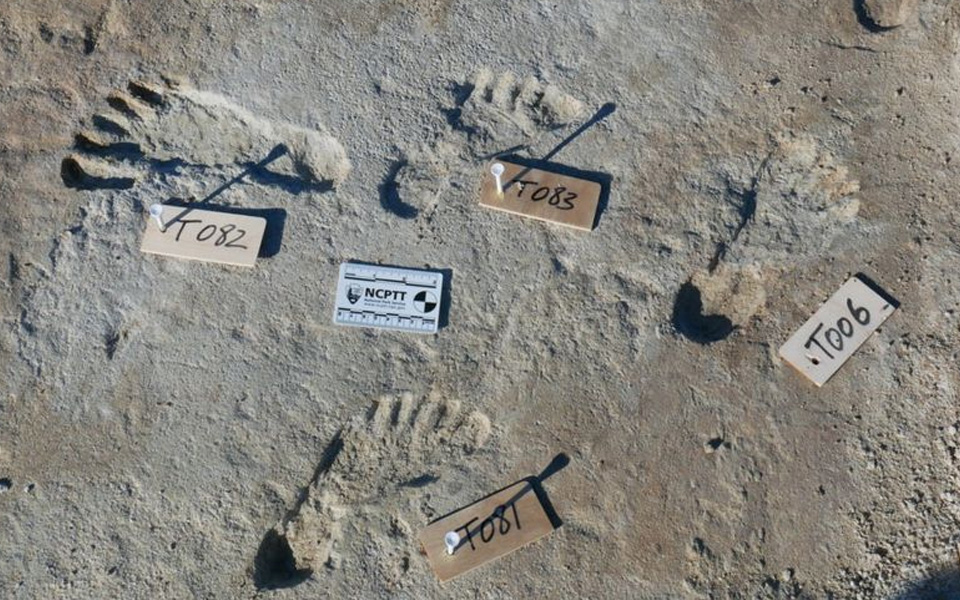
Washington(AP): Fossilised footprints discovered in New Mexico indicate that early humans were walking across North America around 23,000 years ago, researchers reported Thursday.
The footprints were found in a dry lake bed in White Sands National Park, first spotted in 2009 by a park manager. Scientists at the US Geological Survey recently analysed seeds stuck in the footprints to determine their approximate age, ranging from around 22,800 and 21,130 years ago.
Most scientists believe ancient migration came by way of a now-submerged land bridge that connected Asia to Alaska. Based on various evidence including stone tools, fossil bones and genetic analysis other researchers have offered a range of possible dates for human arrival in the Americas, from 13,000 to 26,000 years ago or more.
The current study provides a more solid baseline for when humans definitely were in North America, although they could have arrived even earlier, the authors say. Fossil footprints are more indisputable and direct evidence than cultural artifacts, modified bones, or other more conventional fossils, they wrote.
What we present here is evidence of a firm time and location, they said.
Based on the size of the footprints, researchers believe that at least some were made by children and teenagers who lived during the last ice age.
The research was published Thursday in the journal Science.
Earlier excavations in White Sands National Park have uncovered fossilized tracks left by a saber-toothed cat, dire wolf, Columbian mammoth and other ice age animals.
Let the Truth be known. If you read VB and like VB, please be a VB Supporter and Help us deliver the Truth to one and all.
Congress’ Umesh Meti wins Bagalkot bypoll

Bagalkot: The Congress has secured a victory in the Bagalkot Assembly by-election, with its candidate Umesh Meti winning the seat after maintaining a lead from the first round of counting till the end.
The seat had fallen vacant following the death of sitting MLA H Y Meti. Umesh Meti, his son, has now been elected to the Assembly.
Party leaders attributed the victory to a combination of factors, including sympathy votes, the state government’s schemes, and campaign strategies led by Chief Minister Siddaramaiah and senior leader Satish Jarkiholi.
The Congress maintained a consistent lead throughout the counting process, eventually securing a decisive win in the constituency.