Pakistan opposition rejects results, demands re-election
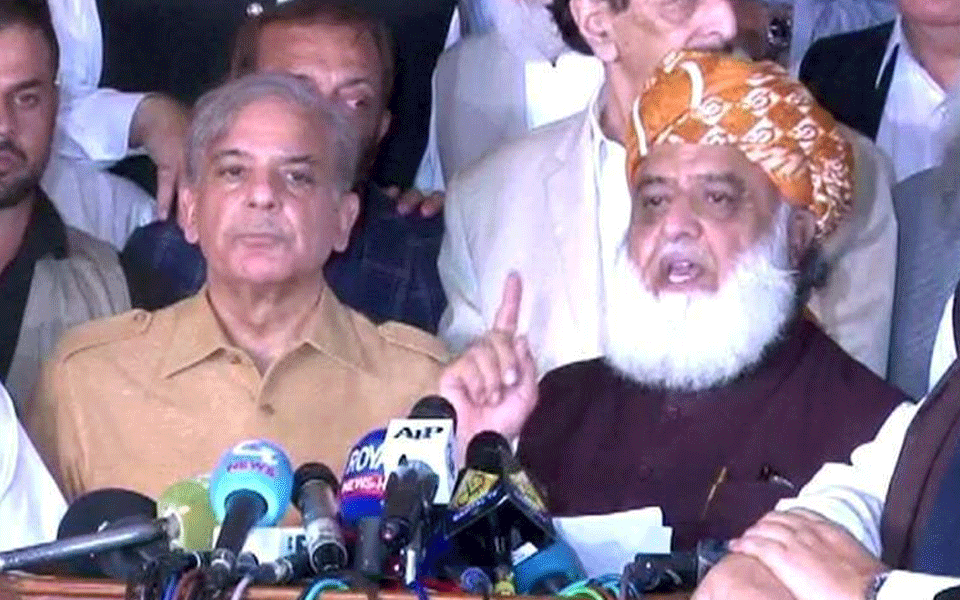
Islamabad, July 27 : A multi-party conference (MPC), called to devise a joint strategy over alleged rigging in the 2018 general elections of Pakistan, on Friday rejected the poll results, demanding a "transparent" re-election.
Attended by leaders of various parties, the MPC was chaired by PML-N President Shahbaz Sharif and Muttahida Majlis-i-Amal (MMA) President Maulana Fazlur Rehman. It was held at the Islamabad residence of MMA leader Mian Aslam, Dawn reported.
"The APC (all parties conference) has completely rejected the July 25 elections with consensus," announced Rehman while addressing the media after the conference concluded.
"We do not consider this election to be the mandate of the public."
The Pakistan Peoples Party had earlier on Friday decided not to attend the conference, with a spokesperson saying its leadership will devise its own strategy regarding alleged poll irregularities.
In attendance at the MPC were Jamaat-i-Islami (JI) chief Senator Sirajul Haq, Sindh Governor Mohammad Zubair, Gilgit-Baltistan Chief Minister Hafeezur Rehman, Azad Jammu and Kashmir Prime Minister Raja Farooq Haider, Awami National Party chief Asfandyar Wali Khan, Qaumi Watan Party chairman Aftab Ahmad Khan Sherpao, National Party's Senator Mir Hasil Bizenjo and several MMA leaders.
PML-N leaders Shahid Khaqan Abbasi, Ayaz Sadiq, Marriyum Aurangzeb, Chaudhry Tanveer and Khurram Dastagir and Pak Sarzameen Party (PSP) leaders Mustafa Kamal, Raza Haroon and Waseem Ahmed also participated.
Interestingly, Muttahida Qaumi Movement (MQM-P) leader Farooq Sattar also showed up to the conference, despite reports that his party has agreed to join the Pakistan Tehreek-e-Insaf (PTI)-led government in the centre after a contact between PTI leader Jehangir Tareen and Khalid Maqbool Siddiqui.
Speaking at the MPC, Sattar alleged that the July 25 polls were "rigged massively" and the results were altered.
"Results of their choice were devised and the party of their choice was made to win," he claimed.
The MMA had on Thursday rejected the poll results outright, calling for declaring the entire electoral exercise "null and void".
The recently revived alliance of five religio-political parties suffered a drubbing in the elections and even its chief, Maulana Fazlur Rehman, and JI chief Sirajul Haq tasted defeat in their native constituencies.
The PML-N too had decided to take all major parties, including the PPP and obviously excluding the PTI, on board to formulate a joint strategy to take up the rigging issue that it believes has deprived it of majority in the coming National Assembly.
Let the Truth be known. If you read VB and like VB, please be a VB Supporter and Help us deliver the Truth to one and all.
Two held for 'firing' at BJP leader's house in Bengal

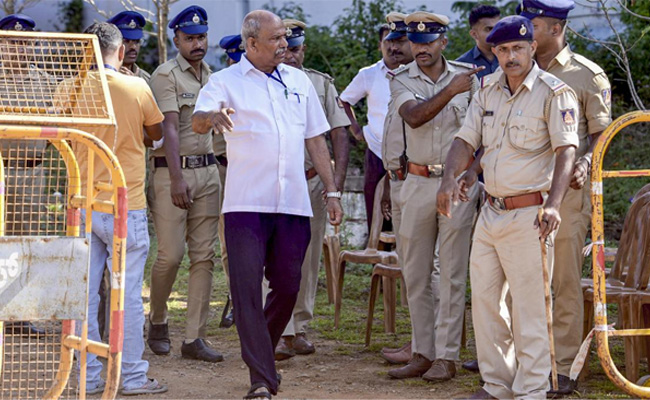
Kolkata (PTI): A day before the counting of votes for the West Bengal assembly elections, two persons were arrested on Sunday for allegedly being involved in a firing incident outside the residence of a BJP leader in North 24 Parganas district, police said.
BJP leader Kundan Singh lodged a police complaint, alleging that a few gunmen fired at his house in the Noapara constituency around Saturday midnight.
Based on the CCTV footage, the two accused were apprehended, a senior officer said.
BJP's Noapara candidate Arjun Singh, in a post on social media, claimed that around 12.05 am, two armed miscreants arrived on a motorcycle at the residence of Kundan Singh, a BJP functionary and secretary of the Barrackpore organisational district, with an "intent to kill him".
According to the BJP leader, the accused are residents of Garulia and are known criminals.
Their names as offenders had been submitted to the Election Commission, he said.
The police officer did not specify whether the two arrested persons were the same individuals named by Arjun Singh.
According to the complaint, one round of firing took place outside Kundan Singh's house, triggering panic in the area.
The BJP candidate also questioned the role of the police, claiming that one of the accused had been detained by the police on the polling day but was later released in the evening.
The Noapara assembly seat went to the polls on April 29.
Several BJP leaders alleged that attempts were being made to create an atmosphere of fear ahead of the counting and weaken the organisation of the opposition parties.
The counting of votes will take place on May 4. Polling for the West Bengal assembly elections was held on April 23 and April 29.
The BJP urged the Election Commission to intervene immediately to ensure peaceful counting.
TMC candidate Somnath Shyam rubbished Arjun Singh’s allegation, claiming that the BJP nominee had orchestrated the firing incident to divert attention from imminent defeat.
“Arjun Singh knows all the gangsters in the Barrackpore belt. Everyone knows about his links with the underworld. Let the police investigate the incident,” Shyam said.