Pakistani court bars government from 'harassing' Hafiz Saeed
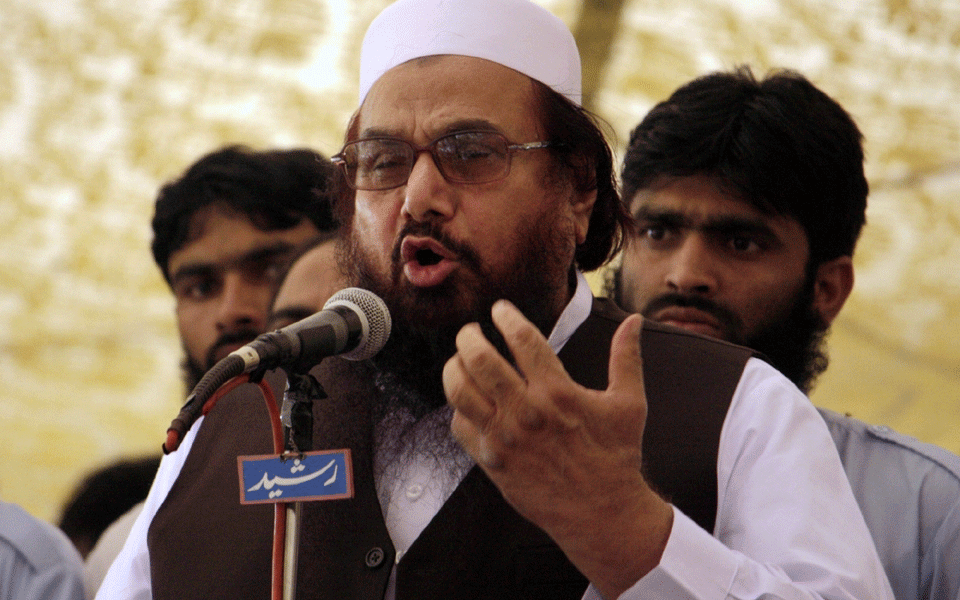
Islamabad: The Lahore High Court on Thursday ordered government authorities to not "harass" banned Jamaat-ud-Dawa (JuD) chief and 2008 Mumbai terror attack mastermind Hafiz Saeed and allow him to continue his "social welfare activities".
The founder of Lashkar-e-Taiba (LeT) alleged in a petition that the government was interfering in his party's welfare projects because it had bowed down to pressure from India and the US, Dawn online reported.
The petition argued that barring an organisation or party from indulging in charity work was against the Constitution.
Justice Ameenud Din Khan, who heard the petition filed by lawyer A.K. Dogar on Saeed's behalf, also directed the authorities to submit their responses by April 23.
Saeed had filed a nearly identical petition through Dogar before the same judge in March. That time, Justice Khan had directed the federal and provincial governments to submit their responses by April 27.
However, due to the similar nature of both petitions, the court decided to club the cases.
After hearing Saeed's arguments in Thursday's hearing, Justice Khan issued notices to the federal and provincial governments again, directing them to file their replies. The hearing was subsequently adjourned until April 23.
On January 1, the Securities and Exchange Commission of Pakistan had barred JuD and several other such organisations named in a list of banned outfits by the UN Security Council from collecting donations in the country.
The federal government had followed suit on February 12, with President Mamnoon Hussain amending the Anti-Terrorism Act (ATA) of 1997 and issuing the amended Anti-Terrorism Ordinance, 2018, following which the personnel banned by the UN stood banned in Pakistan as well.
Earlier this week, the US designated LeT's political front, the Milli Muslim League (MML), as well as another front organisation, the Tehreek-e-Azadi-e-Kashmir (TAJK), as foreign terrorist groups.
Let the Truth be known. If you read VB and like VB, please be a VB Supporter and Help us deliver the Truth to one and all.
Centre spent Rs 76.13 lakh on print media ads for RSS centenary, reveals RTI
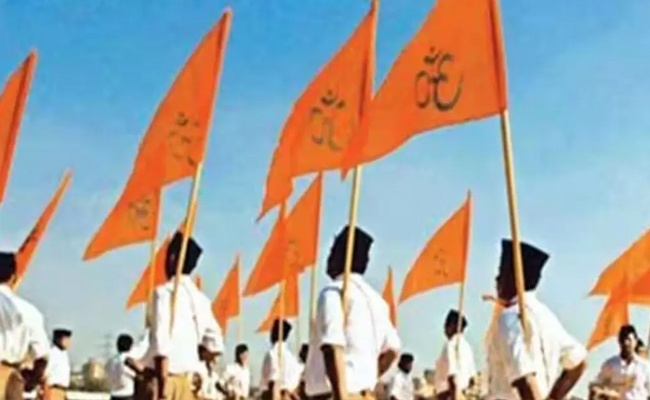
New Delhi: The Union Ministry of Culture allegedly spent Rs 76.13 lakh on print advertisements marking the 100-year celebrations of the Rashtriya Swayamsevak Sangh (RSS), according to a Right to Information (RTI) reply.
The information was sought by RTI activist Ajay Basudev Bose, who filed an application seeking details on expenditure incurred by the ministry for advertisements commemorating the RSS centenary.
Bose shared a picture of the reply from the ministry on his official ‘X’ handle.
“It is informed that an amount of Rs 76,13,129 has been spent on advertisement given in various print media by the Ministry of Culture on the occasion of the completion of 100 years of RSS,” the government’s reply stated.
RTI reply shows Min of Culture Govt of India spent a Whopping Rs 76L,13K,129 on Advertisement in Print Media on occasion of 100 yrs of #RSS
— AJAY Basudev Bose (@AjayBos93388306) April 16, 2026
When Everyone knows RSS is Not Registered & Does not Pay any Tax is it justified to spend Tax Payers Money on such Private event??@RSSorg… pic.twitter.com/dW4IUtdNCg
Bose questioned the expenditure in the post X, “when Everyone knows RSS is Not Registered & Does not Pay any Tax is it justified to spend Tax Payers Money on such Private event??”
Reacting to the development, Karnataka’s IT-BT and Panchayat Raj Minister Priyank Kharge also criticised the spending.
In a post on X, he asked why public money was being used for what he described as a “private ideological project.”
"Modi Sarkar spent Rs 76,13,129 of public money on newspaper advertisements to celebrate 100 years of the RSS. Why is Government spending taxpayers money on an unregistered, non-tax-paying organisation to celebrate their centenary?," he added.
Why is public money being used to serve a private ideological project?
— Priyank Kharge / ಪ್ರಿಯಾಂಕ್ ಖರ್ಗೆ (@PriyankKharge) April 16, 2026
Modi Sarkar spent ₹76,13,129 of public money on newspaper advertisements to celebrate 100 years of the RSS.
Why is Government spending taxpayers money on an unregistered, non-tax-paying organisation to… pic.twitter.com/EoZ6Pim3IM
According to reports, the RSS describes itself as a volunteer-based organisation and has stated that it functions as a body of individuals rather than a registered entity.
Founded by Keshav Baliram Hedgewar in 1925, the organisation is marking its centenary year beginning from Vijaydashami in 2025, with the milestone observed on October 2.