Pakistani musician Haniya Aslam dies, cousin Zeb Bangash confirms the news
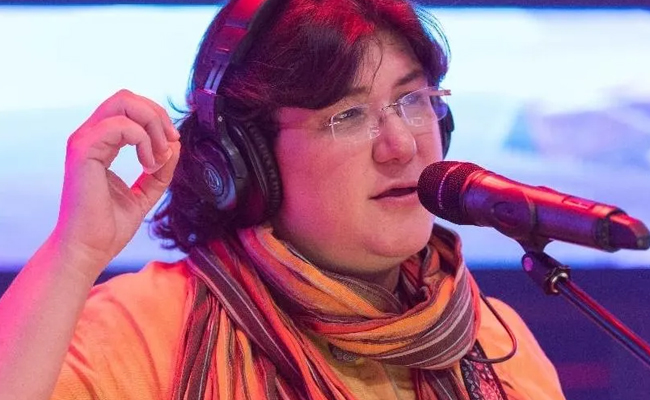
Mumbai (PTI): Popular Pakistani singer Haniya Aslam, known for her Coke Studio hits "Laili Jaan", "Bibi Sanam", "Paimona", and "Chup", has died, her cousin and musical collaborator Zeb Bangash confirmed on social media.
Bangash paid tribute to Haniya by sharing pictures of her late cousin on Instagram. Shecaptioned the post, "Hanini", confirming Aslam's death on Sunday.
Local media reports said Aslam died of cardiac arrest and was in her late 30s.
Fans and well wishers mourned the singer's death on social media.
One user commented, "What!? This is a shock". Another said, "I am so so sorry to hear this!"
Indian musical artist Anirudh Varma wrote, "I'm so sorry to hear about this. May her soul rest in peace. Her music will be celebrated forever."
Indo-Pakistani duo comprised of Rup Magon and Qurram Hussain, known by their band "JoSH the Band" shared a story with the Aslam's picture captioning it, "Today, our music fraternity lost an incredible artist and soul. You will never be forgotten Haniya. R.I.P."
Pakistani cricketer Syeda Nain Fatima Abidi wrote, "Aas wohi dil mai leye, iss aarzoo mai hum jiyen, tera haath thaam k, lo ham bhi chal diye… Rest in peace."
Lyricist-singer Swanand Kirkire wrote on X, "My dear friend Haniya Aslam ( from Zeb and Haniya ) has left us. She had a cardiac arrest. Rest in peace dear Haniya."
Aslam, who was one of the popular singers in the Pakistani music industry over the years, began her career in 2007 after forming a band "Zeb-Haniya" alongside Bangash. They worked together on several hits before she moved away to Canada in 2014 to study further.
Aslam and Bangash have worked on several compositions for Coke Studio Pakistan a Some of her other songs include "Tann Dolay", "Dosti", "Dil Pagla", "Ahaan" and "Seh Na Sakay" to name a few.
Let the Truth be known. If you read VB and like VB, please be a VB Supporter and Help us deliver the Truth to one and all.
Trump pauses Project Freedom, claims great progress for final agreement with Iran
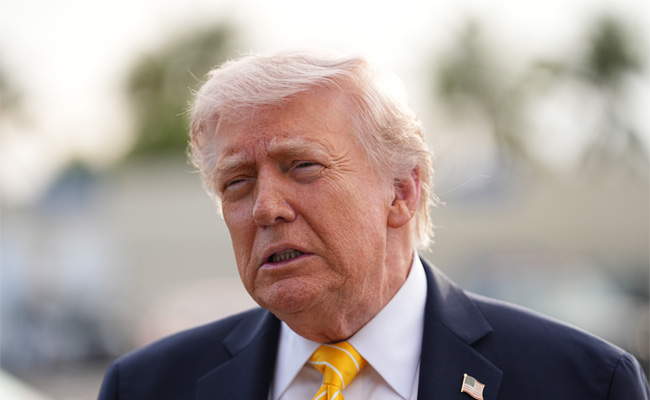
Washington (PTI): President Donald Trump has suspended “Project Freedom,” to escort ships through the Strait of Hormuz, claiming progress in negotiations with Iran toward an agreement to end the war.
In a post on Truth Social on Tuesday, Trump said, “Great progress has been made toward a complete and final agreement with representatives of Iran.”
“Based on the request of Pakistan and other Countries, the tremendous Military Success that we have had during the Campaign against the Country of Iran and, additionally, the fact that Great Progress has been made toward a Complete and Final Agreement with Representatives of Iran, we have mutually agreed that, while the Blockade will remain in full force and effect, Project Freedom (The Movement of Ships through the Strait of Hormuz) will be paused for a short period of time to see whether or not the Agreement can be finalized and signed," Trump said.
Project Freedom was launched on Monday to escort ships, stranded due to the closure of the Strait of Hormuz, out to safety. Trump had announced the operation on Sunday and the US Central Command began implementing it the next day.
However, the Project led to friction in the vicinity of the narrow seaway, a key route for transporting one-fifth of the global oil supplies, with the UAE claiming that its ships were attacked by Iran. The US also claimed to have destroyed several Iranian small boats.
Trump’s statement on Truth Social came hours after US Secretary of State Marco Rubio announced that Operation Epic Fury, launched on February 28, had concluded as its objectives have been achieved.
"Operation Epic Fury is concluded. We achieved the objectives of that operation. We're not cheering for an additional situation to occur. We would prefer the path of peace. What @POTUS would prefer is a deal... that is, so far, not the route that Iran has chosen," Rubio told a press conference at the White House on Tuesday.
On Project Freedom, Rubio said the goal was to rescue almost 23,000 civilians from 87 different countries who were trapped inside the Persian Gulf and left for dead by the Iranian regime.
"This is not an offensive operation. This is a defensive operation, and what that means is very simple: there’s no shooting unless we're shot at first. We’re not attacking them, but if they're attacking us or they’re attacking a ship, you need to respond to that," Rubio said.