Palestinian embassy in Egypt says Rafah crossing will reopen Monday for people returning to Gaza
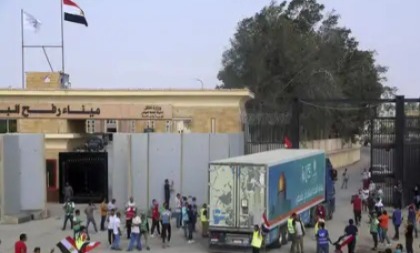
Cairo (AP): The Rafah border crossing between Gaza and Egypt will reopen Monday for people returning to Gaza, the Palestinian embassy in Egypt said Saturday, but the territory's sole gateway to the outside world will remain closed to people trying to leave.
“The number of people registering to return to Gaza is very big,” Naji al-Naji, cultural counselor at the embassy, told The Associated Press without saying how many.
There was no immediate comment from Israel.
The Rafah crossing is the only one not controlled by Israel before the war. It has been closed since May 2024, when Israel took control of the Gaza side. A fully reopened crossing would make it easier for Gazans to seek medical treatment, travel internationally or visit family in Egypt, home to tens of thousands of Palestinians.
Meanwhile, Gaza's ruins were being scoured for the dead, over a week into a ceasefire. Newly recovered bodies brought the Palestinian toll above 68,000, according to Gaza's Health Ministry.
The ministry maintains detailed casualty records that are seen as generally reliable by UN agencies and independent experts. Israel has disputed them without providing its own toll.
Hostages' remains
Israel said the remains of a 10th hostage that Hamas handed over the day before were identified as Eliyahu Margalit.
The handover of hostages' remains, called for under the ceasefire agreement, is among key points — along with aid deliveries into Gaza and the devastated territory's future — in a process backed by much of the international community to help end two years of war.
The office of the Israeli prime minister said that Margalit's family had been notified. The 76-year-old was abducted from kibbutz Nir Oz during the October 7 attack. His remains were found after bulldozers plowed up pits in the southern city of Khan Younis.
The effort to find the remaining 18 hostages followed a warning from US President Donald Trump that he would greenlight a resumption of the war by Israel, if Hamas doesn't live up to its end of the deal and return them all.
In a statement, the hostage forum that supports the families of those abducted said they won't rest until the remaining hostages come home. The forum said that it will continue holding weekly rallies until all are returned.
Hamas has said it is committed to the terms of the ceasefire deal, but that the retrieval of remains is hampered by the scope of the devastation and the presence of unexploded ordnance. The group has told mediators that some remains are in areas controlled by Israeli troops.
As part of the ceasefire agreement, Israel on Saturday returned the bodies of a further 15 Palestinians to Gaza. Gaza's Health Ministry said the International Committee of the Red Cross handed over the bodies to Nasser Hospital, bringing the total number Israel had returned to 135.
In announcing the updated Palestinian death toll, the ministry said the number has climbed since the ceasefire began, with the majority of the newly counted bodies being found during recovery efforts.
Thousands of people are still missing, according to the Red Cross.
Hamas accuses Israel of violations
Hamas again accused Israel of continuing attacks and violating the ceasefire, asserting that 38 Palestinians had been killed since it began. There was no immediate response from Israel, which still maintains control of about half of Gaza.
On Friday, Gaza's Civil Defense, first responders operating under the Hamas-run Interior Ministry, said nine people were killed, including women and children, when their vehicle was hit by Israeli fire in Gaza City. The Civil Defense said the car crossed into an Israeli-controlled area in eastern Gaza.
The Civil Defense said Israel could have warned the people in a manner that wasn't lethal. The group recovered the bodies Saturday with coordination from the United Nations, it said.
Israel's army said it saw a “suspicious vehicle” crossing the so-called yellow line and approaching troops. It said it fired warning shots, but the vehicle continued to approach in a manner that posed an “imminent threat.” The army said it acted in accordance with the ceasefire.
Aid demands
Hamas has urged mediators to increase the flow of humanitarian aid into Gaza for its 2 million people, expedite the full opening of the Rafah border crossing and start reconstruction of the battered territory.
The flow of aid remains constrained because of continued closures of crossings and Israeli restrictions on aid groups.
UN data on Friday showed 339 trucks have been offloaded for distribution in Gaza since the ceasefire began. Under the agreement, about 600 aid trucks per day should be allowed to enter.
COGAT, the Israeli defence body overseeing aid in Gaza, reported 950 trucks — including commercial trucks and bilateral deliveries — crossing on Thursday and 716 on Wednesday, the UN said.
Throughout the war, Israel restricted aid to Gaza, sometimes halting it altogether.
International food security experts declared famine in Gaza City, and the UN says it has verified more than 400 people who died of malnutrition-related causes, including over 100 children.
Israel has long said it let in enough food and accused Hamas of stealing much of it. The UN and other aid agencies deny the claim.
Let the Truth be known. If you read VB and like VB, please be a VB Supporter and Help us deliver the Truth to one and all.
4 workers die after being buried under coal slurry in Jharkhand's Dhanbad
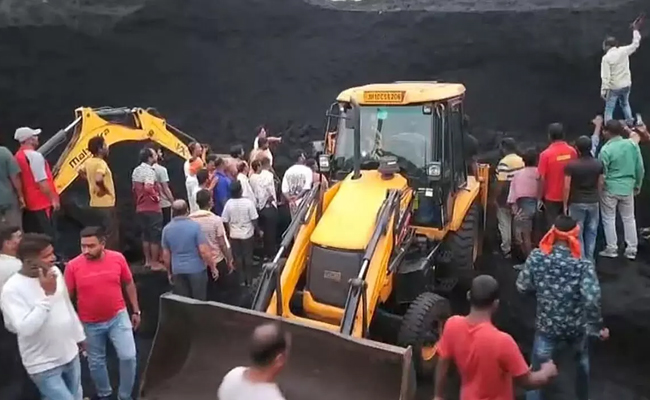
Dhanbad (Jharkhand) (PTI): At least four workers died after being buried under coal slurry in Jharkhand's Dhanbad district on Saturday, a police official said.
The incident took place at Moonidih coal washery in the command area of Bharat Coking Coal Limited (BCCL).
"Bodies of all four workers were dug out of debris during a rescue operation," Putki police station in-charge Waqar Hussain told PTI.
The incident took place when coal slurry was being loaded into trucks by workers, during which a large chunk of slurry fell and trapped several workers underneath, officials said.
The deceased have been identified as Manik Bauri, Dinesh Bauri, Deepak Bauri, and Hemlal Gope.
Meanwhile, the family members of the deceased and local villagers placed the bodies in front of the washery gate and began a protest.
They demanded compensation, jobs for dependents and action against those responsible for the incident.
Police and administration officials are trying to pacify the protesters, an official said.